
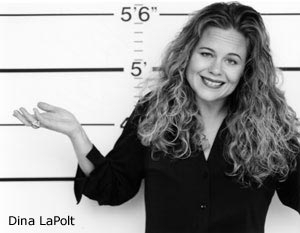
I am a longtime and passionate fan of the work and social ideas of the late legendary Tupac Shakur. When I got the chance to sit down and interview the woman who is behind the branding and professional legacy for Tupac Shakur, I jumped at the chance! Her name is Dina LaPolt, owner of LaPolt Law, P.C. She, in conjunction with Tupac's mother Afeni Shakur, is working very hard to make sure that Tupac Shakur is remembered as the brilliant artist and revolutionary that he was. They also see to it that Tupac's production company, Amaru Entertainment, thrives in the areas of music, poetry, film, and now The Tupac Amaru Shakur Center for the Arts, which is being built in Atlanta, GA. Dina LaPolt is also co-producer of the Oscar Nominated documentary about Tupac Shakur's life, "Tupac: Resurrection." The Tupac Amaru Shakur Center for the Arts is their number one mission, and I am doing my part with this interview to help them carry that out! It's the very least I can do for a brilliant young man who gave so much to the world in his 25 years on earth.
PR.com (Allison Kugel): Dina, you are a co-producer of "Tupac: Resurrection" which is nominated for an Oscar for best documentary feature this year. Congratulations! Are you going to the Oscars on Sunday?
Dina LaPolt: No. I'm going to all these other things that I've been doing all week long. The two people who are actually accepting are the director, Lauren Lazin and Karolyn Ali who is one of the producers. They got tickets and we had to get Afeni Shakur a ticket and her husband, but when they were the ones who actually got the tickets, a lot of us were relieved.
PR.com: But you'll be somewhere watching it of course…
Dina LaPolt: Oh of course!
PR.com: I'm rooting for you guys on Sunday, because I am a huge Tupac Shakur fan!
Dina LaPolt: Oh really?
PR.com: I'm so passionate about his work!
Dina LaPolt: Wow!
PR.com: I love his music and I love what he stood for. It almost brings tears to my eyes when I think about the fact that he was killed at the age of 25. When it happened I was in college and 21, and now that I'm 30, I look back and I'm like "25?" He was an infant when he died.
Dina LaPolt: The most ironic thing is all the material he left behind.
PR.com: How many albums?
Dina LaPolt: 9 albums since his death, 15 albums total.
PR.com: You and your Law Firm, LaPolt Law, represent Tupac Shakur's entire estate.
Dina LaPolt: Yes. [Tupac's] mother, Afeni Shakur and her entertainment companies which fall under the umbrella of Amaru Entertainment, Inc. Amaru is Tupac's middle name. Tupac Amaru Shakur. I do all the entertainment transactional work.
PR.com: So that encompasses Amaru Films, Amaru Records, and The Amaru Foundation?
Dina LaPolt: The record company, all the films, the books, the merchandising, the clothing line, all of that. We have a foundation lawyer down in Atlanta, and I work very closely with her.
PR.com: Afeni Shakur hired you after the death of her son?
Dina LaPolt: I met her in August 1998 when I was at my old firm, and she and I hit it off right away. I was just a little bitty associate at my old firm, and it was my boss who she had hired thru referral. She and I met in August of '98 and we hit it off immediately. I can tell you that I basically grew up practicing law with Afeni Shakur. I learned how to practice law under her.
PR.com: How would you describe Afeni Shakur as a woman?
Dina LaPolt: The most internally powerful person I have ever met in my life. Very spiritually and emotionally grounded. She very much has a warrior spirit which is so refreshing. She's not afraid of anybody. She's only about protecting her son's legacy and taking care of her family. And if anybody is messing with that or challenges her, she doesn't stand down. She's an amazing inspiration for me, as a woman for sure!
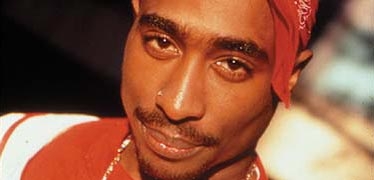
PR.com: You are responsible for freeing up millions of dollars in frozen assets and unpaid royalties of Tupac. Where were these assets tangled up and how did you untangle them?
Dina LaPolt: When Tupac died, he never had a music lawyer. When you are a recording artist every royalty payment that goes to producers and other third party royalty participants, people that perform on your album, comes out of the artist's royalty. And if they write music with the artist, then the artist has to do agreements with them, like song split agreements, so these people share in the publishing money. When Tupac died, nothing was papered on his behalf. Under the terms of his recording agreement, they were still allowed to release all his albums notwithstanding the fact that none of the paperwork was done, and they just didn't pay him. They just froze all the royalty streams and kept their profits. When I got involved, there was literally over $13 million dollars in frozen royalty payments that belonged to Tupac, his producers, all his co-writers… it was just awful. Me in connection with another lawyer, Donald David, who was very influential in getting this untangled as well, and then the lawyer for our publishing company, Robert Allen, we literally…two and a half years of our lives we just went song by song and worked out all the copyright splits.
PR.com: These royalties went to Amaru Entertainment?
Dina LaPolt: No, they went to all the producers who never got paid, all the song writers who never got paid, and Tupac who never got paid. It was divided amongst everybody. Tupac didn't have agreements with his producers, like he was supposed to, so nobody was getting paid. All the songwriters who wrote songs with Tupac, whether it was Dr. Dre or The OutLawz or whoever, none of them were getting their songwriter royalties.
PR.com: Did any of that money have to go to Marion (Suge) Knight?
Dina LaPolt: No, by the time I got involved, Donald David had already litigated Death Row [Records] and Suge Knight, and got all the intellectual properties reverted to Afeni Shakur. When I got involved, the estate was in a very litigious time. And I was the person who was brought in to help make it into a business. [Suge Knight] has two record albums that he still owns that are now distributed by Koch Records. So, he gets royalties on those, and he also gets royalties on some of the albums that we have on Interscope.
PR.com: Amaru Records' deal is with Interscope...
Dina LaPolt: Although, we are doing a spoken word album this year with Koch Records.
PR.com: And that's poetry?
Dina LaPolt: Yes. Poems that Tupac wrote that are unpublished, that we have secured in a vault, and we are getting third party artists and producers to perform those poems. It's gonna be an album.
PR.com: These nine albums that came out after Tupac's death in 1996… where did all of this material come from?
Dina LaPolt: Tupac, when he died, he left behind 154 unreleased master recordings. He told everyone he was gonna die. I mean if you've seen the film, so see the end when he says, "I don't have time here!" He goes "I don't have time to lay the hook! You do that after I leave!"
PR.com: Why did he think he was gonna die young?
Dina LaPolt: He just did. He said, even in the movie, you heard him say, "when I'm gone, you're gonna have all this material to be released." And as he's talking, they showcased each album we've released over the years.
PR.com: Do you think that he courted his own death by his behavior and things he said to the media? Or do you think it was something that was out of his control?
Dina LaPolt: I will tell you that after being around Afeni Shakur all these years, I can tell you that it is probably a prophecy. Because she knows things… talking to her, she'll say to me, "you better put this in the contract, because in this many years, this is gonna happen." In the beginning, I was like "What?" and she'd be like, "no, just do what I say." Now, I don't argue! I mean she'll say, "Make sure you put this in the contract because in ten years, this is gonna happen and I need to be protected."
PR.com: Sometimes I've said to people that Tupac Shakur was an angel who was put on earth for 25 years, and then he had to go back home.
Dina LaPolt: I believe that.
PR.com: How did the documentary, "Tupac: Resurrection," come about, and how did Lauren Lazin come into the picture as Director?
Dina LaPolt: Lauren was working in the MTV news and documentaries department. She came to meet with us, and she said that her lifelong dream was to do the Tupac Shakur documentary. We finally introduced her to Afeni [Shakur] who liked her right away. [Lauren] was always attached to the project from the very beginning. It wasn't like we did a deal with MTV and then Lauren came around. Afeni Shakur fell in love with Lauren Lazin and said, "We're doing it with Lauren Lazin!" She is the visionary of the movie.
PR.com: This was a collaboration between MTV, Amaru Films and Paramount?
Dina LaPolt: Paramount is the distributor. Amaru and MTV did the film on their own.
PR.com: What was your role as co-producer?
Dina LaPolt: I was working with Lauren so closely over the years obtaining music and footage. I was in battle every day, fighting Death Row [Records] who was sending cease and desist letters to everybody and scaring the pants off of everybody. All the music that Lauren used in the film…we have 70 Tupac songs in the film and most of them contain samples. I don't know if you know about intellectual property law, but we had to reach out to every person who had a little bitty share of any piece of a song and beg for them to let us put it in the movie. If we paid retail price for those songs, it would have been a $7 million dollar production. I begged and groveled for years and begged everybody on behalf of Afeni Shakur and said, "Please! She's making a movie about her son. Please help us!" At the end of the day, Lauren [Lazin] and Afeni [Shakur] said, we're gonna give Dina this [producer] credit.
PR.com: Is Afeni involved in the day to day operations of her son's production company?
Dina LaPolt: Every step of the way! She's very involved with everything. I can tell you that I talk to her five times a day!
PR.com: What year did you, Afeni Shakur, Lauren Lazin and MTV first sit down for your first meeting? And how many years was it from its inception until the time that it premiered at Sundance?
Dina LaPolt: We met Lauren Lazin in 1998, and the film premiered at Sundance in January 2003. So it was a five year process.
PR.com: Why do you think Lauren Lazin was so passionate about making this documentary?
Dina LaPolt: I think she's a huge Tupac fan. She's been doing news and documentaries at MTV for over ten years I believe, and I think that out of all the artists that she has covered, I think that Tupac stood out to her the most.
PR.com: So it was Tupac Shakur that she was very passionate about, and she wanted to tell his story properly…
Dina LaPolt: And then when she met Afeni, it was over the top. Because everyone who meets Afeni…you fall in love with her. You just can't help it. Everybody who works for her company and the lawyers here at my firm, we have this mission, which is her mission, of building the "Tupac Amaru Shakur Center for the Arts."
PR.com: I was gonna ask you about that, so let's talk about this now…
Dina LaPolt: That's why we work so hard, because it's so gratifying!
PR.com: And in what city is the center being built?
Dina LaPolt: In Atlanta, on Memorial Drive. We're almost completed with the Meditation Peace Garden and the Visitor Center.
PR.com: This is going to be a school for children…for the arts?
Dina LaPolt: Yes. And Afeni has a school every summer, where she does a performing arts camp for children, and it just keeps growing and growing. I think this is gonna be the first summer where we have the performing arts camp at our own facility on Memorial Drive.
PR.com: That's incredible!

Dina LaPolt: It is! This is just phase one of it. There's gonna be an auditorium, and a dance studio, and a recording studio and an editing bay… we are on a national campaign to raise money for this now. I can tell you this…every project that we do, income streams are diverted to The Center for the Arts.
PR.com: People can buy a brick and put it in their name…
Dina LaPolt: Yup.
PR.com: How is that going?
Dina LaPolt: Great! [Afeni's] goal for 2004 was this national fundraising campaign. That's what our whole goal was, and three weeks into January we got nominated for an Academy Award, and that's consumed our lives.
PR.com: Tupac was a huge believer in helping the underdog and he believed in spreading wealth. With all of the money that your company is generating with Amaru, is any going to philanthropic work?
Dina LaPolt: Well, [Afeni] is building The Center for the Arts. That's a $5 million dollar undertaking. And she's been doing it all on her own. She's involved in a lot of different charities, from "The Place Called Home," which is here in LA to the "Impact Reparatory Theatre" in New York City. That's the basis of her life's work. Ever since she was a very young activist, she was involved in the landlord/tenant right fights in New York. She worked for a law firm for ten years. She was very involved in getting tenants rights in New York City. She was fighting the slumlords.
PR.com: In her younger years she was a Black Panther…
Dina LaPolt: Yes! She did the Children's Free Breakfast Programs…that's her life's work, philanthropy. That's why now her life's work has turned into building The [Tupac Amaru Shakur] Center for the Arts, because she feels as though, when Tupac was accepted into The Baltimore School of the Arts, it changed the course of his path forever.
PR.com: He found himself there…
Dina LaPolt: He studied Shakespeare and Ballet…
PR.com: So many people don't know that about him. They think that he was just a street rapper and there was so much more depth there. He was a poet, he was a dancer, he knew Shakespeare. He was the consummate all around artist.
Dina LaPolt: Yeah. So [Afeni] knows that that opportunity is an opportunity that's not readily afforded to young people of today. Especially for those who are underprivileged.
PR.com: Is this going to be a public school or private school?
Dina LaPolt: Public. We haven't worked out how people are going to be accepted, but according to Afeni, no one's going to go without.
PR.com: There's a woman named Angela Ardis who recently published a book about Tupac. Are you familiar with her? She wrote a book called "Inside A Thug's Heart."
Dina LaPolt: Afeni approved that book.
PR.com: Was that publishing deal done thru your law firm?
Dina LaPolt: Yes. And actually Angela [Ardis] donates money to The Center. Afeni didn't get paid for that. Instead she said, "Can you please make sure there's a donation going to The Center?"
PR.com: You are also a teacher. You teach a UCLA Extension Course called "Legal and Practical Aspects of The Recording and Publishing Industries?"
Dina LaPolt: I swear it's not as boring as it sounds (we laugh). What I do is, I take every legal agreement in the music industry and I teach the deal points in those agreements. People in the class are artists, managers, lawyers, business managers.
PR.com: These are people who are actively working in the music business?
Dina LaPolt: Yes. I know that Windswept Pacific, The Firm, Network Management and Sony Entertainment send people to my class. I have people in the class who are professionally working in the music industry right now, and people in the class who are very serious about their careers in the music industry.
PR.com: What are the common financial pitfalls that young and inexperienced artists fall into?
Dina LaPolt: They sign agreements that they don't give somebody to look at, the worst thing they can do.
PR.com: They're very anxious to get started…
Dina LaPolt: Right…and they don't understand what the ramifications of doing that are. You have a young artist who comes out here [to LA], and they're very talented and they're "discovered" by somebody in a club, and the guy says to them, "I want to develop you…get you a fat record deal…sign on the dotted line." The artist who's so excited to get ahead, decides to sign on the dotted line, only to realize later on, that that artist gave up all their publishing, all their merchandising, the rights to all their trademarks for their name… If you're an artist, you better know what your publishing is, you better know mechanical royalties, what artist royalties are, what merchandising licensing is. You need to know all that stuff.
PR.com: What are the mechanics of representing the estate of a musician who has passed away, as opposed to a musician who is alive and actively working in the business?
Dina LaPolt: I can tell you that working with a deceased artist is a lot harder, especially at the record company level. I'll tell you my experience especially with Tupac…when Tupac's albums come out, Tupac is not there to yell at somebody when his video is not out when it's supposed to be. Tupac's not here to pick up the phone and say to the president of the record company, "Hello! What are you doin'?! I want a list of all the radio stations that are playing my music!" It was great this past album working with Eminem, because he was in Tupac's role. It was phenomenal.
PR.com: He and Afeni co-executive produced the "Loyal to the Game" CD, which was just released…
Dina LaPolt: Yeah, we love Eminem!
PR.com: He is working with you as well?
Dina LaPolt: He is represented by somebody else, but we work with their people very closely. Tupac is one of the biggest influences of [Eminem's] life, and he'll tell you that within five minutes of speaking to him.
PR.com: Then he and I have something in common.
Dina LaPolt: Eminem is very much a Tupac fan, and he did a couple tracks for the "Tupac: Resurrection" album and it really moved Afeni [Shakur]. When they started contacting people who were involved in the soundtrack, it got back to us that Eminem was so eager to be involved. He cooperated, made himself available to be interviewed, and that really moved Afeni and the entire family. When we asked him to produce tracks, he was like "Ok Yes!" and then the tracks were done!
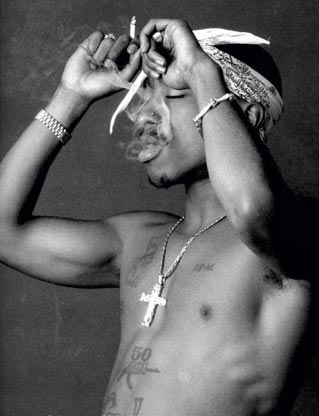
PR.com: Over the top…
Dina LaPolt: Oh, over the top! (We both laugh) That really moved the family. When it came time this year to put this album out (Loyal to the Game), he approached - we have the same record company, Interscope - someone very high up at Interscope called me one day and said, "Eminem wants to work on this album." I asked Afeni, and she said "Absolutely!" So we said, "Yes, of course Eminem can do tracks." He did three tracks and then the record company called us back and said that he wants to produce the entire album. And this is the funniest story, are you ready?
PR.com: Mmm Hmm…
Dina LaPolt: I was at a music conference in Boston and Afeni calls me and she goes, "Dina, Oh My God! I got the cutest letter from Eminem! And she read it to me on the phone. He personally wrote to her and said, "Dear Afeni… I would like to produce the entire album. I am such a huge fan of your son…" It was the sweetest letter! Afeni said, "I'm faxing the letter to your office for the files." I said, "Ok great!" A couple hours later I call my office to check in, and my assistant Heidi says, "We got some random fax from some [guy] named Marshall. He says he wants to produce the next Tupac album. I put it in your unsolicited pile" (We are both in hysterics at her assistant's fau paux) I said, "Heidi… that's Eminem!!!"
PR.com: That's great!
Dina LaPolt: Isn't that funny!?
PR.com: That's priceless!
Dina LaPolt: I know! (We can't stop laughing)
PR.com: Lauren Lazin said that one of the reasons "Tupac: Resurrection" was able to hold an audience's attention for an hour and a half is because Tupac never gave a bad interview. Do you agree with that statement?
Dina LaPolt: Yes. He was such a personality!
PR.com: Was it impossible for Lauren to cut out everything she had to cut out?
Dina LaPolt: Yes. Her film was [originally] three and a half hours. She was like, "I don't know what to cut out! It's too amazing!" In December [2002], when I was at MTV watching the film for the first time, it was such a long film. People were like, "Lauren it has to be less time, less time, less time," and she was like "I don't know what to cut out! (upset) It's just too amazing!"
PR.com: I would give anything to see the full three and a half hours.
Dina LaPolt: I don't know if there's a copy.
PR.com: If "Tupac: Resurrection" wins the Oscar on Sunday, how do you see that changing Amaru Entertainment, Afeni Shakur's career or your career?
Dina LaPolt: Hopefully we'll raise all the money for "The Tupac Amaru Shakur Center for the Arts." If we win, that will be our dream, because then we can raise a global awareness as to The Center for the Arts.
PR.com: I think that's fabulous. That's such a selfless reason to want to win.
Dina LaPolt: It just gives you the best day at work, to know that you're doing it because you're going to help some little child.
PR.com: When did your firm, LaPolt Law, open its doors?
Dina LaPolt: October 2001.
PR.com: And you have your own band, Trophy Girls?
Dina LaPolt: Yes.
PR.com: Have you guys ever played a gig on Sunset [Blvd. in Hollywood, CA]?
Dina LaPolt: Yeah, but [now] we just play in the studio on weekends and have fun.
PR.com: What's your favorite Tupac Shakur song?
Dina LaPolt: Wow, that's such a great question! I have favorite songs for different moods…
PR.com: When you're in a speeding down the freeway mood?
Dina LaPolt: Oh, that's easy, "Breathin'."
PR.com: What about when you're bummed out or feeling a little down?
Dina LaPolt: "Thug's Mansion: The Accoustic Remix" with Nas.
PR.com: One of my favorites is "How Do You Want It."
Dina LaPolt: That's a great bumpin' song.
PR.com: Hell yeah it is!
Learn more about LaPolt Law, P.C. in its PR.com Company Profile
Learn more about Tupac Shakur in the PR.com Company Profile for 2Pac Legacy