
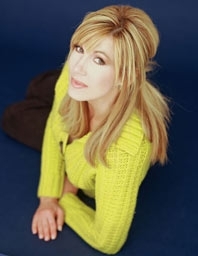
Leeza Gibbons is one of those mythical women you hear
about, but never really believe exists. With television news reporter,
talk show host, cosmetics guru, author, producer and activist on her ever
expanding resume, she is no longer a "TV Personality," but a
bona fide Brand, Leeza, Inc! And did I mention she is a hands-on mother
of three kids to boot?? Leeza squeezes every last drop of time out of
her days and wears each of her many hats with the poise and grace of an
industry pro... a showbiz veteran who is using her celebrity to reach
out and spark change. Real change. She doesn't take on "pet"
projects, but rather throws her entire being into every cause that she
believes in. She walks her talk, and that's my kind of woman!
Because of the extent of her credits and experience, I couldn't just focus
on one topic for this interview, so right off the bat, I told her it was
going to be a "This is your Life" type of interview starting
from her first big job on "Entertainment Tonight" all the way
up to present day. I picked up the "Uh Oh" vibe in her voice
when I told her of the extent to which I planned to interview her, but
hey, before long we bonded like old friends and she was loving every minute
of it! ;-)
PR.com (Allison Kugel): What was your very first job in television and how did you get it?
Leeza Gibbons: My very first job in media was actually a radio job. I worked for National Public Radio while I was in college and realized how much fun it was. I just got totally hooked on communicating stories. You know, when I was in the sixth grade, we were doing one of those talent shows at school and I came home upset [because] I had no talent. And my mom said, "Yes you do! You're going to stand up there and tell a story. You're a great story teller." I guess I really self identified at that moment and had been doing that throughout my entire career. My first television opportunity to tell stories came my first year out of college, at WSPA-TV in Spartanburg, South Carolina. I was a general assignment news reporter. I did everything from chase ambulances to report on burst water pipes and exotic animals escaped from the zoo…everything.
PR.com: So you started your career in South Carolina, your hometown. What brought you to Los Angeles?
Leeza Gibbons: I moved to LA by way of New York and Texas. I was working for Eyewitness News in South Carolina and that was around the time when Magazine Shows started populating the broadcast landscape. That is when they first began to do PM Magazines. So I started hosting a show in Texas. I had my heart set on moving to Dallas, and when I showed up with my little resume tape in Dallas, they thought I was not quite ready for the big city, so they sent me to their sister station in Bellmont, Texas. I did a PM Magazine there and then a year later I moved up to Dallas and did the same thing for five years, and a headhunter called me in Dallas and said that they were looking for hosts for "Two On The Town" in New York. I'd never really been to New York, so I thought, "Well that'll be great. I'll go and check that out."
PR.com: That was your very first trip to New York?
Leeza Gibbons: Yeah. I got that job and then we got cancelled. The show was cancelled while I was on assignment in Rio. We got a call [from the show], "Don't hurry back. Enjoy yourself. Show's cancelled."
PR.com: Did they at least pay for the rest of the trip?
Leeza Gibbons: Yes they did!
PR.com: Ok good!
Leeza Gibbons: So, at that time… that was the year that Entertainment Tonight and MTV had both just permeated the popular culture.
PR.com: Did they both hit television the same year?
Leeza Gibbons: They both hit at the same time. By that time, those shows were really just beginning to give a glimpse of the phenomenon that they would become. But I was flipping the dial, because we literally used to have a dial (we both laugh. Are you trying to say I'm very young Leeza? God bless you!), so I was flipping the dial and saw "Entertainment Tonight" and I thought, "Well, I think I could do that!"
PR.com: Did you contact your representation about it?
Leeza Gibbons: I found out who was doing the show and went out, and just sort of showed up, and got a very luke warm reception. So, I just waited and waited until finally somebody took a look at me and took a look at my tape. My first contract there was for thirteen weeks, and I stayed with the show for sixteen years.
PR.com: From what year to what year?
Leeza Gibbons: That's unbelievable isn't it?
PR.com: Sixteen years?!
Leeza Gibbons: How can that even be?! That must not be right, that can't be right! I was at Paramount that long, yeah. I started "ET" in 1983 and I worked there and started "The Leeza Show" …
PR.com: So you're talking about the entire time that you were at Paramount…
Leeza Gibbons: I did both [shows] for many years.
PR.com: Because the first time I ever became aware of you was next to Mary Hart and John Tesch on Entertainment Tonight. And it seemed to me that you were just as much of a personality on the show as they were. Whereas now, it seems like they have two anchors and the correspondents are more peripheral.
Leeza Gibbons: You know, it was easier to get noticed back then, quite honestly. We were breaking rules everyday and there used to be such a thing as a backstage pass. There used to be exclusive access. There hasn't always been this glut of entertainment news. So, at the time it was still kind of a small club…
PR.com: And it was special…
Leeza Gibbons: I really think that the shows are probably better today, but what we had going for us was, we had more time to develop a relationship with the audience. We had more time to make mistakes and be real. Everything wasn't a massive tease, followed by a thirty second story that is often times, vapor.
PR.com: Do you find that the business, in general, grows more and more cynical and more corporate each passing year?
Leeza Gibbons: It does. But that's the way of the world and not just the TV, movie, media business. All the mergers have made it less creative. I think in everybody's sandbox there aren't as many players and not as many toys to play with. [However], I think with television, audiences are not wrong. Whatever works on television, works for one reason only… it's 'cause that's what people want. Just look at what we have co-existing out there now, mean spirited shows that have humiliation at their core right alongside shows that celebrate life and have empowerment at their core. And the same people watch both.
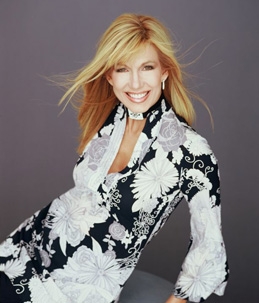
PR.com: In 1994, when you segwayed from Entertainment Tonight to The Leeza Show (on NBC), did you approach Paramount or NBC with the concept or did they approach you?
Leeza Gibbons: I was headed towards doing "Leeza Late Night." Before that I had targeted wanting to do a late night show. The Late Night [schedule] was very much in flux at the time. Joan Rivers had a show, Chevy Chase had a show… there were a bunch of shows popping up and there was no room to get in late night. Real Estate was available in the daytime. So, Paramount's idea was a good one, to take two pre-branded personalities from Entertainment Tonight, myself and John Tesh, and put us on as the west coast alternative to [Live with] Regis and Kathie Lee. And that show was "John and Leeza from Hollywood." After a year, when "John and Leeza" wasn't working, they came to me and said, "We want you to do the show by yourself, and do "Single Topic Talk." Except for "The Oprah Show" I didn't really know what "Single Topic Talk" was. I was like, "Ok, you need to give me a weekend. I need to watch some shows… so I'm watching Jenny Jones…"
PR.com: Not the best example…
Leeza Gibbons: Well yeah, I'm watching Maury, and trying to figure out what [single topic] is. And we had seven good years of talk. So really, they came to me because we had already pre-sold that timeslot with the John and Leeza Show, and we needed to deliver something to the affiliates.
PR.com: They wanted to do something with you and it was just a matter of finding your niche.
Leeza Gibbons: Right.
PR.com: Why did these other talk shows, like Chevy Chase, not succeed, and why did yours succeed?
Leeza Gibbons: That's an apples and oranges thing, because obviously they were on Late Night and I was on Daytime. I think any show succeeds or fails based on a conflux of issues, very few over which you have control. Marketing, promotion, clearance, timing, the ability to attract good guests, how well produced the show is… there are just so many criteria that go into that moment, where you can look at something and say, "Wow, that works." With The Ellen Show, you looked at it and went right away, "Wow! That works."
PR.com: Isn't that show fabulous?
Leeza Gibbons: It's just so great, and it never had an awkward period. It never had a rocky stage. But you look at Jay Leno on The Tonight Show. Jay Leno was a bumpy ride for a while…
PR.com: It took him a while to find his way…
Leeza Gibbons: It really did. So part of it is that you do have to have the backing and the belief, and the vote of confidence from your business partners. Right now, if you try to launch a show and you don't make it in a nanosecond… bye bye. The good news is you don't wear failure so much anymore either.
PR.com: Right. It doesn't stay with you, because people have very short memories and they're getting shorter. You won three Emmy's during the time you were doing "Leeza," and you got a Star on the Hollywood Walk of Fame…
Leeza Gibbons: There ya go.
PR.com: Do you feel that a lot of it was choices on your part as far as what guests to book, and how you covered a topic? What do you think it was that gave you so much respect and admiration from the industry?
Leeza Gibbons: I was very clear with everyone from the beginning that I wanted to do a show of integrity that was respectful of guests, with honorable business practices, that delivered maximum entertainment. My interests were in making sure that we didn't talk down to the audience. Making sure that our guests didn't get thrown into a limo and sent home without us vowing to support them in their own issues of mental health. Honestly, it's really easy to get people to show up and emotionally bleed all over the stage. You know, we all have this incredible drive to tell our story. We all want other people to be a witness to our lives, whether they agree with us or not. Our TV Aftercare Program was a big hallmark of what we did. We brought in Dr. Jamie Huysman, who now runs my Memory Foundation. As a licensed clinical social worker, therapist and interventionist, he came in and arranged for our guests to have "aftercare." [He arranged] for them to have treatment if they needed it, and to have the support, for as long as they needed it, after the show. That was really important to me, because we're talking about life changing issues on these programs. It's episode #1495 to us, but for the people on that stage, it's a pivotal moment in their lives that may change everything. I think that we had to respect that. So, I'm very proud of that.
PR.com: You handled guests with dignity. You didn't take the low road…
Leeza Gibbons: I had planned to have a long career. I don't think that you can violate the public's trust and keep getting invited back into their homes. So, I always think it sounds funny to refer to individuals as a brand, and I think it's become kind of an over hyped… Martha Stewart's a brand, Oprah Winfrey's a brand… I think many other people, myself included, may aspire to having that kind of…
PR.com: Well, I think you are a brand, because when we talk about your cosmetic line and your foundation and everything else, during this conversation, I think that the reason you're having success in everything that you're doing is because people trust you.
Leeza Gibbons: Well, thank you for that, I hope they do.
PR.com: So, when you say you believe in a product, people know you, so they trust you. That's what enables you to stamp your name on something, and for people to feel that it's solid. I think that people think that you're a solid person.
Leeza Gibbons: I think I'm a solid person and I really have respect for viewers, for customers, and for listeners. I think people get it, and I think [people] can spot an untruth. So, there's an unspoken contract that you have with an audience, and I do take that very seriously, and I also am not afraid to be wrong, and I listen to feedback, and I admit when I'm wrong. I mess up, and I've been allowed to make horrendous mistakes and by owning up to them and being real, I'm fortunate that I've been able to continue to work.
PR.com: Now here's something that I absolutely have to ask you about! I found out when I was doing research on you, that you were Executive Producer of "The Michael Essany Show."
Leeza Gibbons: Yes.
PR.com: You have to tell me where you found him. Because here was a kid who started his own Johnny Carson-like talk show in his hometown in Indiana, in his parent's house. How did you find him and how did you guys bring the show to E!?
Leeza Gibbons: Michael Essany called me time after time after time, to get an interview for his show. My assistant one day came in and said, "You know what? It's time to call this kid back." I said, "You're right, let's get him on the phone." He was incredibly bright, very charming, and incredibly disarming. I hung up and I said, "Let's just keep an eye on this Michael Essany. He's really got something going on." So we toyed with different things for Michael, and then when reality [TV] hit, it was time to look at what that meant for Michael. So, we shopped him around and it ended up that the place for us was going to be at E! I really think that Michael will be one of those guys. He'll be one of those [Johnny] Carson, [Craig] Ferguson, [Carson] Daly guys.
PR.com: This past November, with Westwood One, you launched your radio show, "Leeza At Night." I was going to ask what made you decide to try your hand at radio, but it's kind of like you came full circle, because you started in radio.
Leeza Gibbons: And I've never really left it. For a decade I've done "Hollywood Confidential," which used to be called "The Top Twenty Countdown." I'd done a weekend radio show for all those years. I had been asked to host a show called "Country Line," which is a live call in show where performers come on and play acoustically. I was asked to host one night. I had such a great time and after the show that night, the producer of the show said, "You should be doing radio." I said "I work at Entertainment Tonight" and we made a deal right then to do "ET" on the radio. Handshake deal, and we did "ET" on the radio for many years. Then when I went to "Extra" I continued to do radio minutes from "Extra." My radio business has always been there. The "Leeza At Night" concept was really an opportunity to talk about what's on your mind and what's in your heart.
PR.com: Is it mostly a talk format?
Leeza Gibbons: It's music and talk hybrid. We launched the show with Infinity [Broadcasting] and we're on a lot of the Infinity Hot AC Stations. We're playing a good bit of music and talking about truly everything, from the outrage over that little five year old girl who was handcuffed in Florida for having a temper tantrum at school to… trial news, entertainment news… stories that empower women... everything from "How to get a raise" to "How to eliminate stress." [We cover] holistic cures you can find in your kitchen.
PR.com: Do you have guests on who fit the topic that you are discussing?
Leeza Gibbons: We have guests on and I can talk to them for as long or as little as I want. We are targeting women. As women, we don't have a lot of time to be as well rounded as we want to be and as we need to be. So, we try to be sensitive to females' role as businesswoman, as caregiver, as nurturer, as sister, and as friend, wife and lover. All of those roles that we have, they all require that we take our oxygen first. So, what we try to do on the radio show is deliver the oxygen. When we nourish our minds and our hearts and our bodies and our souls we can give more. I think as women, our universal experience is, "How can I be better, so I can give more?"
PR.com: I think a lot of women, what they don't realize is that they put everybody else and everything else first.
Leeza Gibbons: Totally!
PR.com: And then your battery gets drained, and you can't be there for the people in your life if that happens.
Leeza Gibbons: That's exactly it. When I started [The Leeza Gibbons] Memory Foundation in 2002, I was not aware of how important caregivers are in our culture, both economically and how underserved and undervalued this community is. Women, we primarily take on that role of care giving, and often the people for whom we care, fare better then we do, because of all those issues that you and I just mentioned.
PR.com: Now, let's talk about The Leeza Gibbons Memory Foundation. Your own family, both your grandmother and your mother were diagnosed with Alzheimer's Disease. Your grandmother has passed away. Did she pass away from complications from Alzheimer's?
Leeza Gibbons: Yes.
PR.com: Since it happened to your grandmother and to your mother, do you fear that it's hereditary and that you yourself are at risk for developing Alzheimer's?
Leeza Gibbons: I know that like with families who have a history of heart disease or breast cancer, I need to pay more attention. I probably do have a greater propensity to get this disease. But, because we don't know a lot about it, because it's such a mystery that's yet to be unraveled, everyone's at risk. And that's why I'm on such a mission to increase awareness and irradicate the stigma and to offer empowerment and education and energy for caregivers and those who have been newly diagnosed with Memory Disorder. Memory Disorder is so frightening because, it's a disease of our mind! That's command central! And there is an awful lot of shame. People compensate and people hide. It's like how we used to feel about AIDS, when it wasn't even safe to support it as a cause or even to talk about it. That's sort of where we are with Memory Disorder. I think we're at a tipping point now, and consciousness is changing, and that's great.
PR.com: Does the Memory Foundation deal with Memory Disorders other than Alzheimer's?
Leeza Gibbons: Yes. At the Memory Foundation, we deal with a broad umbrella of memory disorders which includes: Parkinson's [Disease], MS, Stroke, Brain Trauma, and the other Dementias. Even people who have been using the cocktails for many years for AIDS have cognitive deficits…
PR.com: Caused by the cocktails?
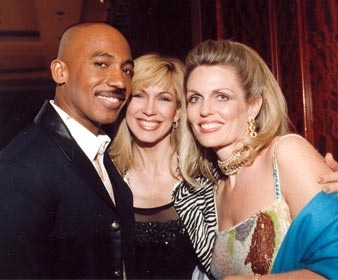
Leeza Gibbons: Yes. So, we know that other diseases can prompt conditions that create cognitive deficits. My friend Montel [Williams], who has his own foundation, and Nancy Davis, who has her wonderful "Center Without Walls" MS group… they've told me how challenging memory can be for people with MS.
PR.com: Your mother was the one who really encouraged you and inspired you to start The Leeza Gibbons Memory Foundation, to take action. Has she been well enough throughout the process to contribute or to just see and experience the kind of work that you're doing?
Leeza Gibbons: Not really. Not on a conscious level anyway, but mom did public service announcements for Alzheimer's Awareness, and I interviewed her on my talk show. She was incredibly brave, very courageous, wanted to be an advocate, wanted to be part of research studies…mom never really saw The Foundation come to life. What she saw though, was her daughter sharing the story. That's what she knew, and that's what she asked me to do, was to talk about it and to use it to make a difference. She did see that I was doing that, and she was very proud at that effort.
PR.com: Where do you stand on stem cell research?
Leeza Gibbons: I stand with The Michael J. Fox Foundation, with The Christopher Reeve Foundation, with Nancy Reagan and others who believe that it is essential that we continue to explore what is possible, that we find ways to ethically and morally investigate the promise of stem cell research, rather then arbitrarily politicizing the issue and shutting doors and closing windows. We can't afford to do that.
PR.com: Do you think it's wrong that it's been tied up with religious issues?
Leeza Gibbons: I think it's similar to what we see going on with the Terri Schiavo case. I think many things like this get politicized and the real efforts of the matter get sidetracked and used for agended purposes. We can't afford to be ignorant and close the door to all these potential treatments and vaccines and ultimately possible cures. I'm certainly not qualified to speak as a scientist or an expert on this one, but I'm a family member and I'm a mom, and I feel very passionately that we need to continue exploring it. What I'm trying to say is we really can't afford not to know.
PR.com: I personally find it disturbing… I feel that the issues have been jumbled together. I feel that the issue of Christianity, the issue of God, the issue of cloning a human being… all of these issues have been stirred into the mix and have clouded the real issue. I think that President Bush is actually a victim of the clouding of these issues. Having Diabetes in my family, I find it very disturbing.
Leeza Gibbons: And you look at the science for Diabetes and that's really promising. There's an area where there are real strides being made, and it's encouraging. But it's one step forward and two steps back. I do think there's so much misinformation. So much fear. It all comes from fear. We need to look more deeply at where the common ground is, and I think that Nancy Reagan's leadership has been dramatic.
PR.com: Do you think that President Reagan coming forward with having Alzheimer's and Nancy Reagan, the fact that the public witnessed what they went through… do you think that it kick started a more aggressive search for a cure, or did it create what I call "empty publicity"?
Leeza Gibbons: I don't think it was empty publicity. I think that The Reagans did such a wonderful job of protecting the dignity and the legacy of this man, while also allowing the public to get a glimpse of how heinous this disease really is. I think that without Ronald Reagan many people wouldn't even be conversant about Alzheimer's Disease. The danger is people thinking, "oh, it's just something that happens to old people where they forget [things]." They don't realize that it kills people, and they saw the toll that it took on Mrs. Reagan. It really is creating a caregiver crisis. If you just follow the money, you'll recognize why we have to pay attention. Alzheimer's is not content with the diagnosed individual… it wants the entire family. You become bankrupt: spiritually, emotionally, financially… it ravages.
PR.com: You are in a state of limbo. You're not grieving the way you would if you have a relative who passes away, where you grieve, you go through the process, and then you start to move forward. With this you're kind of in limbo, because the person's here but yet they're not here, so those emotions don't have a chance to resolve themselves.
Leeza Gibbons: Your insights are exactly right. I talk about my mother often in the past tense, because in my mind, she's not here. I've had to find a peaceful place to put that and to let her go. My dad can't quite do that. Physically, there's a part of her still in this world. But it's like you say… all we are is our collective memories. At the end of the day, at the end of a life, that's what resonates. How did we spend our time? Who did we love? What did we do? What is our legacy? Some people play it out on a grand scale: Nelson Mandela, Oprah Winfrey… others have a much smaller visible experience, but all of us want to know that our lives matter! That's the message behind my Scapbooking Line, is that memories matter!
PR.com: You have a book coming out this May called "Scapbooking Traditions." Is that what the book is about?
Leeza Gibbons: Yes. Scrapbooking Traditions is a series of heartwarming stories designed to inspire newcomers, primarily, to tell the story of their lives. To introduce the concept of scrapbooking for women who haven't considered it and don't see themselves as being crafty. I'm not crafty at all! People who have known me over the decades are shocked at how obsessed I've become with this scrapbooking business. I absolutely love it! I find it so soul-soothing, and I really wanted to keep my mother alive in the pages of these scrapbooks, for my kids.
PR.com: Is it saving mementos, let's say, a memento from an event that you enjoyed together?
Leeza Gibbons: What the scrapbooking industry pointed out, is that women want to use this craft as a way to show how much they love their families, or their pastimes and their passions. Depending upon which numbers you go by, the lowest estimate is that it's a three to five billion dollar industry. It started around kitchen tables, and now it has morphed into a very fashion conscious industry. The papers and embellishments that we created for Leeza Gibbons Legacies were inspired by fashion. They're original designs, they're beaded embellishments, they're vintage inspired ribbons. They're really gorgeous. It's a creative expression that allows you to… it's like every page, you get to set a new table. Just the act of putting pictures and words artfully together on a page elevates the experience. The part that I love about it is the journaling. That's the reporter in me. I respond to having an opportunity to tell the story while the emotional paint isn't quite dry.
PR.com: So, your book Scrapbooking Traditions will show people how to create their own scrapbook…
Leeza Gibbons: Just being inspired by the book, yes. Every chapter has an idea starter and a 101 Section. But the book is really designed like an interview. Like a conversation between me and the readers. Tell me about your heritage, tell me about the things you love, tell me about your firsts. So, by sharing those things in my life, and encouraging the reader to explore their own archives of emotion, I hope that I'll spark some creative energy.
At this point Leeza graciously asks me if she can call me back on her cell phone in her car, so she can go pick up her son from school…
PR.com: Hey Leeza?
Leeza Gibbons: Sorry about that.
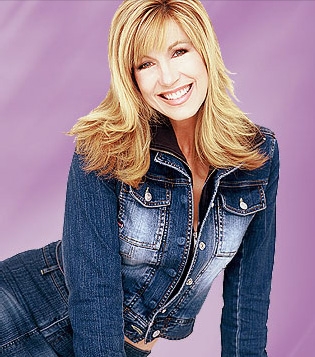
PR.com: That's ok… The Leeza Gibbons Memory Foundation runs Leeza's Place. What types of resources are available through Leeza's Place?
Leeza Gibbons: We're psycho-social support centers, where we offer, free of charge, the education, empowerment and energy for caregivers and those newly diagnosed. It's a myriad of programs. We're open right now in New York, Melbourne, Florida, Joliet, Illinois, we're opening another one in Florida very soon, and we've got New Orleans on standby. Our growth has been phenomenal, because the need is so great. One of the things that we do at Leeza's Place, and it's been very popular, is the scrapbooking curriculum. A diagnosed individual may have trouble remembering yesterday, but you bet they can remember the old days and they feel powerful about that, and it allows them to feel in charge of a life that's spiraling out of control in many ways. It also is very therapeutic for families. It gives them a tool so that they can begin to talk about this disease and begin to deal with their own issues and emotions about it. We do something at Leeza's Place called Memory Television, that is one of our cornerstone programs and I've very proud of it. My mother actually inspired it indirectly. She had done an interview with Lifetime Television for Intimate Portrait years ago, and out of the blue, the producers sent me the raw tapes and said, "We just thought you'd like to see the interview that your mother had done." It moved me so deeply, because at this point she had already fallen behind the vale of this disease. So I called Jamie, our Executive Director, and I said, "We've got to do something to encourage people to videotape the voices, the laughter, and the stories of those in their family. Not just like we do at the big moments in life. So we came up with Memory Television, our own MTV, where we help family members gather together the things that are representative of them, and we build a sort of "set," like on a talk show. Whatever represents that family, they decide what goes on that "set" in the background of their interview. It may be college letter sweaters, trophies, record albums, pictures, whatever. We then have them interview each other, and we give them the tapes. This is a powerful, intergenerational tool that allows families to begin to process their painful new reality while honoring a loved one who is disappearing behind the veil of Alzheimer's disease. We also have a Memory Screening that's available at Leeza's Place, and it's also available online at our website.
PR.com: How can people get in touch with Leeza's Place?
Leeza Gibbons: We are www.LeezasPlace.org on the web, and there it will tell you how to volunteer, how to get involved with us. There is a lot of information right there, including chats, screenings, warning signs and more. Our toll free number is 1-888-OK-LEEZA. We are now working on a few educational campaigns that are nationwide that you'll be hearing about very shortly.
PR.com: How have you explained Alzheimer's to your own children and what kind of coping skills do you use at home?
Leeza Gibbons: I've been honest with them, hopefully without scaring them. The reality is, we don't know who's going to get it, or why. They're very supportive and very involved in my work with The Memory Foundation. With my little one, he loves the scrapbooking as much as I do. I find it helpful to use those pages to talk about his grandmom. The older ones are much more aware. We share our stories and that's about the best that you can do. They visit my mom. They're not afraid of her, even though she looks so vacant and she acts sometimes in a way that can be quite scary. I really try to encourage them to have respect for seniors. I try to expose them to meaningful relationships with people who are not young. I try to irradicate their fear as much as I can. But I can't tell them, "You don't have to worry, I'm not going to get [Alzheimer's Disease]. I can't tell them that." I tell them I'm taking care of myself, learning everything I can and I believe in my heart this will not be a story they will have to tell.
PR.com: A while back you hosted an infomercial with Tony Robbins. You were on the island of Fiji, correct?
Leeza Gibbons: Yes.
PR.com: And you were speaking with him?
Leeza Gibbons: Ok, you're awesome! How do you keep up girl?
PR.com: I remember this because I followed his teachings. Years ago I bought his tapes and I was kind of nervous because I wanted to move out to Los Angeles. It had always been a dream of mine to move to California, and I'm from New York. I was twenty three at the time. I actually got the courage to pick up and move to LA, not knowing a soul, because one of the things that he teaches is, if you look back on your life ten years from now, what will be scarier: taking a leap that you were afraid to take or the pain of not having taken that chance.
Leeza Gibbons: YES!
PR.com: Have his philosophies played a significant role in your life?
Leeza Gibbons: Definitely. I ordered Personal Power way back in the day, when Martin Sheen was on television talking about what affect it had on his life, and I love Martin Sheen, and I ordered Personal Power. It was very effective; I kept my workbooks and all that. Years later William Morris [Talent Agency] called me and said, did I want to meet Tony Robbins? And I said, "Well I'd love to meet him. I'm not interested at all in doing an infomercial." Well, one lunch later… (we both laugh) I don't know what I was thinking, here is the master motivator and I'm gonna go have lunch…
PR.com: Right! And you were sold!
Leeza Gibbons: Such a great influence in my life. What he has done, and he tells you, is he has taken all the masters in this area and borrowed from them to come up with an approach that works on a scientific level. One of the areas he focuses on is neuro-linguistic programming, that's been very helpful for me. Because of working with Tony, I've found some anchors in my life that have helped me control my emotional state. And as Tony says, "If you can control your state, you can control your life."
PR.com: You're doing so many different things and doing them to such a full capacity and succeeding. What gave you that spark of motivation?
Leeza Gibbons: I don't know. Maybe a good therapist would tell me it's just my neurosis haunting me (she jokes). It's just my natural state of being. Over the years I've looked at my very full plate and my very rich life and I've said, "You know, I'm going to start picking things off." And I have done that, and I've become more skillful at having things co-exist. But I always re-create them, Allison. I re-create it every time. So, I have to believe that I really enjoy deal making, transformation, feeding off the energy of other people, passing on what I know… and that's all I really do.
PR.com: How did you come up with the makeup line Sheer Cover?
Leeza Gibbons: Well working with Tony Robbins put me in business with Guthy Renker Corporation. Guthy Renker developed Sheer Cover. Over the years, I have loved working with GRC, they're great partners and they kept saying, "Do you want your own line of something? How about it?" I said to them, "I really am interested in talking to women, and exploring how we find our power as women." They brought Sheer Cover to me and what I loved about it was the stories of the women who were using it, the stories of women who talked about how it helped them show up for their lives. I met women with rosacia, blotchiness, uneven skin tone - you name it, and Sheer Cover took care of it. Besides really loving this product and wanting to share it, I want to talk about sheer inspiration and sheer determination. I know that the women who use this product have these stories. I know that's the connection that we all have. So, by selling this product, I'm able to help build these communities of women, and who knows what we're gonna do together. It's wildly exciting…
PR.com: This is a mineral based makeup, unlike traditional face makeup. Who is the chemist that came up with this?
Leeza Gibbons: A woman named Pauline Youngblood, who is an esthetician and was working in a dermatologist's office…. (Leeza gets excited when she arrives at the school to pick up her son and his friends. She excitedly asks them how their day was while loading them into her car.) She developed it and was using it on her dermatological clients and even on Soap Opera Sets. A lot of the actresses who had tattoos needed to cover them up so they were using it in the love scenes. Prior to that use, women who were coming in to Pauline's office with Rosascia or acne or some other skin condition for which they had a laser treatment and they couldn't wear makeup… it was developed in that [dermatologist's] office for really sensitive skin and for people who were having serious skin issues and the procedures to eradicate those. So, that's how it became known. It was popular out here in Los Angeles, and on the sets of some TV shows. Pauline's lovely to work with, and we're developing a lot of new products.

PR.com: Mineral based makeup allows maximum coverage, and you can use very little of it?
Leeza Gibbons: Exactly right. Because of the pigments in the minerals, the coverage is complete with very little of the mineral powder being used. The minerals lie flat on the surface on the skin, and that's why you can get the look of bare skin. It's luminous and sheer looking, and yet it really will cover even the most serious skin concerns. One of the minerals is Mica, and Mica reflects the light, and so what it does is that it gives that little bit of luminescence without it looking shiny. But not dull and matte and ashen like so many makeups. It works with the natural oils in your skin, so that the longer you wear it, it even looks better and it really does last. It gives you that flawless finish. The finishing powder makes your skin look like it's airbrushed.
PR.com: Does Sheer Cover have color cosmetics as well?
Leeza Gibbons: Yes. We are just introducing a line of lip glosses that come in a six pot pallet, and shadows that also come packaged in sets of six. Also, lip stains that I really love that are in the nude and berry colors with liners to match and the world's best primer! We also have a pressed powder. A lot of people had asked for that.
PR.com: How do you gather feedback from your customer base?
Leeza Gibbons: I've gone out to the call centers to be with the operators when customers call in to place an order. I'll also call people back when they leave us their phone numbers on the success line. (It usually takes a while before the person on the other end of the line believes it's really me.) When I talk with the operators who answer the calls, I get to hear a lot from them about what objections people may have over the phones or what positive feedback they have. I want everyone who answers the phone for Sheer Cover to know I believe in it and I use it and how I use it. So I love to listen in on those calls. I find that to be incredibly enlightening. I see all the emails and love reading letters from customers who tell me how Sheer Cover has added value to their lives.
PR.com: Do you also sell through the Home Shopping Network?
Leeza Gibbons: Yes. I love going to HSN. We also have a new infomercial which will be out soon and we get many sales from our website, www.SheerCover.com; we do a lot of business from visitors to LeezaGibbons.com too.
(Leeza dutifully stops once again to help the kids get slurpies at 7-11. I ask her if she is the designated "carpool lady" for the day and she gives a resounding, "Yes I am!" with a giggle.)
Leeza Gibbons: It's funny because I've had this radio show for so long and I did a commercial for this station in LA that was running my radio program. In the commercial I was talking about driving my kids around the school… somebody called in and said, "Oh please! Like she really drives her kids!" And I thought, "What do people think? There's some guy named James who shows up in a black tie and tux and the kids get into a Hummer Limo and go off to school? What do they think??"
PR.com: After twenty years in the public eye. Does the public know you? Do you think they know who you are?
Leeza Gibbons: I don't know if it's important that anybody really knows who I am. I think what is important is that people believe that I'm doing my best and that I try and I care and I'm just for real.
(She gets sidetracked by her son showing her a crazy concoction of different slurpie flavors mixed together. She tells me that when the kids mix all the different slurpie flavors together, they call that a "suicide." She is transfixed by the little moments of laughter with her son and his friends.)
PR.com: I can definitely say that you are a down to earth soccer mom, who just happens to have an extraordinary job.
Leeza Gibbons: You're sweet.
Learn more about Leeza Gibbons in her PR.com Company Profile