

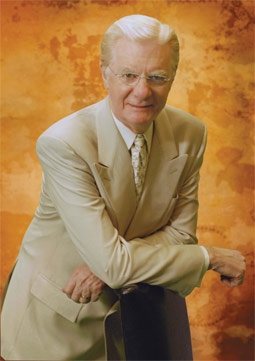
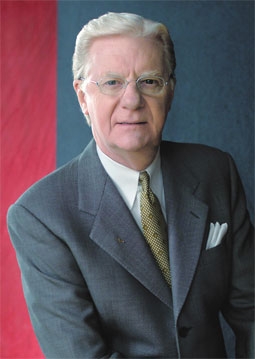
For those of you who have seen the groundbreaking documentary, The Secret, you will recognize Bob Proctor as the first teacher to appear on the screen. At the start of the film, he emphatically and enthusiastically states, "The Secret is The Law of Attraction." If you were like me, your eyes were glued to the television screen from that moment on, as you soaked in every word that followed. Bob Proctor is one of a select few people who have thoroughly understood and successfully applied The Law of Attraction (explained in detail in the film, 'The Secret'), transforming his early life, consisting of no formal education and no business connections or experience, into the story of a self-made multi-millionaire who travels the globe teaching people how to re-condition and re-program themselves for ultimate success in every facet of their lives. In this interview, Bob Proctor explains in great detail, the fundamental false wiring that causes most people to not reach their personal and professional goals. He also explains the practical techniques that you can put into practice today, to begin to correct that original conditioning, and start to program yourself for abundance and success in any area of your life that you wish.
We discuss the phenomenon that is The Secret… how it was made, how the producer of The Secret, Rhonda Byrne, learned of Bob's work and pursued him for the film, as well as some behind the scenes tidbits.
Bob is extremely generous with his depth of explanation, as it is his desire to help others in the realm of personal development. Pointing out that we all need coaches and teachers to set us on the right path, he cites Earl Nightingale, a pioneer in the field of personal development, as his mentor: a man he holds in the highest esteem and refers to several times throughout our chat. At the age of 72, Bob Proctor is on fire and determined to share his message with as many people as he can reach, through his company, LifeSuccess Productions. Both Bob and I have a similar goal in that respect. I enjoy using my platform on PR.com to share, to inspire, to teach and to entertain as many people as I can reach. I requested this interview with Bob Proctor with the notion of sharing his remarkable insights with our readers. I hope it does just that!
PR.com (Allison Kugel): I watched The Secret for the very first time this past December, and I was thoroughly mesmerized. I literally didn't blink, or move, or get up for water. It was at a time in my life when I was going through quite a bit and it really did put me on the path to correcting that. I first became aware of you through watching the documentary The Secret. How did the producers of The Secret become aware of you?
Bob Proctor: We have people in Australia. The guy who you see [in the movie] who talks about the parking space in the film, he carries our stuff in Australia and we work with him. They had heard of me and he gave them my cell phone number. It was really a rather strange situation, the way it all came together. He also gave Rhonda Byrne (producer of 'The Secret'), a copy of my book, You Were Born Rich. I wrote it years ago. The idea behind it is that everyone is born with deep reservoirs of talent and ability within them. In other words, that's their riches and it's a matter of developing that. He gave her a copy of the book. That's the only book, apparently, that she took on the plane with her when she flew over to America. She read it all the way over. When she got here to shoot this film, she wanted me in it. Her sister Glenda was traveling with her. They had a crew. Glenda phoned my cell phone but the message was very garbled; it wasn't easy to understand. I didn't delete it, but I didn't get it either. This went on for three of four weeks. I said [to the president of my company], Gina Hayden, "Gina, I think this woman's name is Glenda and I think this is the phone number. Would you please phone and see what this is about? It mentioned something, I think, about a film." They said that they really wanted me in this film but that the crew was going back to Australia next week. She said that they were shooting all weekend in Aspen, Colorado. Gina said, "Isn't that strange? Bob is doing a seminar this weekend in Aspen." And I hadn't been to Aspen for two or three years. So I ended up right next door to where they were shooting. I just went in and sat down and went to work.
PR.com: Did they shoot you all at one time, and they just cut it up?
Bob Proctor: Yes. The amazing part of this… no one had a script… no one! It was a little hotel room that they were shooting in. Of course there's camera equipment everywhere and lights, shadowing for lights and you had to watch or you'd trip over something in the room, it was so small. They asked a couple of questions and I would answer them as if they weren't questions; just stating things. I talked to them for a couple hours, just explaining everything about the mind, the world that we live in and our relationship with why things happen the way they do. That was it, and I left. She said, "You'll hear from us." That was in June [of 2005] and then the following February of 2006, I got a DVD of The Secret, by Fed Ex. I didn't even put it on right away. Finally, I said to my wife, "Let's see what this is." Well, I just about fell off the sofa, I couldn't believe it!
PR.com: Because you were so moved by it?
Bob Proctor: I really was! I've been in this business and studying this since 1961, and I worked for five years with Nightingale-Conant in Chicago. Nightingale-Conant is the leader in personal development programs and products. I spent 5 years with them in the sixties and early seventies when this industry was really just in its rompers, and I'd never seen anything like [The Secret]. It is without question, the best production, and it gets the idea across better than anything I've ever seen.
PR.com: Who coined the term "The Secret?"
Bob Proctor: They did. Well actually if you go back to 1959, Earl Nightingale made a recording, The Strangest Secret. He says it's strange that it's a secret, because it's so obvious. But he said it is virtually a secret, because so few people understand it. It's that we become what we think about.
(After our interview, Bob sent me a copy of Earl Nightingale's revolutionary audio recording, 'The Strangest Secret.' As I listened to this man speak on the mechanics of how we become what we think about, and the power of positive imagery and emotional conditioning, I was agape at the notion that Mr. Nightingale possessed the wherewithal to come to understand such progressive ideas, back in the 1950s. He was truly ahead of his time and most likely what many people would have labeled a radical thinker, much to their own detriment. Even in 1959, a million people did see its genius, making his the biggest selling spoken word audio recording of that time, and earning Mr. Nightingale a gold record.)
PR.com: Do we become what we think about as the result of… we think positive thoughts and then we feel happier and more confident, and people are attracted to that? As a result, we tend to make more positive friends, more positive colleagues…?
Bob Proctor: Well that's the philosophic side of it, but I believe there is a more scientific side of it.
PR.com: Right. That's what I was going to ask you… or is it literal, where there is actual science…?
Bob Proctor: It's literal. Come back for a moment to 1959, because I think it's an important part of this. Earl Nightingale made this record (The Strangest Secret) in 1959. I worked with them in the early seventies, when Columbia Records gave them a Gold Record for it, because it was the only record outside of the entertainment industry that sold over a million copies. The Strangest Secret, was that we become what we think about. Now that is the one point that all great philosophers, avatars, and leaders have agreed on. They've disagreed on virtually everything else, but on that one point, they're all in agreement. When you think… your brain, first of all, is an electronic switching station. You are not your brain, Allison. You have a brain. You're not Allison. Allison is your name. If I say, "Who are you?" you would say, "I'm Allison." But you're really not. That's your name. You may point to your body and say, "This is me." But that's really not true either. You probably have a car, a home, and clothes. These are all things you have, but it's not you. And you… when you think, you activate brain cells. Think of your car for a moment, and an image of your car will come on the screen of your mind. What color is your car?
PR.com: Silver.
Bob Proctor: What color is the interior?
PR.com: Black.
(Bob continues to ask me more questions which included inquiring about the colors of my front door and the refrigerator in my kitchen. I answer his questions, eagerly awaiting his explanation. I am becoming acutely aware of the pictures that are flashing, one by one, in my mind's eye. I begin to get an inkling of where he is going with this exercise.)
Bob Proctor: You see things in your mind, don't you? You had to see your car. When I said, "Think of your car," what I am doing is, I am activating vocal cords. I am setting up a vibration… it's actually a light message. Your hearing sense is picking it up. It's going firing down a nerve passageway and striking a group of cells in your brain. And when it hits those cells in your brain, they are activated and the picture that's in them flashes on the screen of your mind. We went from your car to your door to your refrigerator. We could go from your stove to your clothes closet to your bed. You see how the pictures keep jumping on the screen of your mind? That's what language is. Language activates cells of recognition in your brain. Every cell has a positive and a negative pole. What do you like most about your car?
PR.com: The drive.
Bob Proctor: What do you dislike most about it?
PR.com: It could have more traction in bad weather.
Bob Proctor: There you saw the positive and the negative side of your car. Well your car just is. Your car's not a positive or a negative. There are people that would like the fact that it skids around because they find that fun. You don't find it fun. So there's positive and negative pole in your brain, in those cells that are clumped together. It's a cluster of cells in your brain that have pictures of your car in it, and you can activate what's good and what's bad in it, can't you?
PR.com: Yes.
Bob Proctor: That's true with everything. That's true with the city you live in, the job you have, your relationships with the people you're related to; you can activate positive or negative poles in the cells. When you do, you set up a vibration in your body. If you hold your hand in front of you and look at it, it's a molecular structure. It's a mass of molecules at a very high speed of vibration. It looks solid, but the truth is, it's not. It's a mass of energy that's vibrating, and when you leave it, it's still going to vibrate. The body in a coffin is moving, if you looked at it through the proper microscope you would see that, or it would never change to dust. See, everything in the universe vibrates. Well your mind and body vibrate. Your mind is activity. Your brain is the physical manifestation if that activity, as the rest of your body is. But you have the ability to activate brain cells and set up a vibration. Now the vibration that you're in most of the time is going to dictate the kind of people that are attracted to you, and that you're attracted to. If you're an upbeat, positive, gregarious individual you're not going to want to be hanging out with people that are always depressed or introverted. That doesn't mean you're never around them, but you're not going to be attracted to them. We attract everything into our life, and that's how we attract it: according to the vibration we're in. If you were raised with the idea of poverty, you've probably got that idea fixed in your subconscious mind. You could work your butt off all your life and you're going to stay poor.
PR.com: Is that because you are sending vibrations out into the universe? In other words, is it literal? Are my vibrations literally connecting to other vibrations in the universe that are arranging the universe in that way?
Bob Proctor: Absolutely. But, you see, it has to do with awareness. What you have to do is raise your level of conscious awareness. As I am explaining some of these things, you're developing an awareness. You're becoming aware of something about Allison. How old are you?
PR.com: 32.
Bob Proctor: Isn't it amazing that there are things about you that you don't even know, and you're 32 years old?! You're living in one of the most advanced countries in the world. How does that happen? Well because we're never taught these things. You go through school and learn nothing about this. You don't learn it at home. You see, everything in life is about awareness. We've always been able to have the Internet. We've just become aware of it. What we are doing is developing a greater awareness all the time, and as you develop a greater awareness, you start to see things that you couldn't see before.
PR.com: I'm interested in your particular background, because I read that you didn't have a formal education. You didn't continue High School. And you then met the gentleman whom you were referring to before (Earl Nightingale) which set you on this path. How did these events transpire in your life?
Bob Proctor: I was on the fire department in a suburb of Toronto. I probably thought I was going to stay there for the rest of my life. It was the best job I'd ever had. I had just worked in factories and bars and things like that, prior. There was a man I met, and he was a very upbeat guy and he was always helping people to do better than they were doing. It was his way of life. And he got me to read Napoleon Hill's book, Think and Grow Rich. I had never read a book up until that point, and I was 26. I read that, and it was like it set something on fire inside of me. I had no formal education. There were all kinds of words in it that I didn't even understand. I had become very friendly with dictionaries, and I would have to dig out a dictionary and find out, "What's this word mean, what's that word mean?" He said, "If you do exactly what this author says, you're life will start to change." What I really wanted was money. I was earning four thousand dollars a year at the time, but I owed six. So my life was constantly trying to figure out how to take care of this debt and that debt. Well as long as you're thinking "debt," you're going to stay in it, but I didn't understand any of that. I set a goal of having twenty-five thousand dollars, and I didn't believe it. He told me to write it on a card and to carry the card in my pocket and read it as often as possible; at least every morning and every night. I didn't even know anyone with twenty-five thousand dollars. But what it did, and it took me years to figure this out, it caused me to start to think of earning money. Prior to that, I was thinking about debt. There's your polar opposite. When I was thinking of earning money, I wasn't thinking of debt. Then when I starting to think about [money], I started to hear people talking about it.
PR.com: It shifted your focus.
Bob Proctor: It did. It created a new awareness. I became aware that there were people talking about and that there were people earning money, and there were people earning a lot of money. Someone said that there was good money cleaning floors. I said, "I'm not proud. I'll clean floors." I had lots of time off from the fire department, so I started to clean one office and then another and then another. Pretty soon, I was earning a few thousand [dollars] a month. I thought I'd died and gone to heaven. Well, one day I passed out on the street [from exhaustion]. If you're one of those people that believe that hard work and honesty alone will bring riches, perish the thought, because it's not true. Riches come in responding to definite demands, based upon the application of definite principals, and not by chance or luck. I thought it was hard work. I worked myself into exhaustion, and I passed out in the street. So then I got all dressed up and I got other people cleaning offices. Pretty soon I was cleaning offices in Toronto, Montreal, Boston, Cleveland, Atlanta, London… and my income went over one million dollars. I realized that the secret to earning a lot of money is to have multiple sources of income. You don't trade time for money. That's the worst way to earn money! And that's what the masses do. That's what school teaches. 96% of our population trade time for money. It's a fool's game, because it's got an inherent problem. It's called saturation. You run out of time. So I started to learn things about money that school doesn't teach you. The secret to earning a lot of money is to multiply your time but setting up multiple sources of income.
PR.com: In other words, shifting your awareness will inspire a new way of thinking…
Bob Proctor: Wayne Dyer puts it very well. He says, "When you change the way you look at things, the things you look at will change."
PR.com: And you also say in your seminars, that somebody once told you that in order to change your life, you need to change your life. Can you define that?
Bob Proctor: In other words, when talking about changing your life, you're talking about your results. You're talking about your income, how you spend your days, and who you spend your days with. Well in order to do that you have to change inside: your way of thinking, your feelings and your actions.
PR.com: Why and how did you change?
Bob Proctor: I changed because I changed the paradigm. I changed my conditioning. It took me nine years to figure it out. You're conditioned to operate the way you operate. You have ideas fixed in your subconscious mind. They're both genetic and environmental. You look like your relatives because of genetic conditioning. The form of your body and the structure of your features, that's genetic conditioning. That's in your gene pool, and it goes back generations. Once you're born, it's environmental conditioning. If you were raised in a home in the suburbs of Beijing, you would not be speaking English right now. You'd speak fluent Chinese. You're a linguistic genius at birth. You will learn the language of the people you're surrounded by. You will learn according to their level of awareness. You can teach a baby to read before it can talk. Now since most people don't know that, they're not doing it. But some do know that, and they're doing it. So we are conditioned mentally. People who are living on welfare are generally fourth or fifth generation welfare recipients. That is programming in our subconscious mind. Programming is nothing but ideas, through repetition, become fixed in the subconscious and when you put them all together it's called a paradigm.
PR.com: What is the difference between just positive thinking, versus what you do, in getting yourself into a positive vibration?
Bob Proctor: If you go back into proverbs in the Christian Bible, Solomon said, "As a man thinketh in his heart." Not as a man thinketh, but as a man thinketh in his heart. The subconscious mind, the early Greeks referred to as "the heart." As a person thinketh in their subconscious mind, so are they. There's a beautiful word, it's called Praxis. Praxis is the integration of belief with behavior. There are certain things you'll say, "I believe that," and yet your behavior would indicate that you've never heard of it. Pay attention to people when they say, "I believe that," but they don't do it. Why? On a conscious level they believe something. They consciously and intellectually understand it, but their paradigm is programmed the opposite way.
PR.com: How does one turn an intellectual connection into an emotional connection?
Bob Proctor: Through the repetition of presenting it to your emotional mind. There's only two ways to change a paradigm: one is an emotional impact. That's something just hitting you so hard, that your life will never be the same again. It's usually of a negative nature, but since everything is positive and negative, it can be a positive thing. That's when you're really jarred. The other way is through repetition. It's through the presenting of ideas over and over again. I remember as a little kid in school, if I was late for school, the teacher would have me write a hundred times, "I'm late for school. I'm late for school." What she didn't understand was that she was programming me to be late for school (laughs). Anything that you write over and over again, repeatedly, becomes fixed in the subconscious mind.
PR.com: (Laughs) I never thought of it that way. What is your opinion regarding the concept of traditional therapy, where somebody goes week after week and they vent to a therapist about the troubles in their life?
Bob Proctor: I think it's a gross waste of time. I think the therapist doesn't understand what the hell they're doing, which is the probable reason that there's such a high degree of suicide amongst them. And they are reinforcing the negative. I say, let it go! Overpower it with the positive! That's what I did. I'm happy, healthy and wealthy. I'm almost 73 years old. I've got more energy than most people 23. I've been around the world in the last week!
PR.com: How many countries have you been to in the past week?
Bob Proctor: Oh, I don't know; quite a few. Tomorrow I've got to be in Orlando for a meeting, then I've got to go from there to Phoenix the next day for a meeting, then I've got to come back to New York to tape Nightline and then back to Toronto. I think nothing of this. I mean it's just in a day's work.
(My conversation with Bob Proctor digressed, briefly, to the topic of constant motion and the anxiety that it produces, especially as it pertains to flying as well as the lack of downtime. At this point he made a jewel of a statement that will stay with me throughout my life as I think it is very wise. After listing to some reasons why I become anxious at the thought of my schedule becoming too packed, he simply replied, "I don't think we need to slow down. I think we need to calm down." I don't know why I had never before made this distinction, but there certainly is a distinction to be made.)
Bob Proctor: I stay in a very relaxed state. I don't let things throw me off. I am not the plaything for what's going on outside of me.
PR.com: So it seems that this all goes back to the images that you are holding in your mind.
Bob Proctor: Absolutely!
PR.com: Why do you think stress is such an epidemic?
Bob Proctor: Ignorance. People don't know who they are, and they're getting uptight. That thing you're living in, you call a body, is so tense. The body is supposed to be relaxed. I remember, Branch Rickey, he ran the Brooklyn Dodgers before they went to Los Angeles. He said that he didn't care how fast a guy could run or how well he could hit a ball, or how well he could throw the ball, or how well he could catch. He said, "If he wasn't as loose as ashes," he didn't want him on the team. Any professional sports coach will tell you that the person's got to be relaxed. That's the way we're supposed to live. When you are loose, energy flows freely through you. You're just a channel for spirit to operate through.
PR.com: How can people use the principles of The Secret to become more centered and eliminate stress in their lives?
Bob Proctor: To understand the principles of The Secret, we have to go back and understand ourselves. We're the ones that set up what we attract. I believe we have to gain an understanding of how the mind functions. There's a Doctor Mike in Florida. Both he and his wife, Susan, are psychiatrists. John Mike said that I taught him more about the mind in one year, than he had learned in 4 years of medical school and 5 years of psychiatric training. Here is a medical professional, a psychiatrist, who openly admitted they didn't teach him what I taught him. School does not teach us about who we are. So here we are, going around, and we don't know ourselves. And yet, you can teach this to a little kid. If you can teach a child the English language, you can certainly teach them how the mind functions. I have taught this to teenagers and the teenagers get it so fast, it would make your head spin! But, you see, the teenagers are making up their minds. We've got to change our mind.
PR.com: How can we change our vibrations, to create a body that feels loose and unstressed?
Bob Proctor: You would gain an understanding of how the mind functions, and then you would start going through exercises to re-program your subconscious mind. As you re-program your subconscious mind, you will see evidence of it in your material world; in your relationships, in the health that you enjoy. Now, am I doing [this] perfectly? No, because I'm not [always] aware. The more aware I become, the better I'm going to do.
PR.com: Would you say that positive visualization is a fair term?
Bob Proctor: Visualization will do it if you are visualizing the same thing over and over, and you are emotionally letting yourself get involved with it. I teach people to become actors. There's a wonderful book called, The Art of Acting by Stella Adler. She was Marlon Brando's teacher. It's the transcripts of classes she conducted, and living is really acting. If we would see how actors operate, they take a script and they read it and re-read it and memorize the script. Then they internalize the script, and then they become the script. Well that's what we have to do. We have to write our own script. "How do I really want to live?" And then we've got to internalize it and become it. When you watch great acting, they're not acting. They're living the part.
PR.com: So then in our own lives, we need to play the part that we want to be…
Bob Proctor: Absolutely… intellectually, emotionally, and physically. But you know where the real big hang up comes in? We're worried about what somebody else thinks. When you were a little girl, your mother would say, "What would the neighbors think?!" Well I found out… they don't (laughs).
PR.com: (Laughs) Exactly! Everyone is too wrapped up in their own lives.
Bob Proctor: The Secret is a phenomenon! And it's a phenomenon because it resonates with the soul. I believe you are a soul. I don't think you have one. I think you are one. And the soul is forever seeking its awareness of its oneness with what I refer to as God. And the more aware you become of your oneness with this wonderful and infinite, creative power, the more it's going to be reflected in your results.

PR.com: The film, The Secret, kind of found me. Several friends had mentioned it to me on more than one occasion, and I remember promising one friend I was going to watch it, but I was just paying lip service to it. Then I was invited to a viewing party for The Secret and I didn't go because I was busy that particular night. And then I met someone who did a psychic reading for me and he looked at me and he said, "There is a movie that I want you to watch, because I think it will help you. It can help you to literally start to change your life in a matter of minutes." He gave me the website address for The Secret (www.thesecret.tv) and sent me on my way. It was trippie. It kept showing up like a bad penny, until I finally sat down and watched it, and it really spoke to me. I'd never found anything like that before.
Bob Proctor: There's something in you that wants to grow. You're probably destined to do something really good; I mean really good work. This creative urge within you seeks expression with and through you, and this is almost like a key that opened that door. I know that's what it was with me, way back when I picked up that book. I have helped hundreds of thousands of people all over the world. I love it, and I'm going to do it until I die. This is a very complicated subject to teach, and I know very few people who know how to teach it. I don't know all the people on The Secret, so I don't know whether they can teach it or not. But I have been teaching this now for 38 years, and I've had some phenomenal teachers. The one thing I recognized when I saw it… Rhonda Byrne (producer of The Secret) has a genius. Her genius was in putting this together as she has. Her's is the creative mark that is on [The Secret].
PR.com: Do you know what caused Rhonda Burn to research this subject and to pursue it? Has she ever told you her story of why she put The Secret together?
Bob Proctor: She was in a bad way. She was not winning. And she was given the book, The Science of Getting Rich. That book did something to her, like [the book] Think and Grow Rich did with me. We have a program that we teach, and we teach the science of getting rich, and there is a science to it. People knock earning money. You can do a lot of good with money! It's the medium of exchange that we use for other people's products and services. Money is only used for two things: one is to make you comfortable, and the more comfortable you are, the more creative you can be. And the other is to extend the service that you render, far beyond your own presence. But, she was moved by that book. And I think if you had asked her while she was [producing The Secret], she couldn't tell you why. She just knew that she had to do it. I just hope she's strong enough to stand up to the criticism that she's having fired at her. But I would imagine she is.
PR.com: The backlash seems very recent and it appeared to unfold after Oprah talked about The Secret…
Bob Proctor: The reaction is, people don't like being changed. We hear that people resist change. That's not true. People openly accept change when they decide to change. If I come along and said, "Allison, you have to do it this way," you'd probably react to that. You'd resist it. But if you decide to do it this way, then you adapt to it. Well, this is causing people to change and they're reacting. They don't like it. The truth is, this is waking people up in large numbers and it's not going to go away. You've heard the saying, "When you hear the truth, you'll know it." Well, there's a reason for that. It resonates with the soul.
PR.com: I saw that you were billed as 'A Philosopher' in the film…
Bob Proctor: That wasn't my call. I had to go look up what a philosopher is…
PR.com: Oh, because I was going to ask you that. How would you define a philosopher?
Bob Proctor: I don't call myself a philosopher, although, at times I guess I would be. It's a person that's searching for the truth through reason, rather than through scientific facts. You're searching through your own way of thinking, and you don't have to prove it to anybody. And you're sharing your views with people; usually sharing your thoughts. It's of an esoteric nature.
PR.com: It's funny because I was trying to figure it out. I know that when I was in college, you could take philosophy courses or major in it, and I thought, "Is it a job, or a career, or just a state of being?"
Bob Proctor: I think it's more of a mental state that you're in. There are people that just philosophize. They just talk about it and they never do anything. They never internalize the information. I am very high on internalizing it. I believe that learning is when you consciously entertain an idea, you get emotionally involved in that idea, you step out and act on the idea and you change the result. The feedback to your consciousness of the change in result… that's the learning experience.
(Bob points out to me the distinction in what he believes is the true learning process versus what school and traditional learning would have us believe. He describes the process of listening to and memorizing facts, followed by being tested on those facts by way of an exam, as a largely ineffective learning process, and one that most of us have become accustomed to.)
Bob Proctor: We're raised to live through our senses. We're raised to go by what we hear, see, smell, taste and touch. As little kids [we hear], "Will you look at what I'm showing you? Will you listen to what I'm telling you?" Then we go to school, and what do we get? We get a report card. The school sends home a piece of paper with information on it, and that's telling the parent, and telling the student what kind of a student they are. It's absurd! That tells everybody where the student's mind was at for a few minutes, maybe three weeks ago. But we're raised to let that piece of paper we call a report card, determine our self worth as a student. Then when we leave school, we are in the habit of doing this. We let the balance sheet, we let the sales sheet, and we let the x-ray tell us what's going on in our world. We're programmed to live from the outside in, but we're built to live from the inside out.
PR.com: One thing that I find a lot, and tell me if you agree, is that people who's true intention is to serve and to share something, oftentimes they reap huge financial benefits in the process.
Bob Proctor: Well, yeah. Money is a reward for service rendered. Money is an instrument. It's also a magnifier. Money will just make you more of what you already are.
PR.com: It's funny that you say that, because I'm working on an article entitled, "Money is a Magnifying Glass."
Bob Proctor: Rhonda Burn (producer of The Secret) was a nice person before she started to earn any money. I knew her when she had to borrow money to get the film out there. Well now that she's earning millions, I don't need to wonder what she's going to do. I know what she's going to do. She's going to do a lot of good with it.
Bob Proctor is one of the dynamic teachers from the
phenomenal documentary, 'The Secret,' as well as a world renowned life
coach and personal consultant. For more information on Bob Proctor, visit
www.bobproctor.com.