
2025 Canada Seafood Conference, New Opportunities for Canadian Sustainable Seafood Export to China
Over 100 delegates from China and Canada attended the 2025 Canada Seafood Conference to explore new opportunities and future prospects in seafood trade.
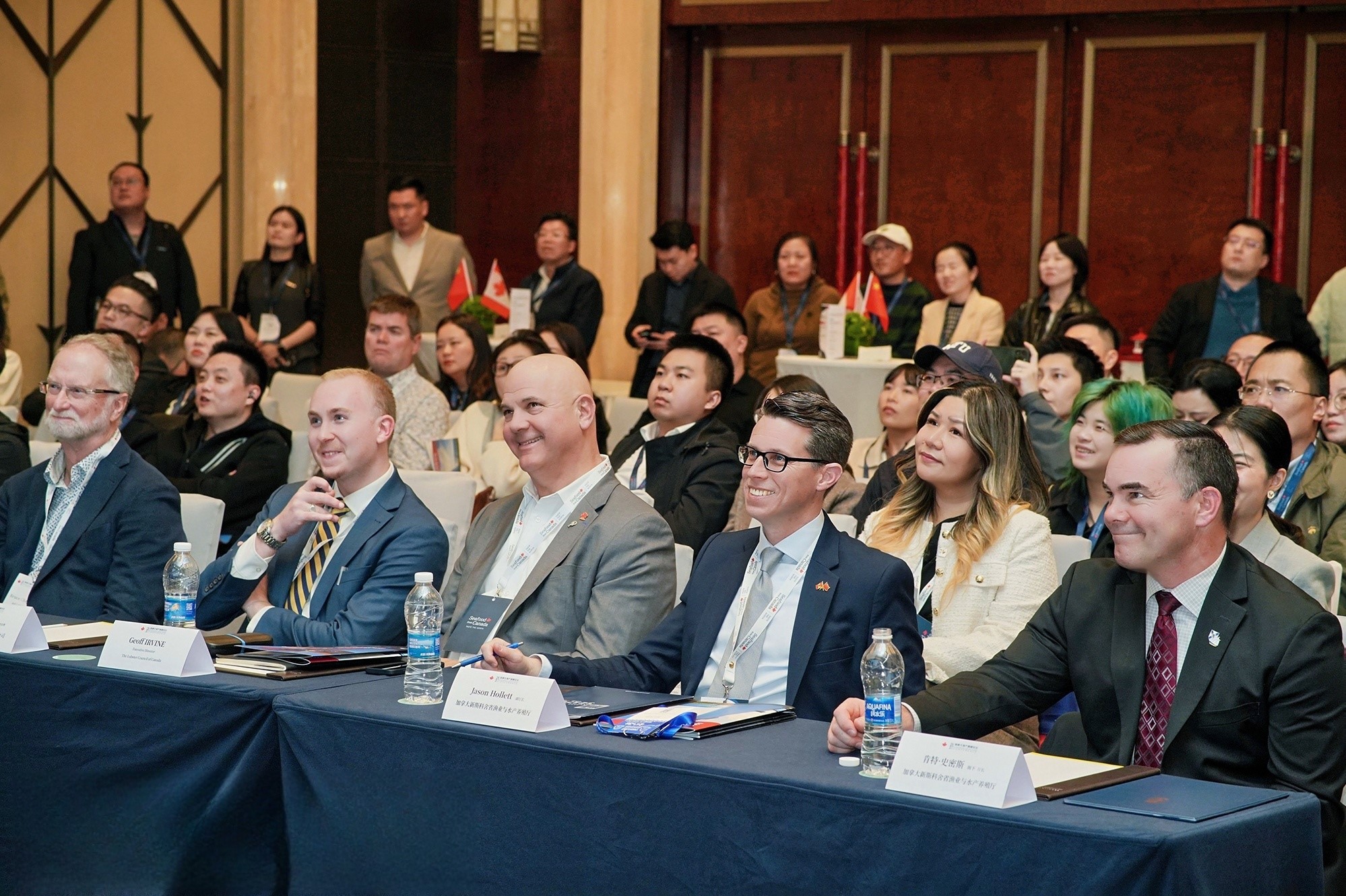
Halifax, Canada, November 21, 2025 --(PR.com)-- Canada Seafood Conference: Leveraging Strategic Timing to Enhance Global Influence
As one of the world’s top three seafood trade exhibitions, the China Fisheries & Seafood Expo (CFSE) brings together suppliers and buyers from over 100 countries and regions and is the most influential seafood event in Asia. The “2025 Canada Seafood Conference” was held one day before the opening of CFSE—a strategic timing that placed Canada at the forefront of global seafood attention and created an early platform for information exchange between Chinese and Canadian stakeholders.
The conference enabled the Canadian delegation to speak first at a moment when the global seafood industry’s attention was focused on China, generating momentum for the “Seafood from Canada” brand. It also gathered key buyers ahead of the exhibition, creating conditions for more efficient collaboration.
The Atlantic Canada Business Network is one of the most influential organizations in Atlantic Canada, it has been committed to fostering China-Canada economic cooperation and sustainable development since its establishment in 2003. ACBN provides one-stop strategic support for Canadian enterprises in seafood, technology, energy, education, and more, helping them conduct market research and execute market entry strategies in China. Organizing the “2025 Canada Seafood Conference” marks another significant initiative by Atlantic Canada Business Network to enhance bilateral cooperation in the seafood sector.
Over 100 Delegates Gather to Explore New Opportunities in the China-Canada Blue Economy
The conference brought together representatives from Canadian government, industries, associations, leading seafood exporters, and major Chinese importers, distributors, and food services. Participants discussed sustainable fisheries development, emerging market opportunities, and future cooperation pathways.
Canadian Leaders Demonstrate Strong Confidence in Cooperation with China
The Embassy of Canada to China and the governments of Canada’s five ocean provinces placed great importance on this event. H.E. Jennifer May, Ambassador of Canada to China, remarked: “Canadian seafood is globally recognized for its quality and sustainability. China is not only an important market for Canada but also a key partner in driving responsible ocean trade. We look forward to deepening mutual trust and cooperation through this conference to achieve win-win outcomes.”
Visiting China for the first time, Hon. Kent Smith, Minister of Fisheries and Aquaculture, Nova Scotia, shared that Nova Scotia exported CAD 614 million worth of seafood to China in 2024, over one-quarter of the province’s total seafood exports. “China is crucial to us. The conference allows us to hear directly from the Chinese market and explore new possibilities for collaboration.”
Mr. Benjamin Roffey, Agricultural counselor, Embassy of Canada to China, emphasized that Canada is not only a “quality supplier” but also a “responsible producer,” supported by comprehensive traceability systems and strict fisheries management.
Market Insights: Challenges, Opportunities, and Sustainable Growth
The conference provided participants with key market intelligence and practical insights. Highlights included:
- Continued growth in Chinese retail and foodservice demand for “traceable, high-quality, and sustainable” seafood;
- Short-term competitive pressure due to tariffs, yet strong long-term potential and diversified demand;
- The need for product diversification, brand building, and value-added innovation to strengthen Canadian competitiveness.
Industry Leadership: From Lobster to Coldwater Shrimp, Canada’s Strength and Confidence
The Lobster Council of Canada
Executive Director Mr. Geoff Irvine presented an in-depth analysis of the Canadian lobster industry. Returning to China after several years, he reaffirmed Canada’s global leadership in lobster production.
Canada is the world’s largest lobster exporter, producing over 100,000 metric tons annually with export values reaching CAD 3 billion, 95% of which is MSC-certified. In 2025, due to China's imposition of an additional 25% tariff, Canadian lobster now faces a 32% tariff barrier. From April to August, Canadian lobster exports to China declined significantly, with live lobster dropping by approximately 51% and frozen lobster down about 76%. Nevertheless, Geoff stressed that China remains the most strategically important partner.
“November to December is the prime procurement period for the Chinese New Year. Despite challenges, we must work together to promote items like frozen lobster and maintain market vitality.”
The Canadian Association of Prawn Producers
President Mr. Bruce Chapman called for pragmatic cooperation to maintain a sustainable supply chain. He shared that the global coldwater shrimp market remains stable at 200,000–225,000 metric tons annually, with 100,000–125,000 metric tons exported as shell-on shrimp. China is a major importer, with its import volume doubling over the past decade to about 70,000 metric tons, mainly from Canada and Greenland, while Norwegian volumes are increasing significantly in 2025.
China is Canada’s largest export market for coldwater shrimp, accounting for 60% of production. Although tariff increases in 2025 have intensified export pressures, Bruce expressed confidence. Canada’s coldwater shrimp quota will rise steadily in 2026, aligning well with growing Chinese demand. “China is our biggest market. We hope to restore stable trade through policy dialogue and industry cooperation, and remain China’s most reliable supplier.”
Whitecap International Seafood Exporters
Category Manager Mr. Liam Gale highlighted two Canadian products increasingly popular in China: capelin and snow crab.
With Norway and Russia suspending Barents Sea commercial fishing in 2025, global supply has tightened sharply. This change has created unprecedented opportunities for Canada. Leveraging stable fishing grounds and high-standard cold-chain logistics, Whitecap is one of the few global suppliers able to provide consistent, high-quality capelin.
Liam added that Canadian snow crab is gaining momentum in China’s premium foodservice and retail sectors thanks to stable quotas, consistent quality, and customized product specifications. “Whitecap offers not just seafood, but confidence and quality from Canada’s cold, pristine waters.”
More Highlights from Guest Speakers
* Ms. Katie Lindsay, Marketing Manager of Underwater Harvesters Association, shared that Canada exported 3,870 tons of geoduck globally in 2024–2025, with China and Hong Kong accounting for 96%. The 2025 price adjustment offers strong purchasing opportunities.
* Ms. Ivy Wang, General Manager of ACBN, noted that Canadian Redfish exports have entered a new era, with China being the largest importer of whole redfish at 58%. She invited Chinese F&B partners to explore redfish’s culinary potential.
* Ms. Connie Huang, Senior Business Development Manager at True North Seafood (Cooke Group), presented the company’s vertically integrated supply chain and premium Atlantic salmon as a trusted, long-term brand for partners.
* Ms. Dr. Yan An, MSC China Representative, highlighted that over 60% of Canada’s wild fisheries are MSC-certified, positioning Canada as a global leader in sustainable fisheries.
Seafood from Canada Business Reception: A Feast for Tastes and Partnerships
After the keynote sessions, guests gathered at the “Seafood from Canada Business Reception.” Lobster, redfish, coldwater shrimp, capelin, sea cucumber, and other Canadian seafood products served as both culinary delights and catalysts for direct, effective dialogue between Chinese and Canadian partners.
Looking Ahead
The conference reinforced China’s position as a critical growth market for Canadian seafood exporters. With rising consumer demand, improving import conditions, and expanding opportunities across multiple species, China offers significant long-term potential for Canada’s seafood industry. Planning is already underway for next year’s event, with even broader opportunities for collaboration.
As one of the world’s top three seafood trade exhibitions, the China Fisheries & Seafood Expo (CFSE) brings together suppliers and buyers from over 100 countries and regions and is the most influential seafood event in Asia. The “2025 Canada Seafood Conference” was held one day before the opening of CFSE—a strategic timing that placed Canada at the forefront of global seafood attention and created an early platform for information exchange between Chinese and Canadian stakeholders.
The conference enabled the Canadian delegation to speak first at a moment when the global seafood industry’s attention was focused on China, generating momentum for the “Seafood from Canada” brand. It also gathered key buyers ahead of the exhibition, creating conditions for more efficient collaboration.
The Atlantic Canada Business Network is one of the most influential organizations in Atlantic Canada, it has been committed to fostering China-Canada economic cooperation and sustainable development since its establishment in 2003. ACBN provides one-stop strategic support for Canadian enterprises in seafood, technology, energy, education, and more, helping them conduct market research and execute market entry strategies in China. Organizing the “2025 Canada Seafood Conference” marks another significant initiative by Atlantic Canada Business Network to enhance bilateral cooperation in the seafood sector.
Over 100 Delegates Gather to Explore New Opportunities in the China-Canada Blue Economy
The conference brought together representatives from Canadian government, industries, associations, leading seafood exporters, and major Chinese importers, distributors, and food services. Participants discussed sustainable fisheries development, emerging market opportunities, and future cooperation pathways.
Canadian Leaders Demonstrate Strong Confidence in Cooperation with China
The Embassy of Canada to China and the governments of Canada’s five ocean provinces placed great importance on this event. H.E. Jennifer May, Ambassador of Canada to China, remarked: “Canadian seafood is globally recognized for its quality and sustainability. China is not only an important market for Canada but also a key partner in driving responsible ocean trade. We look forward to deepening mutual trust and cooperation through this conference to achieve win-win outcomes.”
Visiting China for the first time, Hon. Kent Smith, Minister of Fisheries and Aquaculture, Nova Scotia, shared that Nova Scotia exported CAD 614 million worth of seafood to China in 2024, over one-quarter of the province’s total seafood exports. “China is crucial to us. The conference allows us to hear directly from the Chinese market and explore new possibilities for collaboration.”
Mr. Benjamin Roffey, Agricultural counselor, Embassy of Canada to China, emphasized that Canada is not only a “quality supplier” but also a “responsible producer,” supported by comprehensive traceability systems and strict fisheries management.
Market Insights: Challenges, Opportunities, and Sustainable Growth
The conference provided participants with key market intelligence and practical insights. Highlights included:
- Continued growth in Chinese retail and foodservice demand for “traceable, high-quality, and sustainable” seafood;
- Short-term competitive pressure due to tariffs, yet strong long-term potential and diversified demand;
- The need for product diversification, brand building, and value-added innovation to strengthen Canadian competitiveness.
Industry Leadership: From Lobster to Coldwater Shrimp, Canada’s Strength and Confidence
The Lobster Council of Canada
Executive Director Mr. Geoff Irvine presented an in-depth analysis of the Canadian lobster industry. Returning to China after several years, he reaffirmed Canada’s global leadership in lobster production.
Canada is the world’s largest lobster exporter, producing over 100,000 metric tons annually with export values reaching CAD 3 billion, 95% of which is MSC-certified. In 2025, due to China's imposition of an additional 25% tariff, Canadian lobster now faces a 32% tariff barrier. From April to August, Canadian lobster exports to China declined significantly, with live lobster dropping by approximately 51% and frozen lobster down about 76%. Nevertheless, Geoff stressed that China remains the most strategically important partner.
“November to December is the prime procurement period for the Chinese New Year. Despite challenges, we must work together to promote items like frozen lobster and maintain market vitality.”
The Canadian Association of Prawn Producers
President Mr. Bruce Chapman called for pragmatic cooperation to maintain a sustainable supply chain. He shared that the global coldwater shrimp market remains stable at 200,000–225,000 metric tons annually, with 100,000–125,000 metric tons exported as shell-on shrimp. China is a major importer, with its import volume doubling over the past decade to about 70,000 metric tons, mainly from Canada and Greenland, while Norwegian volumes are increasing significantly in 2025.
China is Canada’s largest export market for coldwater shrimp, accounting for 60% of production. Although tariff increases in 2025 have intensified export pressures, Bruce expressed confidence. Canada’s coldwater shrimp quota will rise steadily in 2026, aligning well with growing Chinese demand. “China is our biggest market. We hope to restore stable trade through policy dialogue and industry cooperation, and remain China’s most reliable supplier.”
Whitecap International Seafood Exporters
Category Manager Mr. Liam Gale highlighted two Canadian products increasingly popular in China: capelin and snow crab.
With Norway and Russia suspending Barents Sea commercial fishing in 2025, global supply has tightened sharply. This change has created unprecedented opportunities for Canada. Leveraging stable fishing grounds and high-standard cold-chain logistics, Whitecap is one of the few global suppliers able to provide consistent, high-quality capelin.
Liam added that Canadian snow crab is gaining momentum in China’s premium foodservice and retail sectors thanks to stable quotas, consistent quality, and customized product specifications. “Whitecap offers not just seafood, but confidence and quality from Canada’s cold, pristine waters.”
More Highlights from Guest Speakers
* Ms. Katie Lindsay, Marketing Manager of Underwater Harvesters Association, shared that Canada exported 3,870 tons of geoduck globally in 2024–2025, with China and Hong Kong accounting for 96%. The 2025 price adjustment offers strong purchasing opportunities.
* Ms. Ivy Wang, General Manager of ACBN, noted that Canadian Redfish exports have entered a new era, with China being the largest importer of whole redfish at 58%. She invited Chinese F&B partners to explore redfish’s culinary potential.
* Ms. Connie Huang, Senior Business Development Manager at True North Seafood (Cooke Group), presented the company’s vertically integrated supply chain and premium Atlantic salmon as a trusted, long-term brand for partners.
* Ms. Dr. Yan An, MSC China Representative, highlighted that over 60% of Canada’s wild fisheries are MSC-certified, positioning Canada as a global leader in sustainable fisheries.
Seafood from Canada Business Reception: A Feast for Tastes and Partnerships
After the keynote sessions, guests gathered at the “Seafood from Canada Business Reception.” Lobster, redfish, coldwater shrimp, capelin, sea cucumber, and other Canadian seafood products served as both culinary delights and catalysts for direct, effective dialogue between Chinese and Canadian partners.
Looking Ahead
The conference reinforced China’s position as a critical growth market for Canadian seafood exporters. With rising consumer demand, improving import conditions, and expanding opportunities across multiple species, China offers significant long-term potential for Canada’s seafood industry. Planning is already underway for next year’s event, with even broader opportunities for collaboration.
Contact
ACBN
Fiona Sun
86 13815104806
atlantic-canada.ca/
Fiona Sun
86 13815104806
atlantic-canada.ca/
 Contact
Categories