
Petition Over Bald Eaglet "Scout" Calls for Modernized Federal Eagle Protection Regulations
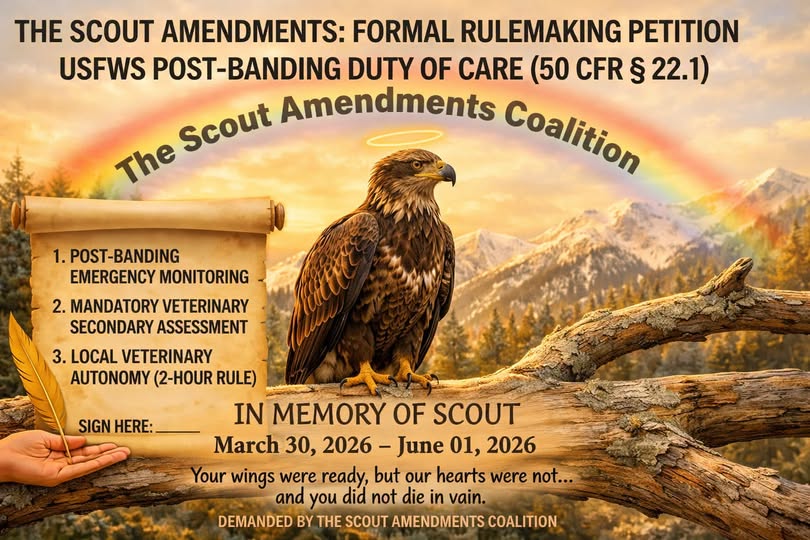
Harvey, LA, July 03, 2026 --(PR.com)-- In just six days, more than 4,075 supporters across the United States have signed a petition calling for federal regulatory review following the decline and death of a bald eaglet known as "Scout" at the Falconshire Raptors of West Michigan nest. The Scout Amendments Coalition states that the petition signatures have been submitted to the U.S. Fish and Wildlife Service (USFWS) as part of a request for administrative review. The incident, viewed by thousands on a public educational livestream, has generated public discussion about the responsibilities and limitations surrounding permitted handling of eagle nestlings.
According to the Coalition, Scout appeared visibly compromised before a handling and banding event. Viewers reported observing signs of injury, repeated sibling aggression, limited access to food, and reduced responsiveness. The Coalition states that these observations are part of the reason supporters are asking USFWS to review whether current procedures provide sufficient clarity for emergency care when a nestling appears injured or compromised.
This is the regulatory concern the Scout Amendments seek to address.
The Scout Amendments propose that any eaglet handled for any reason who is found to be compromised should trigger a medical evaluation or intervention protocol. This would include injury, open wounds, sibling aggression trauma, starvation, dehydration, illness, or any condition that may reduce physiological stability. The Coalition argues that once human handling has occurred, federal procedures should provide clearer guidance regarding duty of care.
The Coalition states that its proposal is also based on concerns about the stress response that may occur during handling. While healthy chicks may be better able to withstand handling stress, the Coalition believes compromised chicks may require additional review, care, or monitoring after a handling event. The Coalition states that Scout's decline after handling is one of the reasons it is requesting further review of current procedures.
The Scout Amendments also address a second concern: post-handling monitoring. The Coalition is requesting clearer post-handling monitoring standards, including parental return verification, feeding checks, and behavioral assessments, to help ensure that handled eaglets do not decline unnoticed after being returned to a nest.
These proposed updates are intended to create a lawful, accountable framework that protects both the birds and the professionals who respond to emergencies.
"Many members of the public watched Scout's decline and are asking whether federal protocols should be reviewed," said Coalition Founder Gayle Gordon. "People across the country are asking how this can be allowed to happen in 2026. The regulations have not kept pace with modern monitoring, modern science, or modern public engagement."
The Coalition emphasizes that its proposals do not weaken eagle protections. Instead, the Coalition says the Scout Amendments are intended to strengthen protections by addressing emergency response concerns, clarifying responsibilities after permitted handling events, and establishing a more accountable framework for rapid review when a chick's survival may be compromised.
Support for the Scout Amendments continues to grow as citizens contact wildlife agencies, state field offices, and federal leadership to request administrative review and a public comment period. The Coalition is preparing additional outreach phases, including media coordination, scientific briefings, and a national awareness campaign.
The Scout Amendments Coalition invites news organizations, wildlife reporters, environmental desks, and investigative teams to cover this developing public advocacy effort and the regulatory questions it raises.
For interviews, statements, or additional information, please contact:
The Scout Amendments Coalition
Harvey, Louisiana
504-516-0051
Email: scoutamendments@gmail.com
According to the Coalition, Scout appeared visibly compromised before a handling and banding event. Viewers reported observing signs of injury, repeated sibling aggression, limited access to food, and reduced responsiveness. The Coalition states that these observations are part of the reason supporters are asking USFWS to review whether current procedures provide sufficient clarity for emergency care when a nestling appears injured or compromised.
This is the regulatory concern the Scout Amendments seek to address.
The Scout Amendments propose that any eaglet handled for any reason who is found to be compromised should trigger a medical evaluation or intervention protocol. This would include injury, open wounds, sibling aggression trauma, starvation, dehydration, illness, or any condition that may reduce physiological stability. The Coalition argues that once human handling has occurred, federal procedures should provide clearer guidance regarding duty of care.
The Coalition states that its proposal is also based on concerns about the stress response that may occur during handling. While healthy chicks may be better able to withstand handling stress, the Coalition believes compromised chicks may require additional review, care, or monitoring after a handling event. The Coalition states that Scout's decline after handling is one of the reasons it is requesting further review of current procedures.
The Scout Amendments also address a second concern: post-handling monitoring. The Coalition is requesting clearer post-handling monitoring standards, including parental return verification, feeding checks, and behavioral assessments, to help ensure that handled eaglets do not decline unnoticed after being returned to a nest.
These proposed updates are intended to create a lawful, accountable framework that protects both the birds and the professionals who respond to emergencies.
"Many members of the public watched Scout's decline and are asking whether federal protocols should be reviewed," said Coalition Founder Gayle Gordon. "People across the country are asking how this can be allowed to happen in 2026. The regulations have not kept pace with modern monitoring, modern science, or modern public engagement."
The Coalition emphasizes that its proposals do not weaken eagle protections. Instead, the Coalition says the Scout Amendments are intended to strengthen protections by addressing emergency response concerns, clarifying responsibilities after permitted handling events, and establishing a more accountable framework for rapid review when a chick's survival may be compromised.
Support for the Scout Amendments continues to grow as citizens contact wildlife agencies, state field offices, and federal leadership to request administrative review and a public comment period. The Coalition is preparing additional outreach phases, including media coordination, scientific briefings, and a national awareness campaign.
The Scout Amendments Coalition invites news organizations, wildlife reporters, environmental desks, and investigative teams to cover this developing public advocacy effort and the regulatory questions it raises.
For interviews, statements, or additional information, please contact:
The Scout Amendments Coalition
Harvey, Louisiana
504-516-0051
Email: scoutamendments@gmail.com
Contact
The Scout Amendments Coalition
Gayle Gordon
504-516-0051
www.facebook.com/share/g/1ELHGuEezg/
Gayle Gordon
504-516-0051
www.facebook.com/share/g/1ELHGuEezg/
 Contact
Categories