
High-Entropy Metal Platform Achieves Both Superconductivity and Hydrogen Storage
Kyung Hee University Prof. Jong-Soo Rhyee’s team publishes findings in an international journal; Opens pathway to next-generation materials and components for cryogenic–hydrogen integrated systems.
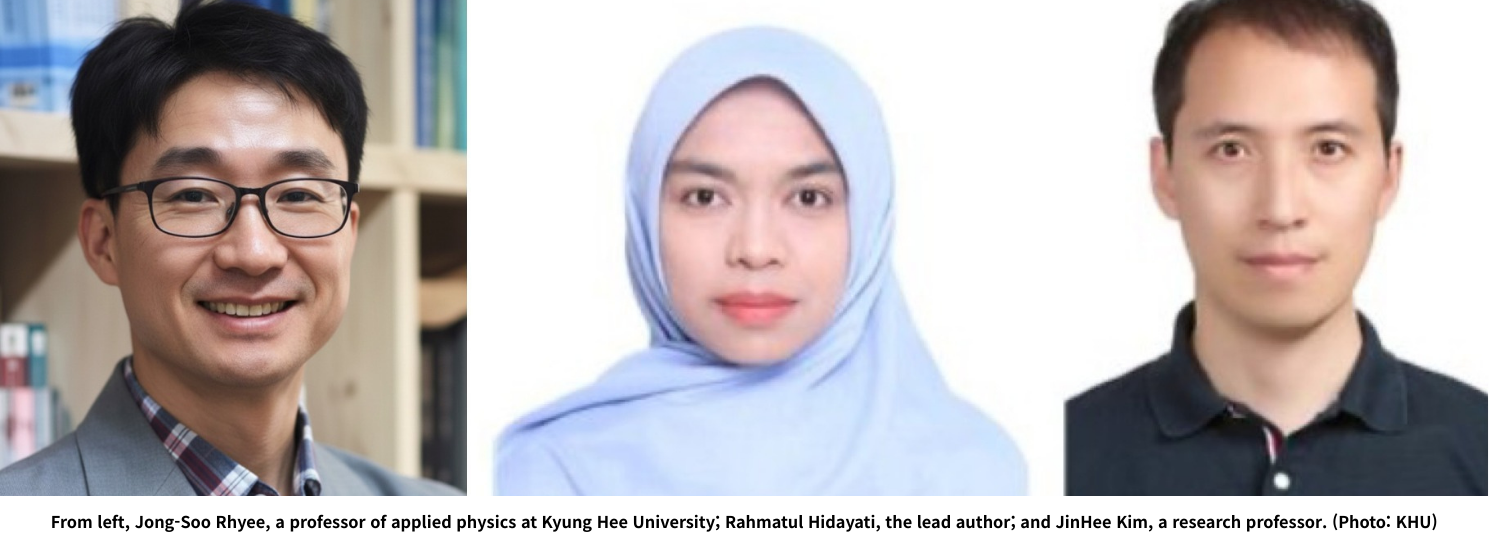
Los Angeles, CA, February 10, 2026 --(PR.com)-- A high-entropy alloy has been developed that simultaneously delivers superconducting performance and hydrogen storage capability. By combining a superconducting state—where electricity can flow with virtually no loss—with the ability to store hydrogen in a single metallic material, the work is drawing attention for its potential to broaden applications where the hydrogen economy and cryogenic (ultra-low-temperature) technologies intersect.
Kyung Hee University (KHU) in South Korea announced that a research team led by Professor Jong-Soo Rhyee of the Department of Applied Physics has developed a “high-strength metallic superconductor” platform that integrates superconducting properties with hydrogen storage. The results were published in the materials science journal Advanced Functional Materials.
Superconductors are materials whose electrical resistance drops close to zero under certain conditions, allowing an electrical current to persist with minimal energy loss. This property underpins key technologies such as MRI (magnetic resonance imaging), fusion devices, high-field magnets, and next-generation power and transportation systems. However, many metal-based superconductors require cryogenic operating environments, and their durability can be challenged when exposed to reactive conditions—especially hydrogen—making it difficult to expand real-world use cases.
To address these limitations, the KHU team applied the concept of a high-entropy alloy (HEA)—an alloy designed by mixing multiple metallic elements in a relatively uniform structure. HEAs are widely recognized for combining a simple crystal structure with high mechanical strength and stability. In this study, the researchers designed a Ta–Nb–Hf–Zr–Ti-based HEA to enhance both “robustness” and “functionality” in a single platform.
A key feature of the work is that the team did not stop at laboratory-scale demonstration. The alloy was produced through a bulk powder-metallurgy route—blending powders, then consolidating them with heat and pressure—and the study mapped how changes in manufacturing conditions alter the material’s internal structure and performance. This process-focused dataset is often essential for evaluating whether a material can move beyond small samples toward practical component manufacturing.
According to the published results, an optimized sample showed a superconducting transition temperature (Tc) of approximately 7.8 K (about −265°C). The team also reported meaningful values for parameters tied to practical operation, including the ability to maintain superconductivity under strong magnetic fields and the critical current density, which indicates how much current the material can carry in real devices. In applied superconducting engineering, critical current density is widely viewed as a “work capability” indicator for high-field magnets and cryogenic systems.
The hydrogen storage performance is also notable. The team confirmed hydrogen uptake of about 3.8 wt% under room-temperature (20°C) and high-pressure (100 bar) conditions. The researchers describe this as a world-leading level among metal-based hydrogen storage materials, excluding conventional hydride categories. Because many metals suffer structural weakening or embrittlement when absorbing hydrogen, the ability to combine hydrogen uptake with comparatively strong and stable mechanical characteristics is highlighted as a key technical point.
From an industrial perspective, the team emphasizes that this advance should not be interpreted as an immediate replacement for commercial superconducting wires. Rather, the nearer-term opportunity lies in component- and module-level expansion in environments where cryogenic systems and hydrogen infrastructure meet. For example, the reliability and cost of superconducting systems are strongly influenced not only by conductors, but also by surrounding components such as housings, support structures, and shielding parts—where strength and environmental stability matter. In hydrogen handling, storage, and thermal-management systems, there is also demand for auxiliary components that help buffer pressure fluctuations, enhance safety, and manage heat.
The researchers further indicated that by tuning manufacturing conditions—such as densification and microstructural features—it may be possible to strengthen superconducting performance and hydrogen storage performance in different ways. This opens a development direction toward designs such as “a robust bulk base plus hydrogen-friendly surface or layered structures,” enabling engineering optimization for specific applications.
Market research firm BCC Research has projected continued growth in the global superconductivity market, with estimates pointing to a $16.4 billion market by 2030. Against that backdrop, the KHU team’s results are gaining attention as global R&D competition accelerates in superconducting materials and related energy technologies.
Professor Rhyee said the work “demonstrates the potential for a new superconducting material suited to the hydrogen economy era,” adding that it could expand into diverse applications where hydrogen-based energy systems and superconducting technologies converge.
Contact: Korea TV Radio | Steven Choi
steven@koreatvradio.com
Kyung Hee University (KHU) in South Korea announced that a research team led by Professor Jong-Soo Rhyee of the Department of Applied Physics has developed a “high-strength metallic superconductor” platform that integrates superconducting properties with hydrogen storage. The results were published in the materials science journal Advanced Functional Materials.
Superconductors are materials whose electrical resistance drops close to zero under certain conditions, allowing an electrical current to persist with minimal energy loss. This property underpins key technologies such as MRI (magnetic resonance imaging), fusion devices, high-field magnets, and next-generation power and transportation systems. However, many metal-based superconductors require cryogenic operating environments, and their durability can be challenged when exposed to reactive conditions—especially hydrogen—making it difficult to expand real-world use cases.
To address these limitations, the KHU team applied the concept of a high-entropy alloy (HEA)—an alloy designed by mixing multiple metallic elements in a relatively uniform structure. HEAs are widely recognized for combining a simple crystal structure with high mechanical strength and stability. In this study, the researchers designed a Ta–Nb–Hf–Zr–Ti-based HEA to enhance both “robustness” and “functionality” in a single platform.
A key feature of the work is that the team did not stop at laboratory-scale demonstration. The alloy was produced through a bulk powder-metallurgy route—blending powders, then consolidating them with heat and pressure—and the study mapped how changes in manufacturing conditions alter the material’s internal structure and performance. This process-focused dataset is often essential for evaluating whether a material can move beyond small samples toward practical component manufacturing.
According to the published results, an optimized sample showed a superconducting transition temperature (Tc) of approximately 7.8 K (about −265°C). The team also reported meaningful values for parameters tied to practical operation, including the ability to maintain superconductivity under strong magnetic fields and the critical current density, which indicates how much current the material can carry in real devices. In applied superconducting engineering, critical current density is widely viewed as a “work capability” indicator for high-field magnets and cryogenic systems.
The hydrogen storage performance is also notable. The team confirmed hydrogen uptake of about 3.8 wt% under room-temperature (20°C) and high-pressure (100 bar) conditions. The researchers describe this as a world-leading level among metal-based hydrogen storage materials, excluding conventional hydride categories. Because many metals suffer structural weakening or embrittlement when absorbing hydrogen, the ability to combine hydrogen uptake with comparatively strong and stable mechanical characteristics is highlighted as a key technical point.
From an industrial perspective, the team emphasizes that this advance should not be interpreted as an immediate replacement for commercial superconducting wires. Rather, the nearer-term opportunity lies in component- and module-level expansion in environments where cryogenic systems and hydrogen infrastructure meet. For example, the reliability and cost of superconducting systems are strongly influenced not only by conductors, but also by surrounding components such as housings, support structures, and shielding parts—where strength and environmental stability matter. In hydrogen handling, storage, and thermal-management systems, there is also demand for auxiliary components that help buffer pressure fluctuations, enhance safety, and manage heat.
The researchers further indicated that by tuning manufacturing conditions—such as densification and microstructural features—it may be possible to strengthen superconducting performance and hydrogen storage performance in different ways. This opens a development direction toward designs such as “a robust bulk base plus hydrogen-friendly surface or layered structures,” enabling engineering optimization for specific applications.
Market research firm BCC Research has projected continued growth in the global superconductivity market, with estimates pointing to a $16.4 billion market by 2030. Against that backdrop, the KHU team’s results are gaining attention as global R&D competition accelerates in superconducting materials and related energy technologies.
Professor Rhyee said the work “demonstrates the potential for a new superconducting material suited to the hydrogen economy era,” adding that it could expand into diverse applications where hydrogen-based energy systems and superconducting technologies converge.
Contact: Korea TV Radio | Steven Choi
steven@koreatvradio.com
Contact
Korea TV Radio
Steven Choi
323-825-9009
Steven Choi
323-825-9009
 Contact
Categories