
Pioneering Geriatrician David O. Staats, M.D., Offers a New Way to Understand How Humans Age
How do humans age, and why does age itself increase our risk for disease? In “Explaining Human Aging,” trailblazing geriatrician David O. Staats, M.D., presents a thought-provoking framework for understanding aging at the level of the whole person. Connecting growth and development with later-life biological changes, Staats explores the mechanisms that shape our lifespan, tissues, appearance, and ability to repair the body over time.
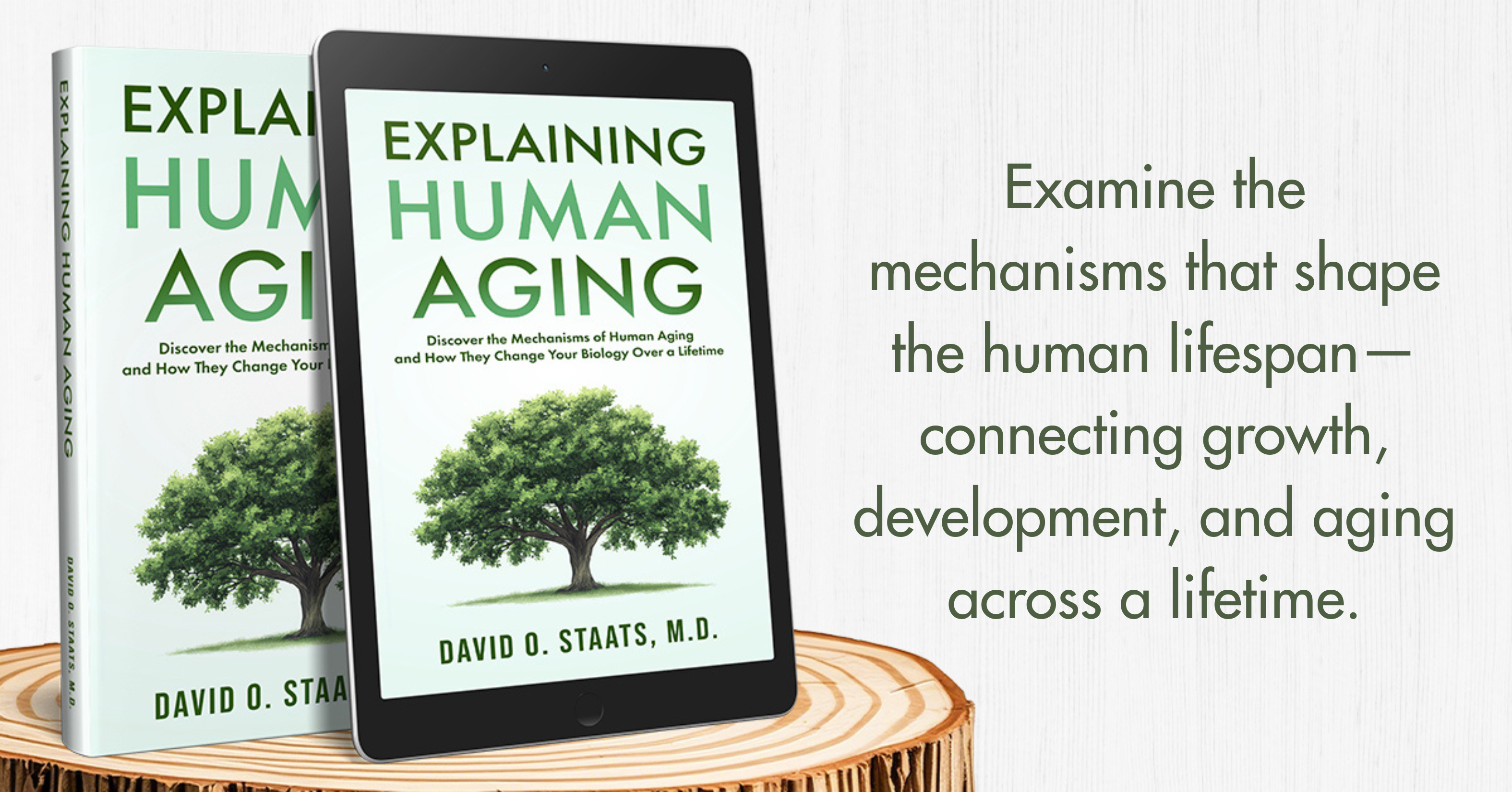
Madison, WI, September 15, 2026 --(PR.com)-- How do humans age? Why do we live as long as we do? And why is simply being old the greatest risk factor for many of the diseases associated with later life?
In “Explaining Human Aging: Discover the Mechanisms of Human Aging and How They Change Your Biology Over a Lifetime,” pioneering geriatrician David O. Staats, M.D., approaches these enduring questions from a provocative perspective: To fully understand aging, we must look beyond individual cells and examine what happens at the level of the whole person.
Drawing on decades of experience practicing and teaching geriatric medicine, as well as research and insights from biogerontology, Staats presents a new framework for understanding the human life cycle. Rather than treating childhood development and aging as largely separate areas of study, he explores them as interconnected phases of a single biological process—one that begins with growth and development and gradually shifts toward aging.
At the heart of “Explaining Human Aging” is a model of the human lifespan characterized by a dynamic first phase of growth and development followed by a long period in which imperfect tissue maintenance, changes in connective tissue, and the body’s gradually declining capacity for repair shape how people age.
This whole-person perspective offers readers a different way to consider not only why humans have a characteristic lifespan but also why the body changes so visibly and functionally over time.
Staats examines the mechanisms associated with tissue atrophy, inflammation, connective tissue changes, and the familiar changes in human appearance that accompany aging. By bringing together medicine, biology, anatomy, and observations drawn from clinical practice, he makes complex scientific ideas accessible to readers interested in understanding what happens to the human body over the course of a lifetime.
His exploration also addresses one of the most consequential questions in aging research: Why is advancing age itself such a powerful risk factor for disease? By examining aging as a process occurring throughout the person rather than solely as a collection of changes within individual cells, “Explaining Human Aging” challenges conventional ways of thinking about the biology of growing old.
Staats’s interest in geriatrics began just as the medical specialty was gaining momentum. Years spent caring for older adults and educating future medical professionals prompted him to ask increasingly fundamental questions about the aging process. His ability to examine familiar biological phenomena from a different perspective ultimately led him to the mechanisms and ideas presented in this book.
Thought-provoking yet approachable, “Explaining Human Aging” is written for curious general readers, healthcare professionals, students, and anyone interested in understanding why the human body develops, changes, and ages as it does.
“Explaining Human Aging: Discover the Mechanisms of Human Aging and How They Change Your Biology Over a Lifetime” is published by Explaining Human Aging and distributed by Bublish, Inc. The eBook (ISBN 9798899891663) is available for $1.99, and the paperback (ISBN 9798899891670) is available for $9.99.
For more information, please contact info@bublish.com. To learn more about Bublish, Inc. and its publishing and marketing services, visit bublish.com.
In “Explaining Human Aging: Discover the Mechanisms of Human Aging and How They Change Your Biology Over a Lifetime,” pioneering geriatrician David O. Staats, M.D., approaches these enduring questions from a provocative perspective: To fully understand aging, we must look beyond individual cells and examine what happens at the level of the whole person.
Drawing on decades of experience practicing and teaching geriatric medicine, as well as research and insights from biogerontology, Staats presents a new framework for understanding the human life cycle. Rather than treating childhood development and aging as largely separate areas of study, he explores them as interconnected phases of a single biological process—one that begins with growth and development and gradually shifts toward aging.
At the heart of “Explaining Human Aging” is a model of the human lifespan characterized by a dynamic first phase of growth and development followed by a long period in which imperfect tissue maintenance, changes in connective tissue, and the body’s gradually declining capacity for repair shape how people age.
This whole-person perspective offers readers a different way to consider not only why humans have a characteristic lifespan but also why the body changes so visibly and functionally over time.
Staats examines the mechanisms associated with tissue atrophy, inflammation, connective tissue changes, and the familiar changes in human appearance that accompany aging. By bringing together medicine, biology, anatomy, and observations drawn from clinical practice, he makes complex scientific ideas accessible to readers interested in understanding what happens to the human body over the course of a lifetime.
His exploration also addresses one of the most consequential questions in aging research: Why is advancing age itself such a powerful risk factor for disease? By examining aging as a process occurring throughout the person rather than solely as a collection of changes within individual cells, “Explaining Human Aging” challenges conventional ways of thinking about the biology of growing old.
Staats’s interest in geriatrics began just as the medical specialty was gaining momentum. Years spent caring for older adults and educating future medical professionals prompted him to ask increasingly fundamental questions about the aging process. His ability to examine familiar biological phenomena from a different perspective ultimately led him to the mechanisms and ideas presented in this book.
Thought-provoking yet approachable, “Explaining Human Aging” is written for curious general readers, healthcare professionals, students, and anyone interested in understanding why the human body develops, changes, and ages as it does.
“Explaining Human Aging: Discover the Mechanisms of Human Aging and How They Change Your Biology Over a Lifetime” is published by Explaining Human Aging and distributed by Bublish, Inc. The eBook (ISBN 9798899891663) is available for $1.99, and the paperback (ISBN 9798899891670) is available for $9.99.
For more information, please contact info@bublish.com. To learn more about Bublish, Inc. and its publishing and marketing services, visit bublish.com.
Contact
Bublish
Kathy Meis
843-513-7337
https://bublish.com
info@bublish.com
Kathy Meis
843-513-7337
https://bublish.com
info@bublish.com
 Contact
Categories