
The Dorper Sheep Society Advances the Way Ranchers Think About Resources
The American Dorper Sheep Breeders' Society illustrates an innovative way to increase the ROI for everyday ranchers. Adding Dorper Sheep to a cattle operation now shows that you can double the return on your land resources. These two coexist without harm to either species while adding value to your land and pocketbook. Adding sheep to a cattle operation can diversify assets with a quick return on investment.
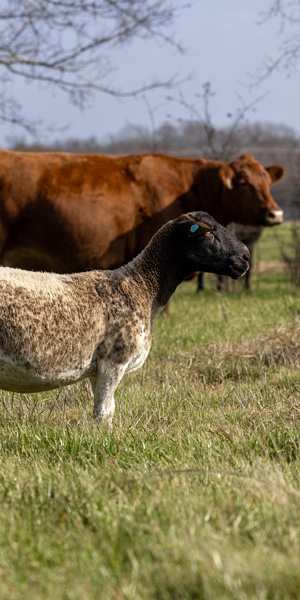
Hallsville, MO, December 24, 2025 --(PR.com)-- The American Dorper Sheep Breeders' Society has illustrated a way for everyday ranchers to increase their return on investment. Rotational grazing is a necessary management tool to conserve pastures and improve livestock nutrition. Properly rotating livestock improves soil condition, increases pasture utilization, and manages overall animal health.
Adding Dorper sheep to a cattle operation can diversify assets with a quick return on investment. Even better, adding Dorpers, which have superior growth performance and carcasses, help achieve these goals much more efficiently.
Lauri Celella of Poetry Dorpers and Amanda Houser, Assistant Manager for the Farm Administration at Tennessee Tech, use Dorper sheep for biological weed control, increase soil organic matter and increase profits.
Tennessee Tech has been managing Dorper sheep alongside their cattle operation for over 10 years. “The challenge list is pretty short,” Houser said. “The pros outweigh the challenges for sure. We increase our overall profit by grazing more livestock on the same acreage.”
The biggest challenge is the safety of the smaller animals. Houser uses a creep-feed method to sort out the sheep, while Celella runs a poly hot wire just above the sheep’s back, allowing them to naturally separate during feeding time. These techniques allow producers to safely supplement both species.
Separating sheep during lambing season is necessary to the safety of the newborn lambs. These challenges and the need to manage minerals are the only hesitations to adding sheep to the herd, said Houser.
“We do sacrifice a little copper, but otherwise, we feed the same minerals and feed them supplemental hay in a ring without any issues,” she said.
Houser and Celella emphasized the positives of multi-species rotational grazing.
Five sheep are equivalent to one cow, but Celella said the overall impact is positive because the sheep eat the forbs and weeds that cows won’t touch, which improves pasture quality and biodiversity.
“With sheep eating most of the weeds, it has allowed us to cut back on chemical use,” said Houser. “We’ve reduced our chemical weed control by 50 percent, but we’ve also increased the pasture density.”
Because of their complementary grazing behaviors, adding one sheep per cow doesn’t change the stocking rate. And, while grazing, the sheep deposit manure across the fields, increasing the organic matter of the pastures.
Celella saw this improvement. “Soil health improved, which allowed native grasses that had not grown for over 60 years on this property to begin germinating,” she said. “Little bluestem, native clovers, peas and vetch began growing without us ever planting a seed.”
When they bought the property, Celella said they could stock ten cows on the property and had to supplement hay in the winter. Fast forward and she said the land carries more than 50 Dorper ewes and 15 Devon cows.
With fencing, handling facilities, water tank and feeder adaptations, the initial investment in raising sheep is mitigated and the financial return optimized. Marketwise, the current demand for American lamb meat is greater than domestic supply. The market for Dorper meat continues to increase in the United States.
Capra Foods, a collective of over 80 ranches in Central Texas provides certified all-natural Dorper lamb and notes, “Dorper is to lamb what Wagyu is to beef.”
Hair sheep, such as Dorpers, are natural shedders, so there isn’t a need to shear, negating the added cost incurred if adding any of the wool breeds. Without wool production, hair sheep do not produce as much lanolin, giving the red meat a milder taste, much like that of beef.
Dorpers have a quick growth rate and excellent feed conversion, which produces high-quality carcasses at a young age. Doing the math: 150 days for gestation (from breeding to lambing), lambs wean at 45-60 days and are ready for market as early as 3-4 months old. Dorpers are unique in they can have three lamb crops over a 2-year span and are not limited by seasonal breeding schedules.
Dorpers are more tolerant of parasites than some of the most common wool breeds. Celella and Houser said that allowing sheep to graze the top half of the plants, rotating every few days, and using cattle to reduce sheep parasites on pastures can considerably reduce parasite infections.
Multi-species rotational livestock grazing improves soil health, increases pasture yield, and manages animal health, all while increasing net cash farm income. Adding Dorpers to cattle operations is beneficial for producers, consumers, and the environment.
Want to find out if adding Dorpers to your operation is worth the investment? Visit www.dorpersheep.org where you can register for the webinar, get in touch with Dorper breeders, and get information about upcoming sales and purchasing opportunities.
Adding Dorper sheep to a cattle operation can diversify assets with a quick return on investment. Even better, adding Dorpers, which have superior growth performance and carcasses, help achieve these goals much more efficiently.
Lauri Celella of Poetry Dorpers and Amanda Houser, Assistant Manager for the Farm Administration at Tennessee Tech, use Dorper sheep for biological weed control, increase soil organic matter and increase profits.
Tennessee Tech has been managing Dorper sheep alongside their cattle operation for over 10 years. “The challenge list is pretty short,” Houser said. “The pros outweigh the challenges for sure. We increase our overall profit by grazing more livestock on the same acreage.”
The biggest challenge is the safety of the smaller animals. Houser uses a creep-feed method to sort out the sheep, while Celella runs a poly hot wire just above the sheep’s back, allowing them to naturally separate during feeding time. These techniques allow producers to safely supplement both species.
Separating sheep during lambing season is necessary to the safety of the newborn lambs. These challenges and the need to manage minerals are the only hesitations to adding sheep to the herd, said Houser.
“We do sacrifice a little copper, but otherwise, we feed the same minerals and feed them supplemental hay in a ring without any issues,” she said.
Houser and Celella emphasized the positives of multi-species rotational grazing.
Five sheep are equivalent to one cow, but Celella said the overall impact is positive because the sheep eat the forbs and weeds that cows won’t touch, which improves pasture quality and biodiversity.
“With sheep eating most of the weeds, it has allowed us to cut back on chemical use,” said Houser. “We’ve reduced our chemical weed control by 50 percent, but we’ve also increased the pasture density.”
Because of their complementary grazing behaviors, adding one sheep per cow doesn’t change the stocking rate. And, while grazing, the sheep deposit manure across the fields, increasing the organic matter of the pastures.
Celella saw this improvement. “Soil health improved, which allowed native grasses that had not grown for over 60 years on this property to begin germinating,” she said. “Little bluestem, native clovers, peas and vetch began growing without us ever planting a seed.”
When they bought the property, Celella said they could stock ten cows on the property and had to supplement hay in the winter. Fast forward and she said the land carries more than 50 Dorper ewes and 15 Devon cows.
With fencing, handling facilities, water tank and feeder adaptations, the initial investment in raising sheep is mitigated and the financial return optimized. Marketwise, the current demand for American lamb meat is greater than domestic supply. The market for Dorper meat continues to increase in the United States.
Capra Foods, a collective of over 80 ranches in Central Texas provides certified all-natural Dorper lamb and notes, “Dorper is to lamb what Wagyu is to beef.”
Hair sheep, such as Dorpers, are natural shedders, so there isn’t a need to shear, negating the added cost incurred if adding any of the wool breeds. Without wool production, hair sheep do not produce as much lanolin, giving the red meat a milder taste, much like that of beef.
Dorpers have a quick growth rate and excellent feed conversion, which produces high-quality carcasses at a young age. Doing the math: 150 days for gestation (from breeding to lambing), lambs wean at 45-60 days and are ready for market as early as 3-4 months old. Dorpers are unique in they can have three lamb crops over a 2-year span and are not limited by seasonal breeding schedules.
Dorpers are more tolerant of parasites than some of the most common wool breeds. Celella and Houser said that allowing sheep to graze the top half of the plants, rotating every few days, and using cattle to reduce sheep parasites on pastures can considerably reduce parasite infections.
Multi-species rotational livestock grazing improves soil health, increases pasture yield, and manages animal health, all while increasing net cash farm income. Adding Dorpers to cattle operations is beneficial for producers, consumers, and the environment.
Want to find out if adding Dorpers to your operation is worth the investment? Visit www.dorpersheep.org where you can register for the webinar, get in touch with Dorper breeders, and get information about upcoming sales and purchasing opportunities.
Contact
ADSBS
Karla Blackstock
210-305-2565
dorpersheep.org
Karla Blackstock
210-305-2565
dorpersheep.org
 Contact
Multimedia
Dorpers Grazing Among Cattle
Dorper Sheep and cattle are great multi-species grazers. They help increase the soil health while managing the resources.
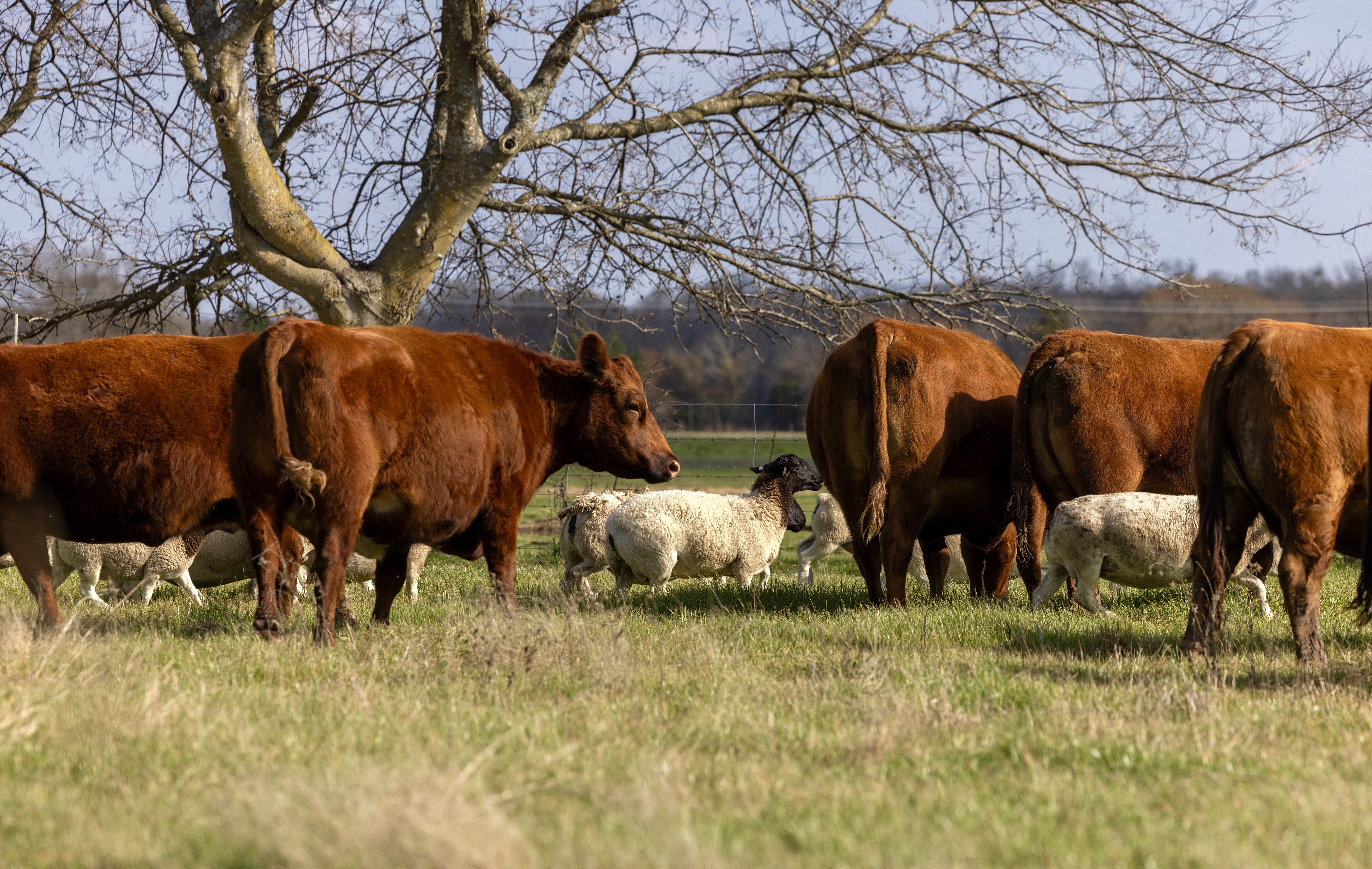
Dorper Sheep and Cattle
Both the sheep and cattle graze together without injury to either species while helping increase organic growth of the soil.
Categories