
William R. Stanek Announces "Job Apocalypse & the Human Advantage," a Powerful New Book on AI, Human Value, and What Survives When Machines Do the Work
A bold new book for workers, students, parents, educators, community leaders, and readers everywhere argues that the future belongs not to the most machine-like people, but to the most deeply human.
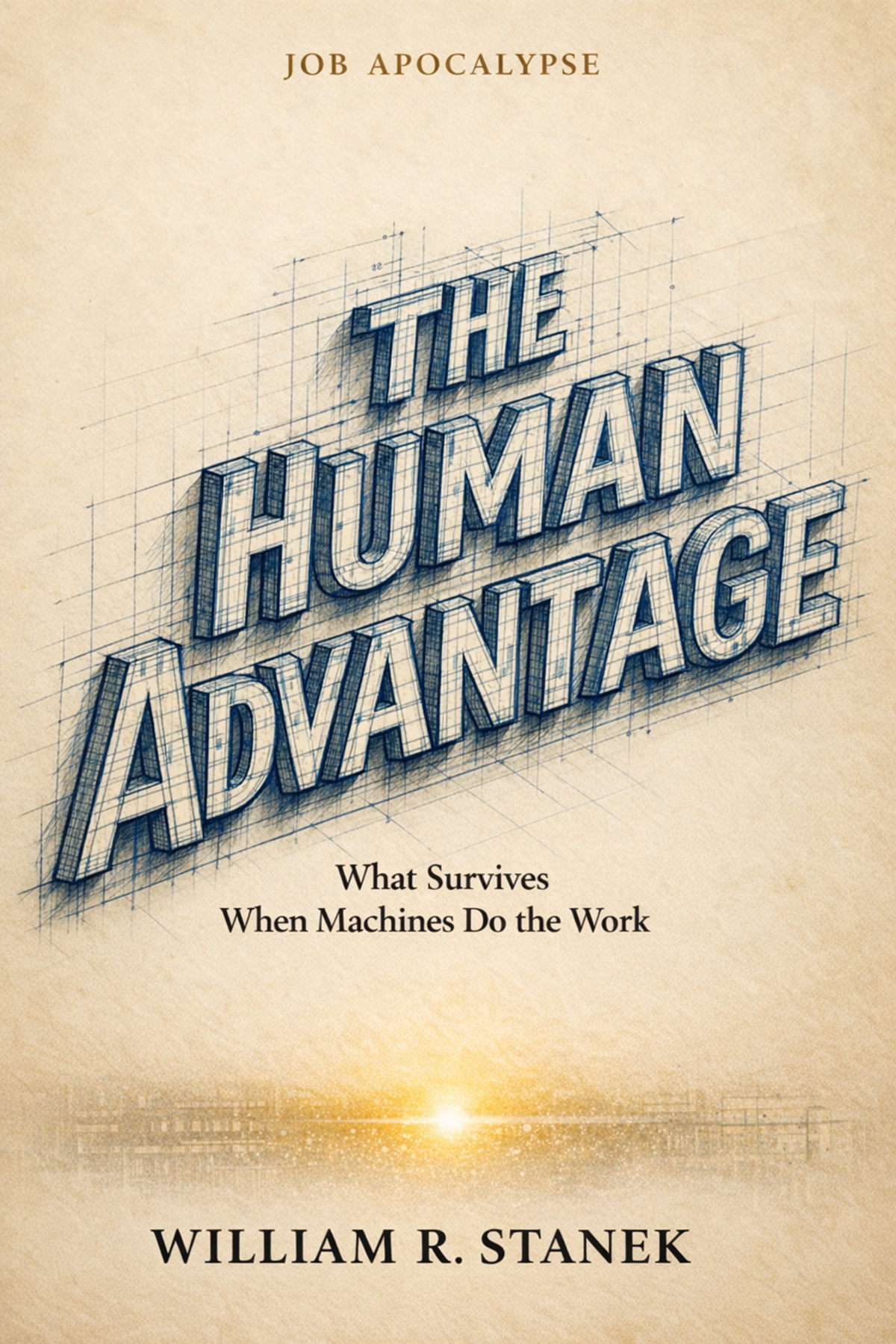
Seattle, WA, March 25, 2026 --(PR.com)-- Award-winning author, decorated military intelligence veteran, systems architect, and creator of the Holistic Intelligence Model, William R. Stanek announces the release of his new book, Job Apocalypse & the Human Advantage: What Survives When Machines Do the Work.
At a time when artificial intelligence is rapidly transforming the way people work, learn, communicate, and make decisions, The Human Advantage offers a larger and more human answer to a question many people can now feel but struggle to name: What happens when machines begin doing more of the work once thought to be distinctly human?
Stanek argues that the real danger is not job loss alone.
The real danger is forgetting what human beings are for.
As AI takes over more routine cognitive labor — drafting, summarizing, analyzing, recommending, and producing first-pass outputs across the white-collar world — The Human Advantage contends that the premium is shifting toward what is hardest to automate: resilience, judgment, ethics, creativity, trust, and meaning.
This is what Stanek calls The Human Advantage.
Rather than treating AI as only a technology story or a future-of-work story, Job Apocalypse reframes the moment as a broader human and civilizational turning point. It asks not only what machines can do, but what kind of human beings the future now requires.
“People are rightly concerned about jobs, skills, and economic disruption,” Stanek said. “But the deeper issue is human. As machines become more capable, we are forced to ask what remains valuable, what remains trustworthy, and what remains distinctly human. The answer is not panic, nostalgia, or surrender. The answer is human development.”
Written for a wide audience — including anyone in the job market, students preparing to enter it, parents helping the next generation navigate it, teachers and professors rethinking education, community leaders guiding others through uncertainty, and readers looking for clarity in a troubled time — the book moves beyond labor-market anxiety to offer a larger framework for understanding work, identity, family, education, and the future of human value.
In The Human Advantage, Stanek explores:
- why white-collar work is being fundamentally reorganized
- how AI lowers the cost of routine cognition
- why resilience, judgment, ethics, creativity, trust, and meaning are becoming more valuable
- what machines can support but never fully replace
- how the deeply human becomes the new scarcity in an age of machine abundance
- why the future belongs not to shallow humans, but to fully developed ones
Part warning, part framework, and part call to action, The Human Advantage is both timely and enduring. It speaks to workers trying to stay grounded, students preparing for an uncertain economy, parents asking how to raise the next generation, educators wondering what formation now requires, and readers everywhere searching for a deeper answer than fear or hype.
About the Book
Job Apocalypse & the Human Advantage: What Survives When Machines Do the Work is a bold and deeply human exploration of AI, work, and the future of human value. As machines increasingly automate routine cognition, William R. Stanek argues that the capacities that matter most are the ones hardest to mechanize: resilience, judgment, ethics, creativity, trust, and meaning. This is The Human Advantage.
About the Author
William R. Stanek is an award-winning author, decorated military intelligence veteran, systems architect, and thought leader whose work has influenced millions of readers worldwide. With more than 200 published books spanning technology, leadership, intelligence, and human development, his writing has helped readers and organizations navigate complexity with greater clarity, resilience, and purpose. He is the creator of the Holistic Intelligence Model.
At a time when artificial intelligence is rapidly transforming the way people work, learn, communicate, and make decisions, The Human Advantage offers a larger and more human answer to a question many people can now feel but struggle to name: What happens when machines begin doing more of the work once thought to be distinctly human?
Stanek argues that the real danger is not job loss alone.
The real danger is forgetting what human beings are for.
As AI takes over more routine cognitive labor — drafting, summarizing, analyzing, recommending, and producing first-pass outputs across the white-collar world — The Human Advantage contends that the premium is shifting toward what is hardest to automate: resilience, judgment, ethics, creativity, trust, and meaning.
This is what Stanek calls The Human Advantage.
Rather than treating AI as only a technology story or a future-of-work story, Job Apocalypse reframes the moment as a broader human and civilizational turning point. It asks not only what machines can do, but what kind of human beings the future now requires.
“People are rightly concerned about jobs, skills, and economic disruption,” Stanek said. “But the deeper issue is human. As machines become more capable, we are forced to ask what remains valuable, what remains trustworthy, and what remains distinctly human. The answer is not panic, nostalgia, or surrender. The answer is human development.”
Written for a wide audience — including anyone in the job market, students preparing to enter it, parents helping the next generation navigate it, teachers and professors rethinking education, community leaders guiding others through uncertainty, and readers looking for clarity in a troubled time — the book moves beyond labor-market anxiety to offer a larger framework for understanding work, identity, family, education, and the future of human value.
In The Human Advantage, Stanek explores:
- why white-collar work is being fundamentally reorganized
- how AI lowers the cost of routine cognition
- why resilience, judgment, ethics, creativity, trust, and meaning are becoming more valuable
- what machines can support but never fully replace
- how the deeply human becomes the new scarcity in an age of machine abundance
- why the future belongs not to shallow humans, but to fully developed ones
Part warning, part framework, and part call to action, The Human Advantage is both timely and enduring. It speaks to workers trying to stay grounded, students preparing for an uncertain economy, parents asking how to raise the next generation, educators wondering what formation now requires, and readers everywhere searching for a deeper answer than fear or hype.
About the Book
Job Apocalypse & the Human Advantage: What Survives When Machines Do the Work is a bold and deeply human exploration of AI, work, and the future of human value. As machines increasingly automate routine cognition, William R. Stanek argues that the capacities that matter most are the ones hardest to mechanize: resilience, judgment, ethics, creativity, trust, and meaning. This is The Human Advantage.
About the Author
William R. Stanek is an award-winning author, decorated military intelligence veteran, systems architect, and thought leader whose work has influenced millions of readers worldwide. With more than 200 published books spanning technology, leadership, intelligence, and human development, his writing has helped readers and organizations navigate complexity with greater clarity, resilience, and purpose. He is the creator of the Holistic Intelligence Model.
Contact
William R. Stanek
William Stanek
360-870-0199
https://williamrstanek.com
William Stanek
360-870-0199
https://williamrstanek.com
 Contact
Categories