
Karkariya Mawlid 2026 Unites Seekers from Four Continents in Devotion, Humanitarian Service, and Scholarship
Al-Karkari Institute highlights the Eighth International Week of Sufism, held by the Karkariya order in Al-Aaroui, Morocco, for the Mawlid of 1448 AH / 2026. Under the theme "Ihsani Guidance for Building Food Security and Economic Stability," seekers from the United States, Canada, France, Egypt, Tunisia, Jordan and Saudi Arabia joined a night of remembrance, an international blood donation drive, and a conference on the Moroccan zawiya as a model of solidarity and sustainable development.
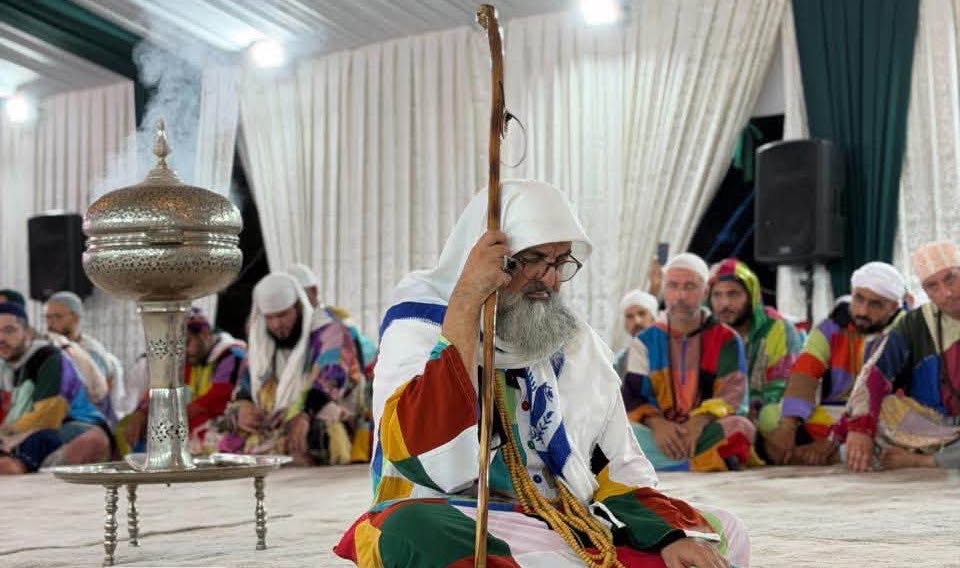
Oakland, CA, August 28, 2026 --(PR.com)-- Seekers from across North America, Europe, Africa, and the Arab world gathered at the Karkariya zawiya in Al-Aaroui, in Morocco's Nador province, for the Eighth International Week of Sufism, held in celebration of the Mawlid al-Nabawi of 1448 AH / 2026. The Al-Karkari Institute presents this year's gathering, convened under the guidance of Shaykh Sidi Mohamed Faouzi al-Karkari, as a demonstration of its core conviction: that spiritual formation is meant to become practical service.
The week carried the theme "Ihsani Guidance for Building the Foundations of Food Security and Economic Stability," and its program moved deliberately between three registers: worship, humanitarian action, and scholarship.
The Great Night
On Monday evening, the zawiya hosted the Great Night of the Mawlid. Disciples arriving from the United States, Canada, Egypt, Tunisia, France, Jordan, Kuwait, and Saudi Arabia, among other countries, filled the grounds for dhikr, madih, and Sufi sama, chanting the praises of the Prophet Muhammad, peace be upon him, deep into the night. Participants who traveled from abroad described the evening as an experience of brotherhood: people of different languages, passports, and cultures standing in a single circle, joined by a single remembrance. For one night, the zawiya became a spiritual space that crossed borders.
Giving Blood
Alongside the celebration, the Karkariya order organized an international blood donation campaign in partnership with the Regional Delegation of the Ministry of Health in Nador Province, the Moroccan Blood and Blood Products Agency for the Oriental Region, and the Al-Aaroui branch of the Moroccan Red Crescent. Shaykh Mohamed Faouzi al-Karkari opened the campaign by donating first, accompanied by his sons, and disciples from inside Morocco and abroad followed. Organizers framed the drive as a natural expression of the occasion: honoring the Prophet's mercy by helping supply hospitals with blood that saves lives.
The Conference
The week's scholarly session, titled "The Zawiyas of the Kingdom of Morocco as a Model of Solidarity and Sustainable Development," brought together academics, researchers, physicians, and specialists from universities in several countries.
Dr. Rami Koujah, a researcher at Harvard Law School specializing in Islamic legal sciences, opened with a reading of Imam Abu Hamid al-Ghazali, arguing for an ethical grounding of economics and environmental protection in which wealth serves people rather than becoming an end in itself.
Dr. Abdelhakim Tahouna, a specialist physician, traced the historical role of the Moroccan zawiya as a social safety net that fed, sheltered, taught, and relieved the needy, and connected that inheritance to the Karkariya's own fieldwork: relief convoys for those affected by the Al Haouz earthquake, blood donation campaigns, and well-drilling projects inside Morocco and beyond.
Hamid Zabdi, a researcher in Islamic studies, examined zakat and charity as mechanisms of solidarity, drawing on the Prophet's care for the People of the Bench to show how giving builds a human bond rather than a transaction.
Dr. Khalid Salem, a medical consultant and assistant professor at a university in Ontario, Canada, proposed renewing the zawiya's role across three axes: spiritual, social, and scientific. He called for research centers, peer-reviewed journals, greater attention to mental health, and the use of digital tools, without surrendering its authenticity.
Abdelhafid Er-Rabati, a researcher in the history of Sufism, argued that renewal operates on two levels: an inward one of human formation, mindful consumption, and responsibility, and an outward one of governance, sound management of resources, and digitization.
Dr. Youssef Casewit, a scholar at the University of Chicago, closed the session on the role of religious institutions and zawiyas in confronting crises, moving from historical examples such as the network of Shaykh Abu Muhammad Salih al-Majiri and the role of Imam al-Jazuli to questions raised by the digital age and artificial intelligence, and the place of spiritual formation in keeping the human being more than a consumer of information.
The scholarly sessions were interspersed with sama and prophetic praise, and the gathering closed with prayers for His Majesty King Mohammed VI and for peace and stability for all people.
For the Al-Karkari Institute, the three components of the week belong together. Remembrance without service is incomplete, and service without reflection loses its direction. Whether in a circle of chanting, a donation chair, or a lecture hall, the argument is the same: ihsan is not only a relationship with God, but also a responsibility toward people, wealth, and the earth.
The week carried the theme "Ihsani Guidance for Building the Foundations of Food Security and Economic Stability," and its program moved deliberately between three registers: worship, humanitarian action, and scholarship.
The Great Night
On Monday evening, the zawiya hosted the Great Night of the Mawlid. Disciples arriving from the United States, Canada, Egypt, Tunisia, France, Jordan, Kuwait, and Saudi Arabia, among other countries, filled the grounds for dhikr, madih, and Sufi sama, chanting the praises of the Prophet Muhammad, peace be upon him, deep into the night. Participants who traveled from abroad described the evening as an experience of brotherhood: people of different languages, passports, and cultures standing in a single circle, joined by a single remembrance. For one night, the zawiya became a spiritual space that crossed borders.
Giving Blood
Alongside the celebration, the Karkariya order organized an international blood donation campaign in partnership with the Regional Delegation of the Ministry of Health in Nador Province, the Moroccan Blood and Blood Products Agency for the Oriental Region, and the Al-Aaroui branch of the Moroccan Red Crescent. Shaykh Mohamed Faouzi al-Karkari opened the campaign by donating first, accompanied by his sons, and disciples from inside Morocco and abroad followed. Organizers framed the drive as a natural expression of the occasion: honoring the Prophet's mercy by helping supply hospitals with blood that saves lives.
The Conference
The week's scholarly session, titled "The Zawiyas of the Kingdom of Morocco as a Model of Solidarity and Sustainable Development," brought together academics, researchers, physicians, and specialists from universities in several countries.
Dr. Rami Koujah, a researcher at Harvard Law School specializing in Islamic legal sciences, opened with a reading of Imam Abu Hamid al-Ghazali, arguing for an ethical grounding of economics and environmental protection in which wealth serves people rather than becoming an end in itself.
Dr. Abdelhakim Tahouna, a specialist physician, traced the historical role of the Moroccan zawiya as a social safety net that fed, sheltered, taught, and relieved the needy, and connected that inheritance to the Karkariya's own fieldwork: relief convoys for those affected by the Al Haouz earthquake, blood donation campaigns, and well-drilling projects inside Morocco and beyond.
Hamid Zabdi, a researcher in Islamic studies, examined zakat and charity as mechanisms of solidarity, drawing on the Prophet's care for the People of the Bench to show how giving builds a human bond rather than a transaction.
Dr. Khalid Salem, a medical consultant and assistant professor at a university in Ontario, Canada, proposed renewing the zawiya's role across three axes: spiritual, social, and scientific. He called for research centers, peer-reviewed journals, greater attention to mental health, and the use of digital tools, without surrendering its authenticity.
Abdelhafid Er-Rabati, a researcher in the history of Sufism, argued that renewal operates on two levels: an inward one of human formation, mindful consumption, and responsibility, and an outward one of governance, sound management of resources, and digitization.
Dr. Youssef Casewit, a scholar at the University of Chicago, closed the session on the role of religious institutions and zawiyas in confronting crises, moving from historical examples such as the network of Shaykh Abu Muhammad Salih al-Majiri and the role of Imam al-Jazuli to questions raised by the digital age and artificial intelligence, and the place of spiritual formation in keeping the human being more than a consumer of information.
The scholarly sessions were interspersed with sama and prophetic praise, and the gathering closed with prayers for His Majesty King Mohammed VI and for peace and stability for all people.
For the Al-Karkari Institute, the three components of the week belong together. Remembrance without service is incomplete, and service without reflection loses its direction. Whether in a circle of chanting, a donation chair, or a lecture hall, the argument is the same: ihsan is not only a relationship with God, but also a responsibility toward people, wealth, and the earth.
Contact
Al-Karkari Institute
Allan Noble
651-808-1900
karkari.org
noble@karkari.org
Allan Noble
651-808-1900
karkari.org
noble@karkari.org
 Contact
Categories