
Long Before the Ai Panic, He Asked: "Where Are the Jobs?" Now Students from Oklahoma to Cape Town Want the Answer
Dr. Daryl D. Green was studying workforce disruption years before generative AI entered the national conversation. This summer, that research took him to a packed lecture hall in Cape Town, South Africa, as the question he first raised in 2010 becomes urgent for a new generation of graduates on two continents.
Oklahoma City, OK, September 03, 2026 --(PR.com)-- In 2010, Dr. Daryl D. Green published an essay with a title that reads today like a warning label: “Where Are the Jobs?” He had already spent a year studying the question in book form and would return to it repeatedly over the next decade and a half as the labor market kept shifting under the people he was trying to help.
This Labor Day weekend, a holiday built to honor American workers, arrives as recent college graduates face an unemployment rate of about 5.6 percent, according to the Federal Reserve Bank of New York. At the same time, artificial intelligence is reshaping expectations for early-career talent. Green, a workforce disruption researcher and international speaker who has spent nearly two decades advising students and working professionals nationwide, says the moment is no surprise. It is the one he has been preparing people for.
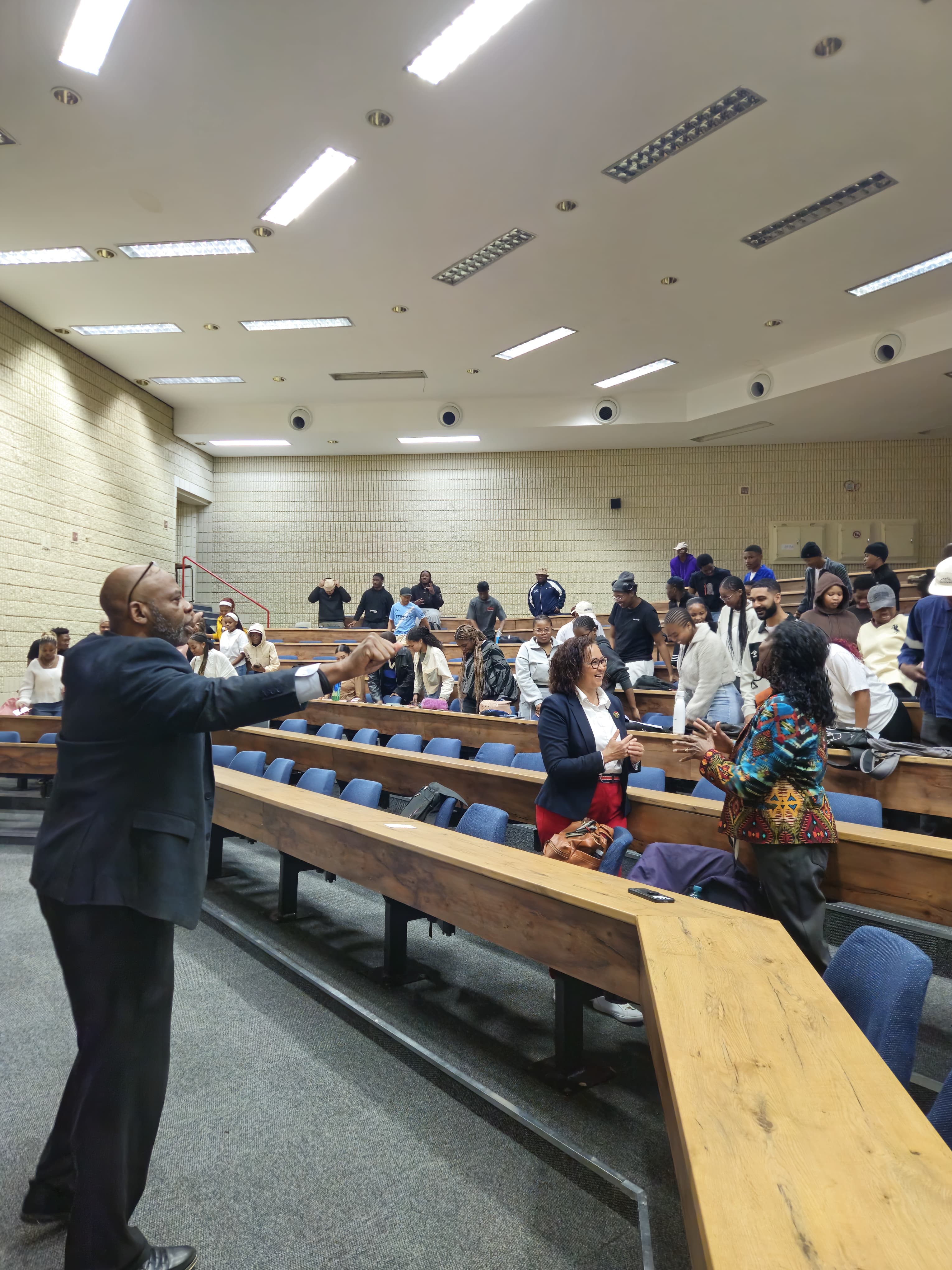
On July 31, 2026, Green delivered a keynote titled “Do You Know What the Future Holds? Career Readiness in a Global Age of Disruption” to roughly sixty first-year students at Cape Peninsula University of Technology (CPUT) at the District Six campus in Cape Town, South Africa. CPUT Professor Henry Esau hosted former Langston University business school dean Green. The lecture hall filled well past its usual capacity, with students standing along the back rows and still filing in as the session began.
For nearly an hour, Green walked the audience through the question that anchored the entire talk: the career you are preparing for today, will it still exist ten years from now? Drawing on his framework, the Nehemiah Blueprint in the Age of AI, alongside NACE career readiness competencies and current labor-market research, Green challenged students to see themselves as builders of the future rather than passengers riding through it.
“Every generation faces disruption,” Green told the students. “What separates those who are prepared from those who are not is whether they choose to watch, to fight, or to build. People rebuild the future. Not machines.”
The warning is not abstract, and it is not only American. Handshake’s April 2026 research on the Class of 2026 found that 58 percent of graduating seniors said they would need a better understanding of AI to succeed at work, while only 28 percent said AI had been meaningfully integrated into their academic programs. NACE reported in April that employer demand for AI skills in entry-level work had risen sharply since fall 2025. For students entering accounting, software development and other knowledge-work fields, the issue is no longer simply choosing a job title. It is building the capacity to adapt, contribute and rebuild as work changes.
The 2010 essay was not a one-off. In 2009, Green published Job Strategies in the 21st Century, examining how workers and graduates could navigate a labor market already in motion. In 2014, he studied employment strategies for college graduates facing a difficult job market. In 2024, as generative AI moved into classrooms and hiring systems, his attention turned to whether colleges were preparing Generation Z for what was coming next.That research runs alongside a career built inside disruption, not observing it from a distance. Green spent twenty-seven years as a senior engineering manager before serving as dean of the School of Business at Langston University, a Historically Black College and University. During his tenure, the school earned a No. 39 ranking among 89 HBCU business schools nationally and recorded top 1 percent performance on the Peregrine Business Exam. Now retired from the deanship, Green remains active as a writer, speaker, guest lecturer, and supporter of student scholarships at Langston University.
The Cape Town presentation represents an international application of the Nehemiah Blueprint in the Age of AI. This leadership framework explores how faith, leadership, innovation, service, hope, human dignity, entrepreneurship, and wise use of AI can help people and communities rebuild amid disruption.
“What made Cape Town remarkable was not just the size of the room,” Green said. “It was watching students who had never heard the phrase Nehemiah Blueprint immediately recognize themselves in the disruption we were describing. This is not an American idea. It is a human one.”
Green plans to continue documenting how the Nehemiah Blueprint in the Age of AI is being lived out in classrooms, churches, businesses, and communities. Readers can follow the continuing series through The Nehemiah Blueprint on Substack and at darylgreen.org.
Sources: Federal Reserve Bank of New York, The Labor Market for Recent College Graduates (2026:Q2); Handshake, Class of 2026 Graduation Report (April 2026); National Association of Colleges and Employers, Job Outlook 2026: Spring Update (April 2026).
About Dr. Daryl D. Green and the Nehemiah Blueprint
Dr. Daryl D. Green is a workforce disruption researcher, international speaker, and author who has studied the changing nature of work since 2009, well before artificial intelligence entered the public conversation. A former dean of the business school at Langston University, Green created The Nehemiah Blueprint in the Age of AI, a thought-leadership platform exploring leadership, rebuilding, workforce transformation, and human belonging amid disruption. He is also the author of The Dean’s Devotional: 21 Proverbs for Academic Leadership.
Media Contact
Dr. Daryl D. Green | The Nehemiah Blueprint
Phone: 865-719-7239 | Email: advice@darylgreen.org | Website: www.darylgreen.org
Note to Editors
Dr. Green is available for interviews by phone, video, or email through the Labor Day weekend. High-resolution photographs from the Cape Town presentation are available on request. A copy of The Dean’s Devotional: 21 Proverbs for Academic Leadership is also available for review upon request.
This Labor Day weekend, a holiday built to honor American workers, arrives as recent college graduates face an unemployment rate of about 5.6 percent, according to the Federal Reserve Bank of New York. At the same time, artificial intelligence is reshaping expectations for early-career talent. Green, a workforce disruption researcher and international speaker who has spent nearly two decades advising students and working professionals nationwide, says the moment is no surprise. It is the one he has been preparing people for.
On July 31, 2026, Green delivered a keynote titled “Do You Know What the Future Holds? Career Readiness in a Global Age of Disruption” to roughly sixty first-year students at Cape Peninsula University of Technology (CPUT) at the District Six campus in Cape Town, South Africa. CPUT Professor Henry Esau hosted former Langston University business school dean Green. The lecture hall filled well past its usual capacity, with students standing along the back rows and still filing in as the session began.
For nearly an hour, Green walked the audience through the question that anchored the entire talk: the career you are preparing for today, will it still exist ten years from now? Drawing on his framework, the Nehemiah Blueprint in the Age of AI, alongside NACE career readiness competencies and current labor-market research, Green challenged students to see themselves as builders of the future rather than passengers riding through it.
“Every generation faces disruption,” Green told the students. “What separates those who are prepared from those who are not is whether they choose to watch, to fight, or to build. People rebuild the future. Not machines.”
The warning is not abstract, and it is not only American. Handshake’s April 2026 research on the Class of 2026 found that 58 percent of graduating seniors said they would need a better understanding of AI to succeed at work, while only 28 percent said AI had been meaningfully integrated into their academic programs. NACE reported in April that employer demand for AI skills in entry-level work had risen sharply since fall 2025. For students entering accounting, software development and other knowledge-work fields, the issue is no longer simply choosing a job title. It is building the capacity to adapt, contribute and rebuild as work changes.
The 2010 essay was not a one-off. In 2009, Green published Job Strategies in the 21st Century, examining how workers and graduates could navigate a labor market already in motion. In 2014, he studied employment strategies for college graduates facing a difficult job market. In 2024, as generative AI moved into classrooms and hiring systems, his attention turned to whether colleges were preparing Generation Z for what was coming next.That research runs alongside a career built inside disruption, not observing it from a distance. Green spent twenty-seven years as a senior engineering manager before serving as dean of the School of Business at Langston University, a Historically Black College and University. During his tenure, the school earned a No. 39 ranking among 89 HBCU business schools nationally and recorded top 1 percent performance on the Peregrine Business Exam. Now retired from the deanship, Green remains active as a writer, speaker, guest lecturer, and supporter of student scholarships at Langston University.
The Cape Town presentation represents an international application of the Nehemiah Blueprint in the Age of AI. This leadership framework explores how faith, leadership, innovation, service, hope, human dignity, entrepreneurship, and wise use of AI can help people and communities rebuild amid disruption.
“What made Cape Town remarkable was not just the size of the room,” Green said. “It was watching students who had never heard the phrase Nehemiah Blueprint immediately recognize themselves in the disruption we were describing. This is not an American idea. It is a human one.”
Green plans to continue documenting how the Nehemiah Blueprint in the Age of AI is being lived out in classrooms, churches, businesses, and communities. Readers can follow the continuing series through The Nehemiah Blueprint on Substack and at darylgreen.org.
Sources: Federal Reserve Bank of New York, The Labor Market for Recent College Graduates (2026:Q2); Handshake, Class of 2026 Graduation Report (April 2026); National Association of Colleges and Employers, Job Outlook 2026: Spring Update (April 2026).
About Dr. Daryl D. Green and the Nehemiah Blueprint
Dr. Daryl D. Green is a workforce disruption researcher, international speaker, and author who has studied the changing nature of work since 2009, well before artificial intelligence entered the public conversation. A former dean of the business school at Langston University, Green created The Nehemiah Blueprint in the Age of AI, a thought-leadership platform exploring leadership, rebuilding, workforce transformation, and human belonging amid disruption. He is also the author of The Dean’s Devotional: 21 Proverbs for Academic Leadership.
Media Contact
Dr. Daryl D. Green | The Nehemiah Blueprint
Phone: 865-719-7239 | Email: advice@darylgreen.org | Website: www.darylgreen.org
Note to Editors
Dr. Green is available for interviews by phone, video, or email through the Labor Day weekend. High-resolution photographs from the Cape Town presentation are available on request. A copy of The Dean’s Devotional: 21 Proverbs for Academic Leadership is also available for review upon request.
Contact
AGSM Consulting LLC
Dr. Daryl D. Green
865-602-7858
nuleadership.com
Dr. Daryl D. Green
865-602-7858
nuleadership.com
 Contact
Multimedia
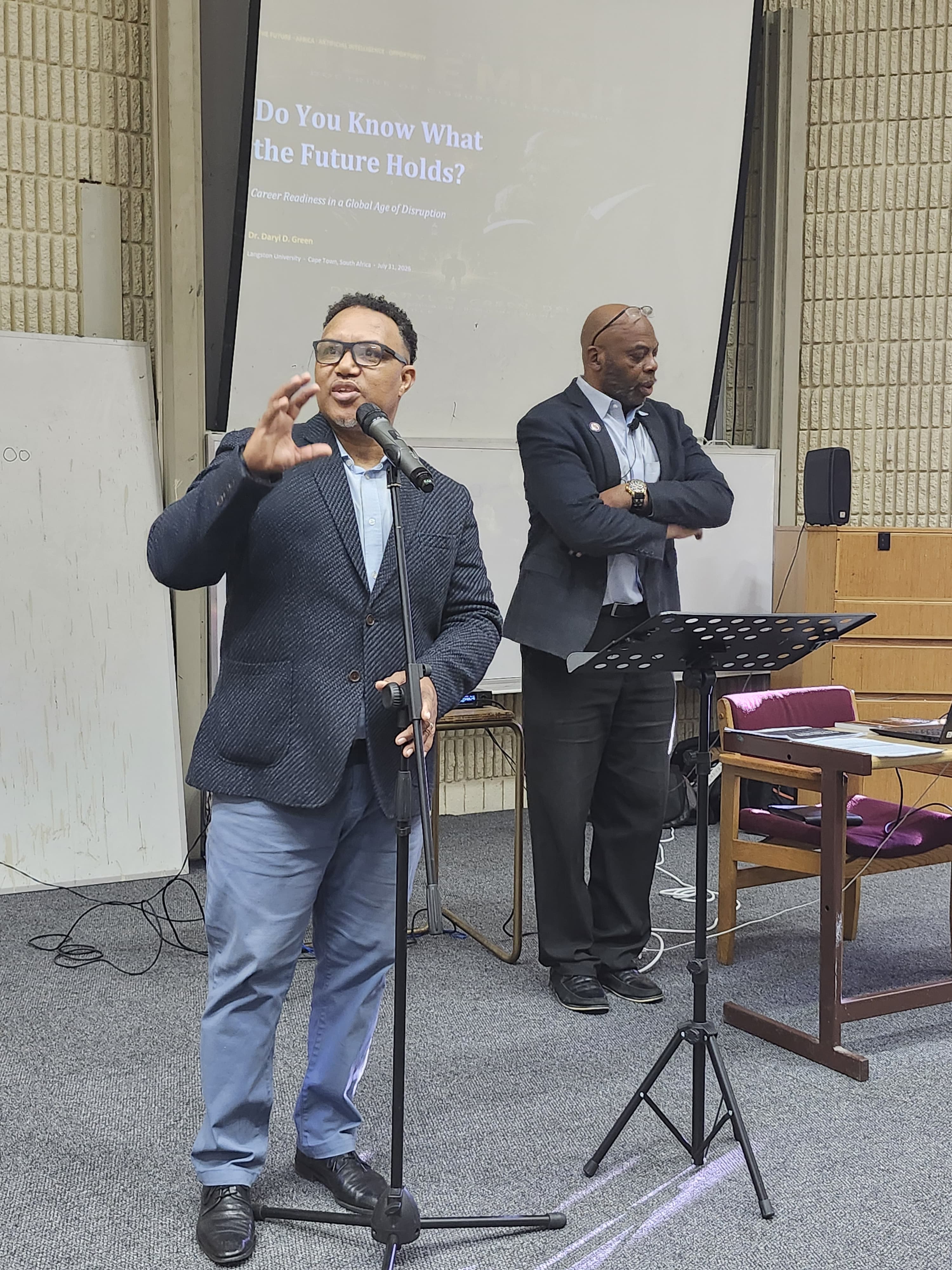
Dr. Green's CPUT Presentation#1
Dr. Green shares insights with CPUT on AI and career development.
Categories