

James (Jim) A. Greer Addresses United Nations Regarding Marijuana Legalization in the United States
James A. Greer, Accredited Drug Testing President and past Chairman of the National Drug and Alcohol Screening Association, addressed the United Nations during the 69th session of the commission on narcotic drugs held in Vienna Austria, March 12, 2026.
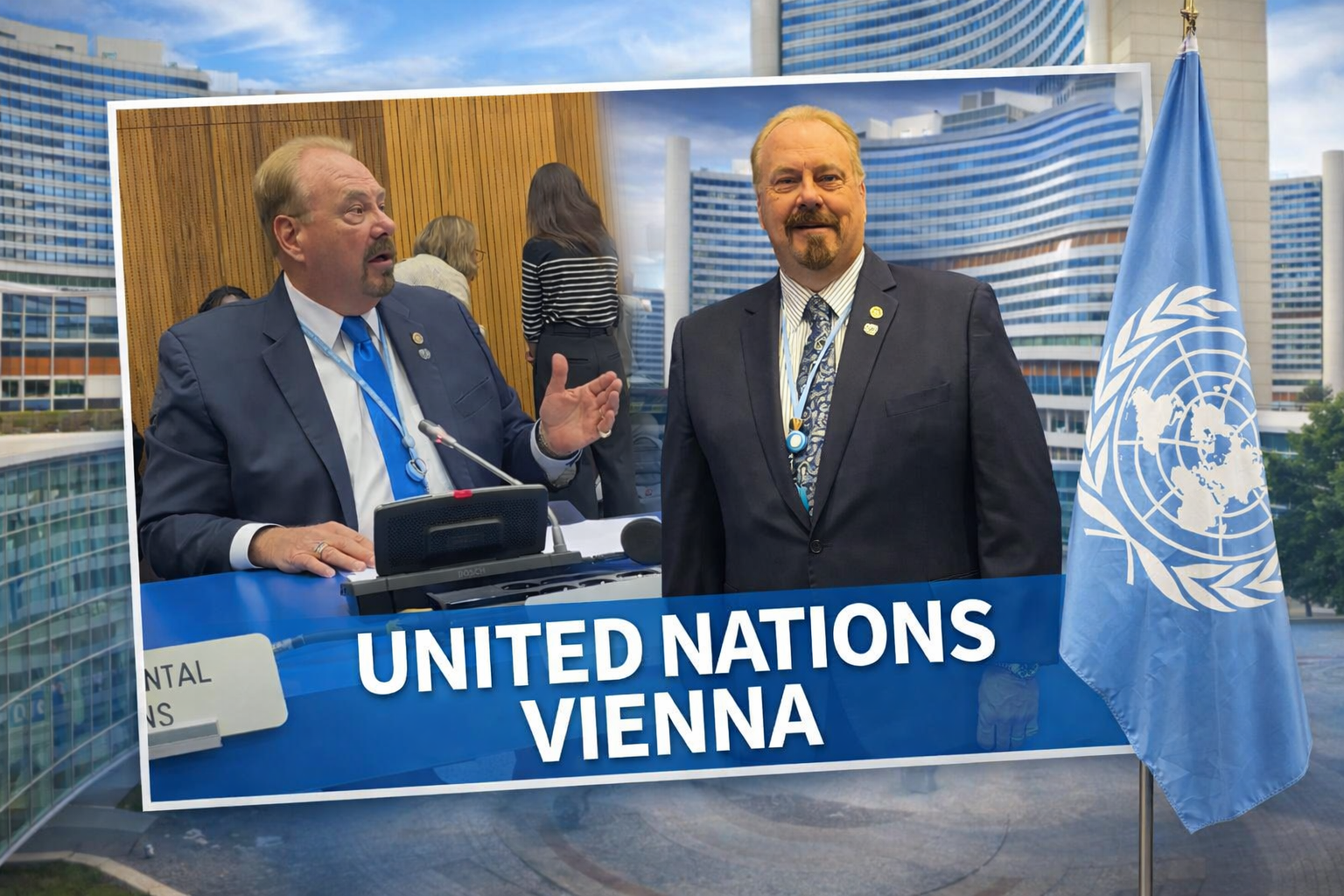
Sanford, FL, March 13, 2026 --(PR.com)-- James A. Greer, Accredited Drug Testing President and past Chairman of the National Drug and Alcohol Screening Association, addressed the United Nations during the 69th session of the commission on narcotic drugs held in Vienna Austria, March 12, 2026.
Mr. Greer’s speech to the United Nation’s focused on the consequences and issues relating to the legalization of marijuana and the Executive Order recently enacted by President Trump directing the US Drug Enforcement Administration to reschedule marijuana from a schedule I drug to schedule III.
Greer’s comments were made during the general session and those present included Ambassadors and Delegates from Member States and was well received by many of those in attendance.
Highlights of Greer’s speech include the following:
Thank you, Mr. Secretary General.
Excellencies, Distinguished Delegates, Ladies and Gentlemen,
I am honored to speak to you today to illustrate hard-learned lessons from the liberalization of marijuana policy in the United States, which is a result of politics rather than science led policies.
The commercialization of marijuana disguised as medicine is also negatively impacting sound drug policy globally. Our aim is to create a global policy conversation that focuses on science, public health, workplace safety, and human rights—while avoiding policies that have proven ineffective or harmful.
In the U.S., it has caused significant negative consequences for employers who wish to be a drug free workplace, and it has also resulted in many employers no longer testing for marijuana, this has resulted in increased post-accident incidents and ultimately made the workplace less safe.
These state governmental commercialized policies permitting the use of marijuana for medicinal purposes, have been created without any specific scientific support - in fact, when the term “follow the science” is so often used in other public policy discussions, the exact opposite approach is used when developing marijuana public policy.
Politics and money take precedence over science, - the harmful effects of marijuana, and its adverse effects on the general population and public safety are disregarded.
Let us not forget that Science and regulatory policies protect the individual; commercialized policies protect the manufactures and those with a financial interest. The result has been that the marijuana industry’s influence on public policy has greatly increased in the United States in the last 5 years.
As an example, in 2011, the marijuana industry spent only around $35,000 to lobby elected officials and legislators - while the most recent expenditure reports show that cannabis interests in 2024 spent over 3 million dollars to lobby Federal Government officials - with State interests exceeding even those numbers combined.
And in 2025, the medical marijuana industry spent over 100 million dollars to change a U.S. states constitution to allow recreational marijuana. However, this effort was ultimately defeated by the voters.
The U.S. experience reveals pronounced lobbying activity and political financing by the cannabis interests, raising concerns about the creation of public policy and market access over the public good.
Regulatory promises, such as significant tax revenue, job creation or reduced crime, have not uniformly materialized, complicating the narrative that liberalization is beneficial and in the public’s interest.
The United States presents a clarifying case: comprehensive state-level reforms legalizing marijuana with a commercialized approach has not delivered the promised public health or safety outcomes the public is entitled to from its government.
Global policy should not blindly imitate a liberalization model that lacks consistent regulatory guidance, uniform data, and rigorous safeguards. Instead, we must pursue policies rooted in independent science, transparent governance, and continuous evaluation.
To view Mr. Greer’s entire speech to the United Nations, visit https://youtu.be/a9IBfXhf9L or visit www.accrediteddrugtesting.com/james-a-greer-speech-to-the-united-nations/
Mr. Greer’s speech to the United Nation’s focused on the consequences and issues relating to the legalization of marijuana and the Executive Order recently enacted by President Trump directing the US Drug Enforcement Administration to reschedule marijuana from a schedule I drug to schedule III.
Greer’s comments were made during the general session and those present included Ambassadors and Delegates from Member States and was well received by many of those in attendance.
Highlights of Greer’s speech include the following:
Thank you, Mr. Secretary General.
Excellencies, Distinguished Delegates, Ladies and Gentlemen,
I am honored to speak to you today to illustrate hard-learned lessons from the liberalization of marijuana policy in the United States, which is a result of politics rather than science led policies.
The commercialization of marijuana disguised as medicine is also negatively impacting sound drug policy globally. Our aim is to create a global policy conversation that focuses on science, public health, workplace safety, and human rights—while avoiding policies that have proven ineffective or harmful.
In the U.S., it has caused significant negative consequences for employers who wish to be a drug free workplace, and it has also resulted in many employers no longer testing for marijuana, this has resulted in increased post-accident incidents and ultimately made the workplace less safe.
These state governmental commercialized policies permitting the use of marijuana for medicinal purposes, have been created without any specific scientific support - in fact, when the term “follow the science” is so often used in other public policy discussions, the exact opposite approach is used when developing marijuana public policy.
Politics and money take precedence over science, - the harmful effects of marijuana, and its adverse effects on the general population and public safety are disregarded.
Let us not forget that Science and regulatory policies protect the individual; commercialized policies protect the manufactures and those with a financial interest. The result has been that the marijuana industry’s influence on public policy has greatly increased in the United States in the last 5 years.
As an example, in 2011, the marijuana industry spent only around $35,000 to lobby elected officials and legislators - while the most recent expenditure reports show that cannabis interests in 2024 spent over 3 million dollars to lobby Federal Government officials - with State interests exceeding even those numbers combined.
And in 2025, the medical marijuana industry spent over 100 million dollars to change a U.S. states constitution to allow recreational marijuana. However, this effort was ultimately defeated by the voters.
The U.S. experience reveals pronounced lobbying activity and political financing by the cannabis interests, raising concerns about the creation of public policy and market access over the public good.
Regulatory promises, such as significant tax revenue, job creation or reduced crime, have not uniformly materialized, complicating the narrative that liberalization is beneficial and in the public’s interest.
The United States presents a clarifying case: comprehensive state-level reforms legalizing marijuana with a commercialized approach has not delivered the promised public health or safety outcomes the public is entitled to from its government.
Global policy should not blindly imitate a liberalization model that lacks consistent regulatory guidance, uniform data, and rigorous safeguards. Instead, we must pursue policies rooted in independent science, transparent governance, and continuous evaluation.
To view Mr. Greer’s entire speech to the United Nations, visit https://youtu.be/a9IBfXhf9L or visit www.accrediteddrugtesting.com/james-a-greer-speech-to-the-united-nations/
Contact
Accredited Drug Testing Inc.
Sicilia Bonilla
800-221-4291
accrediteddrugtesting.com
Sicilia Bonilla
800-221-4291
accrediteddrugtesting.com
 Contact
Categories