
Yiruixing Packaging Highlights Key Sustainable Packaging Trends Transforming B2B Supply Chains in the United States, Canada, and Australia
As environmental awareness grows, sustainable packaging is expected to play an important role in the future of global supply chains, with innovative materials and circular models at the forefront. Companies that embrace these strategies will not only meet regulatory demands but also gain a competitive edge in the market.
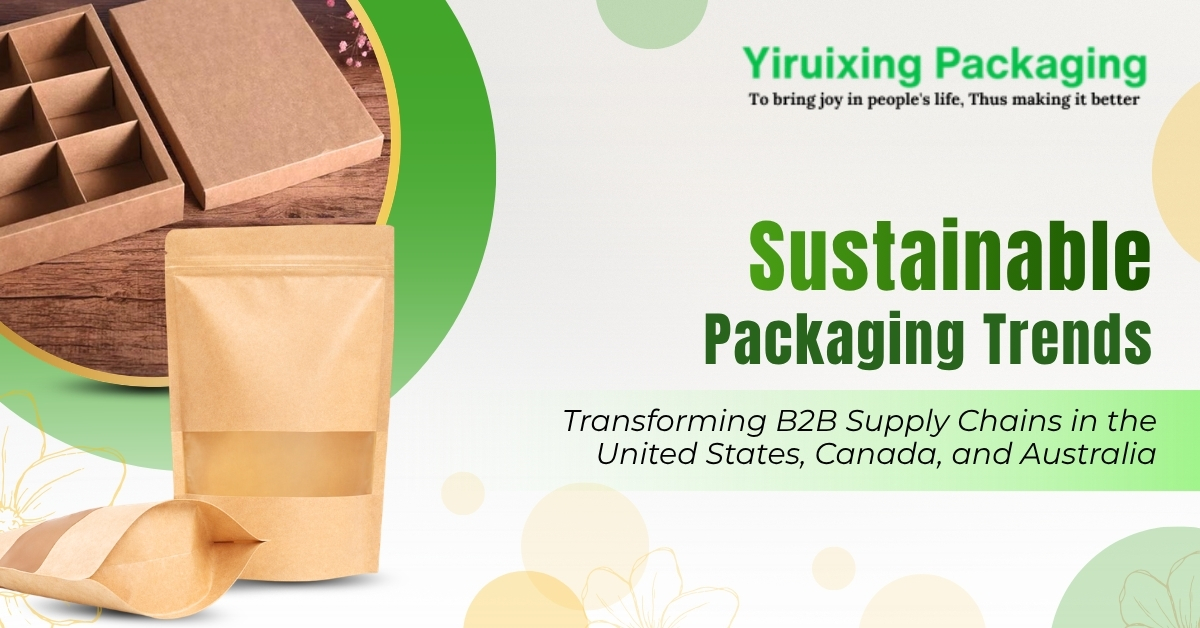
Los Angeles, CA, April 04, 2026 --(PR.com)-- Environmental concerns, evolving government regulations, and changing consumer expectations are transforming global supply chains, and businesses in the USA, Canada, and Australia are rapidly adopting sustainable packaging solutions. In response to these developments, Yiruixing Packaging, a packaging solutions provider specializing in sustainable and cost-effective packaging systems, has released new insights on the sustainable packaging trends reshaping B2B supply chains in the United States, Canada, and Australia. B2B companies are increasingly adopting green packaging materials, waste reduction strategies, and circular supply chain practices to improve operational efficiency and reduce environmental impact.
The adoption of sustainable packaging goes far beyond a mere reaction to environmental issues; in fact, it has turned into a major focus of enterprises that intend to enhance their brand image, comply with the latest regulations, and fulfill the sustainability targets of partners and customers.
“Sustainability is no longer optional for businesses operating in global supply chains.” Companies are actively searching for packaging solutions that reduce environmental impact while maintaining operational efficiency.
The Increasing Market for Green Packaging in B2B Supply Chains
Over the past few years, sustainability has evolved from a niche concern into a fundamental business priority. Packaging is a vital component of B2B supply chains, responsible for protecting products during storage and transportation. Nevertheless, conventional materials like single-use plastics and non-recyclable packaging are increasingly being replaced by environmentally friendly alternatives.
Corporations have started using packaging options made from recyclable paper, biodegradable materials, and reusable containers. In addition to minimizing the environmental impact, these solutions help organizations meet stricter environmental standards being enforced in North America and Australia.
According to McKinsey & Company, more than 60% of consumers globally consider sustainable packaging a crucial factor when buying products, encouraging companies to adopt eco-friendly packaging practices.
In sectors like manufacturing, retail distribution, e-commerce logistics, and food supply chains, sustainable packaging has turned into a vital element of corporate sustainability strategies.
Key Sustainable Packaging Trends Driving Change
1. Move Toward the Use of Recyclable and Biodegradable Materials
Companies are shifting to materials that are recyclable or biodegradable. Packaging made of paper, molded fiber, and compostable materials is replacing plastic packaging in many B2B logistics systems.
2. Lightweight Packaging Designs
Reducing packaging weight helps companies lower transportation costs and environmental impact. Lightweight packaging solutions protect products while using less material.
According to the U.S. Environmental Protection Agency (EPA), source reduction and lightweight packaging are among the most effective ways to reduce packaging waste.
3. Reusable Packaging Systems
Several B2B supply chains are changing to reusable containers and pallet systems. These solutions reduce waste while also lowering long-term costs, especially for the companies that manage large-scale distribution networks.
4. Smart and Minimalist Packaging
Organizations are creating packaging with the least amount of material usage while ensuring durability and effectiveness. This method is in line with the sustainability goals, and it also helps in keeping the supply chain efficient.
Regulatory and Corporate Sustainability Initiatives
Governments in the United States, Canada, and Australia are implementing stricter regulations on packaging waste, recycling standards, and extended producer responsibility (EPR) laws.
According to the Organization for Economic Co-operation and Development (OECD), hundreds of Extended Producer Responsibility programs have been implemented worldwide to encourage companies to manage packaging waste more responsibly.
These regulations are designed to push businesses towards reconsidering their packaging approaches and to move forward with the adoption of environmentally responsible solutions.
As a result, many companies are setting sustainability goals that focus on things like cutting down on packaging waste, using more recyclable materials, and being more transparent about their supply chains. Even big companies are pushing their suppliers and logistics partners to follow sustainable packaging standards so that they are in line with the companies' environmental commitments.
Benefits of B2B Supply Chains
With sustainable packaging, B2B supply chain operations stand to gain several benefits, such as:
Reduced environmental impact
Lower costs of shipping and materials
Better brand image and a higher level of customer trust
Adherence to government regulations
Improved supply chain productivity
Companies that adopt sustainable packaging solutions are recognized by customers and the broader market for their commitment to environmental responsibility and innovation. This recognition gives them an edge over competitors.
The Future of Sustainable Packaging
Growing environmental awareness is driving the expansion of sustainable packaging, which will play an increasingly important role in global supply chains. Novel biodegradable materials, recyclable packaging systems, and circular supply chain models are expected to be the main elements that will revolutionize the B2B packaging sector.
Industry analysis from MarketandMarkets also indicates strong growth in sustainable packaging adoption as businesses continue investing in environmentally responsible materials and circular packaging systems.
Organizations that adopt sustainable packaging strategies are positioning themselves for the future, as environmental responsibility is becoming a key factor in business competition.
More about Yiruixing Packaging
Businesses planning to adopt eco-friendly and cost-effective packaging can benefit from working with reliable packaging manufacturers. Yiruixing Packaging offers fresh packaging ideas that not only meet the needs of evolving supply chains but also emphasize the quality, practicality, and sustainability of businesses around the world.
The adoption of sustainable packaging goes far beyond a mere reaction to environmental issues; in fact, it has turned into a major focus of enterprises that intend to enhance their brand image, comply with the latest regulations, and fulfill the sustainability targets of partners and customers.
“Sustainability is no longer optional for businesses operating in global supply chains.” Companies are actively searching for packaging solutions that reduce environmental impact while maintaining operational efficiency.
The Increasing Market for Green Packaging in B2B Supply Chains
Over the past few years, sustainability has evolved from a niche concern into a fundamental business priority. Packaging is a vital component of B2B supply chains, responsible for protecting products during storage and transportation. Nevertheless, conventional materials like single-use plastics and non-recyclable packaging are increasingly being replaced by environmentally friendly alternatives.
Corporations have started using packaging options made from recyclable paper, biodegradable materials, and reusable containers. In addition to minimizing the environmental impact, these solutions help organizations meet stricter environmental standards being enforced in North America and Australia.
According to McKinsey & Company, more than 60% of consumers globally consider sustainable packaging a crucial factor when buying products, encouraging companies to adopt eco-friendly packaging practices.
In sectors like manufacturing, retail distribution, e-commerce logistics, and food supply chains, sustainable packaging has turned into a vital element of corporate sustainability strategies.
Key Sustainable Packaging Trends Driving Change
1. Move Toward the Use of Recyclable and Biodegradable Materials
Companies are shifting to materials that are recyclable or biodegradable. Packaging made of paper, molded fiber, and compostable materials is replacing plastic packaging in many B2B logistics systems.
2. Lightweight Packaging Designs
Reducing packaging weight helps companies lower transportation costs and environmental impact. Lightweight packaging solutions protect products while using less material.
According to the U.S. Environmental Protection Agency (EPA), source reduction and lightweight packaging are among the most effective ways to reduce packaging waste.
3. Reusable Packaging Systems
Several B2B supply chains are changing to reusable containers and pallet systems. These solutions reduce waste while also lowering long-term costs, especially for the companies that manage large-scale distribution networks.
4. Smart and Minimalist Packaging
Organizations are creating packaging with the least amount of material usage while ensuring durability and effectiveness. This method is in line with the sustainability goals, and it also helps in keeping the supply chain efficient.
Regulatory and Corporate Sustainability Initiatives
Governments in the United States, Canada, and Australia are implementing stricter regulations on packaging waste, recycling standards, and extended producer responsibility (EPR) laws.
According to the Organization for Economic Co-operation and Development (OECD), hundreds of Extended Producer Responsibility programs have been implemented worldwide to encourage companies to manage packaging waste more responsibly.
These regulations are designed to push businesses towards reconsidering their packaging approaches and to move forward with the adoption of environmentally responsible solutions.
As a result, many companies are setting sustainability goals that focus on things like cutting down on packaging waste, using more recyclable materials, and being more transparent about their supply chains. Even big companies are pushing their suppliers and logistics partners to follow sustainable packaging standards so that they are in line with the companies' environmental commitments.
Benefits of B2B Supply Chains
With sustainable packaging, B2B supply chain operations stand to gain several benefits, such as:
Reduced environmental impact
Lower costs of shipping and materials
Better brand image and a higher level of customer trust
Adherence to government regulations
Improved supply chain productivity
Companies that adopt sustainable packaging solutions are recognized by customers and the broader market for their commitment to environmental responsibility and innovation. This recognition gives them an edge over competitors.
The Future of Sustainable Packaging
Growing environmental awareness is driving the expansion of sustainable packaging, which will play an increasingly important role in global supply chains. Novel biodegradable materials, recyclable packaging systems, and circular supply chain models are expected to be the main elements that will revolutionize the B2B packaging sector.
Industry analysis from MarketandMarkets also indicates strong growth in sustainable packaging adoption as businesses continue investing in environmentally responsible materials and circular packaging systems.
Organizations that adopt sustainable packaging strategies are positioning themselves for the future, as environmental responsibility is becoming a key factor in business competition.
More about Yiruixing Packaging
Businesses planning to adopt eco-friendly and cost-effective packaging can benefit from working with reliable packaging manufacturers. Yiruixing Packaging offers fresh packaging ideas that not only meet the needs of evolving supply chains but also emphasize the quality, practicality, and sustainability of businesses around the world.
Contact
Yiruixing Packaging
Sandy Zhao
1 882-482-1039
yiruixingpackaging.com
Sandy Zhao
1 882-482-1039
yiruixingpackaging.com
 Contact
Categories