
Greenwood to Speak on Higher Education Within Prisons in the U.S.
This Pi Gamma Mu Speaker Series online event will feature Dr. Michelle Greenwood of Southwestern College, Kans. The talk will focus on the context of the incarcerated (or formerly) students and the teaching experience along with running a program for incarcerated students and the make-up of a successful program for these marginalized students.
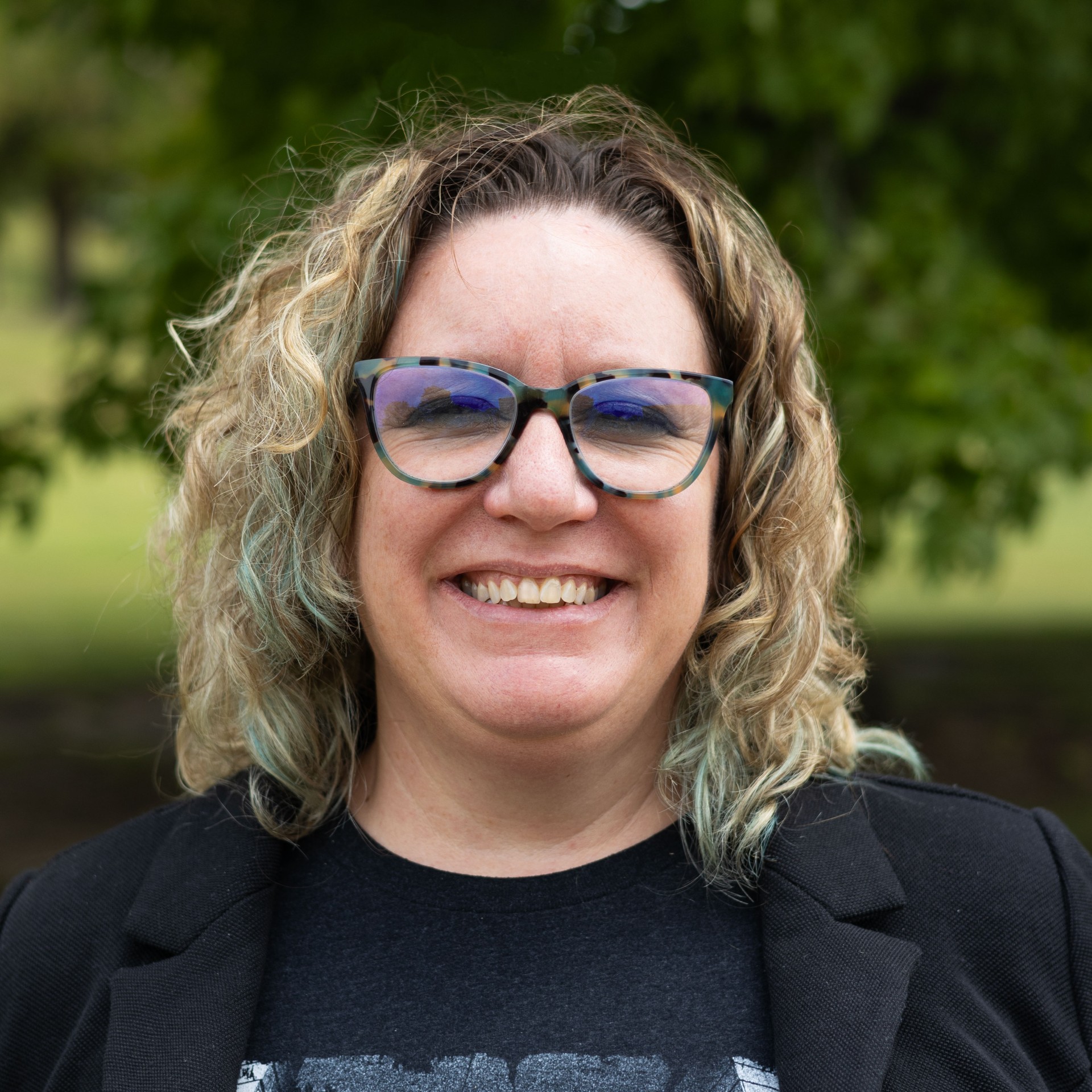
Winfield, KS, April 12, 2026 --(PR.com)-- Dr. Michelle Greenwood of Southwestern College in Winfield, Kansas will be providing a live presentation for the Pi Gamma Mu Speaker Series entitled, "Imprisoned by Academia, Reversing the School to Prison Pipeline" on Friday, May 1, 2026, 3:00 - 4:00 pm ET online. All members of Pi Gamma Mu are encouraged to attend. A Zoom link will be provided to members at a later date.
Educational prison programs are towing the line in rehabilitation success. A meta-analysis on the benefits of correctional education suggests that education reduces recidivism by 43%, and for every dollar spent on it, the state saves four to five dollars on the costs of reincarceration (Davis et al., 2013). The potential recidivism reductions are noteworthy since the totality of US prison rehabilitation programs only reduce recidivism by 20% (Caudy et al., 2013). Educational prison programs include adult basic education/GED completion, non-degree seeking workshops and higher education programs, with higher education programs boasting the most substantial gains toward successful community reentry. Indeed, while national rearrest rates hover around 70% three-years post-release (Antenangeli & Durose, 2021), the Bureau of Justice Statistics reports that only 14% of incarcerated people who received an Associate’s degree during incarceration reoffended, which lowered to 5.6% for those who attained a Bachelor’s degree, and 0% for those who earned a Master’s degree (Davis et al., 2013). Additionally, numerous studies show that the benefits of higher education extend beyond recidivism, overall improving the quality of life for formerly incarcerated persons and their families (see, for example, Evans et al., 2018; Lerman & Sadin, 2023; Pearson & Heckert, 2020; Pelletier & Evans, 2019). Certainly, higher education seems like an ideal place for correctional institutions to place their time, energy, and funding.
Higher education prison programs vary drastically from state to state, making it difficult to get a clear picture of their availability and scope (Castro & Brawn, 2017). There is, however, some evidence to suggest that the number of college programs and level of degree offerings are increasing. The federal ban on Pell grants for incarcerated students was lifted in 2016 (Delaney & Wachendorfer, 2021), and evaluations of the Second Chance Pell Experimental Sites Initiative show consistently increasing enrollment since 2019, even in the face of the COVID-19 pandemic (Chestnut & Wachendorfer, 2021). Degree offerings are changing too. For instance, the University of California and California State University systems started offering in-person classes for Bachelor’s degrees (Jails to Jobs, 2022), whereas prior to, any degrees above an Associate’s degree were offered through correspondence-only classes (i.e., mail). The expansion of higher education in prisons is illustrative of the reinvigoration of rehabilitative practices for offenders, yet many facets of teaching in prison still need to be explored and are important for understanding the needs of prison instructors, incarcerated students, and the correctional and higher education institutions that support them.
This talk will focus on the context of the incarcerated (or formerly) students & the teaching experience along with running a program for incarcerated students and the make-up of a successful program for these marginalized students.
Dr. Michelle D. Greenwood is an Assistant Professor of Psychology at Southwestern College and a cognitive scientist whose work investigates how people think, communicate, and navigate the world. Her research spans perspective-taking, social language use, spatial cognition, GIS-based reasoning, and human–computer interaction, with a particular interest in how people use visual and linguistic cues to understand others’ viewpoints. Her scholarship has been published and presented internationally, including award-winning research on real-time perspective taking and the cognitive mechanisms underlying human decision-making.
Dr. Greenwood’s academic and professional career has also centered on expanding educational access for historically underserved learners. As Director of Rising Scholars at Merced College, she led innovative programs for incarcerated and system-impacted students, securing a $1.5 million state grant to develop academic pipelines for juvenile justice–impacted youth. She has additionally managed large-scale initiatives supporting transfer, returning, and veteran students through a $5 million U.S. Department of Education grant at UC Merced.
A highly experienced educator, Dr. Greenwood has designed and taught courses across cognitive science, psychology, human development, and social adjustment—both in traditional classrooms and inside correctional facilities. Her professional development work includes leadership in anti-racist pedagogy, mental health first aid, inclusive excellence, and trauma-informed teaching.
Dr. Greenwood is a dynamic speaker known for making complex ideas accessible, relatable, and actionable. She frequently delivers talks and workshops on imposter syndrome, student success, transfer barriers, inclusive teaching, perspective-taking, and the power of cognitive science in everyday life. Whether working with educators, students, or community partners, she brings a grounded, compassionate, and research-informed approach to fostering learning, resilience, and equity.
Plan to attend this Pi Gamma Mu Speaker Series online event on Friday, May 1, 2026, at 3:00 pm ET.
About Pi Gamma Mu
Founded in 1924, Pi Gamma Mu International Honor Society in Social Sciences is the oldest and preeminent interdisciplinary social science honor society, with campus chapters in the US and around the world. The mission of Pi Gamma Mu is to encourage and promote excellence in the social sciences and to support and nurture scholarship, leadership, and service. Its headquarters today are in Winfield, Kansas, USA. The society has been certified by the Association of College Honor Societies since 1953 and is a 501(c)(3) non-profit organization. Please visit our website to learn more about starting a chapter.
Educational prison programs are towing the line in rehabilitation success. A meta-analysis on the benefits of correctional education suggests that education reduces recidivism by 43%, and for every dollar spent on it, the state saves four to five dollars on the costs of reincarceration (Davis et al., 2013). The potential recidivism reductions are noteworthy since the totality of US prison rehabilitation programs only reduce recidivism by 20% (Caudy et al., 2013). Educational prison programs include adult basic education/GED completion, non-degree seeking workshops and higher education programs, with higher education programs boasting the most substantial gains toward successful community reentry. Indeed, while national rearrest rates hover around 70% three-years post-release (Antenangeli & Durose, 2021), the Bureau of Justice Statistics reports that only 14% of incarcerated people who received an Associate’s degree during incarceration reoffended, which lowered to 5.6% for those who attained a Bachelor’s degree, and 0% for those who earned a Master’s degree (Davis et al., 2013). Additionally, numerous studies show that the benefits of higher education extend beyond recidivism, overall improving the quality of life for formerly incarcerated persons and their families (see, for example, Evans et al., 2018; Lerman & Sadin, 2023; Pearson & Heckert, 2020; Pelletier & Evans, 2019). Certainly, higher education seems like an ideal place for correctional institutions to place their time, energy, and funding.
Higher education prison programs vary drastically from state to state, making it difficult to get a clear picture of their availability and scope (Castro & Brawn, 2017). There is, however, some evidence to suggest that the number of college programs and level of degree offerings are increasing. The federal ban on Pell grants for incarcerated students was lifted in 2016 (Delaney & Wachendorfer, 2021), and evaluations of the Second Chance Pell Experimental Sites Initiative show consistently increasing enrollment since 2019, even in the face of the COVID-19 pandemic (Chestnut & Wachendorfer, 2021). Degree offerings are changing too. For instance, the University of California and California State University systems started offering in-person classes for Bachelor’s degrees (Jails to Jobs, 2022), whereas prior to, any degrees above an Associate’s degree were offered through correspondence-only classes (i.e., mail). The expansion of higher education in prisons is illustrative of the reinvigoration of rehabilitative practices for offenders, yet many facets of teaching in prison still need to be explored and are important for understanding the needs of prison instructors, incarcerated students, and the correctional and higher education institutions that support them.
This talk will focus on the context of the incarcerated (or formerly) students & the teaching experience along with running a program for incarcerated students and the make-up of a successful program for these marginalized students.
Dr. Michelle D. Greenwood is an Assistant Professor of Psychology at Southwestern College and a cognitive scientist whose work investigates how people think, communicate, and navigate the world. Her research spans perspective-taking, social language use, spatial cognition, GIS-based reasoning, and human–computer interaction, with a particular interest in how people use visual and linguistic cues to understand others’ viewpoints. Her scholarship has been published and presented internationally, including award-winning research on real-time perspective taking and the cognitive mechanisms underlying human decision-making.
Dr. Greenwood’s academic and professional career has also centered on expanding educational access for historically underserved learners. As Director of Rising Scholars at Merced College, she led innovative programs for incarcerated and system-impacted students, securing a $1.5 million state grant to develop academic pipelines for juvenile justice–impacted youth. She has additionally managed large-scale initiatives supporting transfer, returning, and veteran students through a $5 million U.S. Department of Education grant at UC Merced.
A highly experienced educator, Dr. Greenwood has designed and taught courses across cognitive science, psychology, human development, and social adjustment—both in traditional classrooms and inside correctional facilities. Her professional development work includes leadership in anti-racist pedagogy, mental health first aid, inclusive excellence, and trauma-informed teaching.
Dr. Greenwood is a dynamic speaker known for making complex ideas accessible, relatable, and actionable. She frequently delivers talks and workshops on imposter syndrome, student success, transfer barriers, inclusive teaching, perspective-taking, and the power of cognitive science in everyday life. Whether working with educators, students, or community partners, she brings a grounded, compassionate, and research-informed approach to fostering learning, resilience, and equity.
Plan to attend this Pi Gamma Mu Speaker Series online event on Friday, May 1, 2026, at 3:00 pm ET.
About Pi Gamma Mu
Founded in 1924, Pi Gamma Mu International Honor Society in Social Sciences is the oldest and preeminent interdisciplinary social science honor society, with campus chapters in the US and around the world. The mission of Pi Gamma Mu is to encourage and promote excellence in the social sciences and to support and nurture scholarship, leadership, and service. Its headquarters today are in Winfield, Kansas, USA. The society has been certified by the Association of College Honor Societies since 1953 and is a 501(c)(3) non-profit organization. Please visit our website to learn more about starting a chapter.
Contact
Pi Gamma Mu International Honor Society in Social Sciences
Suzanne Rupp
620-221-3128
www.pigammamu.org
Suzanne Rupp
620-221-3128
www.pigammamu.org
 Contact
Categories