
Prehistoric "Transformer Scorpion" Discovered - CT Scan Provided by Advanced Amber
A team of scientists in France and Myanmar have discovered a new species of prehistoric scorpion and published it as a holotype.
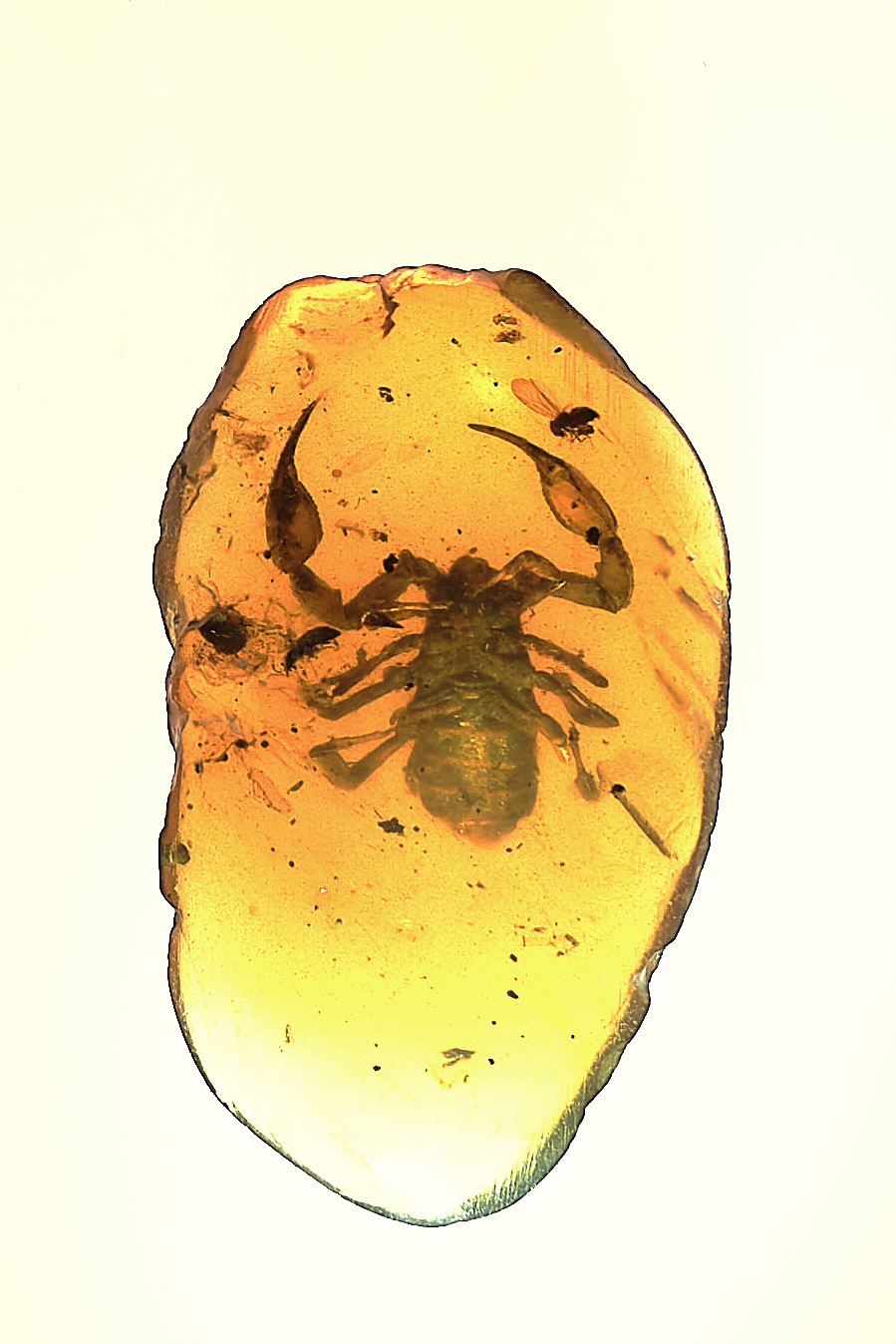
Bangkok, Thailand, May 09, 2025 --(PR.com)-- It has numerous distinct characteristics that differentiate it from other ancient scorpion species from that timeframe, such as a unique amount of pectines, which are tiny comb-like structures on its belly.
Named Burmesescorpiops Wunpawng, this recently discovered scorpion once roamed the forest floors 100 million years ago. At that time, the forest was located on a tropical island hosting a myriad of lilliputian animals, making this primitive arachnid seem like a giant. The amber resin-producing trees were very large and produced copious amounts of liquid tree sap which pooled like swamps on the forest floor, enabling a valuable snapshot of the flora and fauna of that time.
The tropical island was one of many in the region. Another team of researchers, Zaw Win and Jan Westerweel, used paleomagnetic data to demonstrate how these islands lay between Asia and the giant but detached encroaching island of India. As India drifted closer, it rammed the smaller tropical islands beneath Asia, eventually joining the continent and forming the Himalayas, submerging entire islands beneath it. This unique formation process resulted in amber that is larger, harder, and clearer than amber found elsewhere on the planet. That area is now known as the Hukawng Valley, in Northern Myanmar.
Typically, oxidization causes amber to darken and become brittle, as seen in other ambers found at shallow depths. Sealed beneath marble and black shale layers, the amber remained in darkness, forming Earth's own time capsule.
A Scientific Gift Preserved in Time
“This medium, known as amber in the English language, is a marvelous gift to science because it preserves the tissues of ancient species. Our team is honored to have named this species after the Kachin People, the indigenous tribes who live in the Hukawng Valley, where this amber is unearthed,” says Zaw Dan, director of the Kachin Amber Research Institute.
This particular specimen was nicknamed the “Transformer Scorpion” by some of the field amber researchers who participated in the study.
“I look at many scorpion inclusions in amber, and this one stands out to me due to how its chela (claws) are pointed upward, but also with morphological characteristics resembling the fictional sci-fi Transformer robots,” says Ko Zawgyi, a field amber researcher at the Kachin Amber Research Institute.
Leading Experts and Cutting-edge Technology
The study was led by the world’s leading Cretaceous amber scorpion expert, Wilson Lourenco, who described the scorpion family Burmesescorpiops in 2016. Faunitaxys, a French scientific journal, recently published the study.
“Not all structures can be clearly observed due to the presence of some vegetal inclusions and bubbles. Nevertheless, a good number of characters were finally observed thanks to the use of 3D imaging,” the journal states.
Researchers meticulously subjected the amber fossil to macro photography using a Fuji X100V camera and advanced computer tomography imaging and manipulation (CT scanning).
“By placing this amber inside a CT scanning machine, we were able to generate 3D models and carefully measure the size of the arachnid’s pedipalps,” says Zaw Dan, referring to the claws of the scorpion.
Traditionally, researching amber fossils was challenging due to their 3D nature. However, advancements in technology have made scanning and rendering detailed images of these creatures increasingly accessible. The Kachin Amber Research Institute collaborated with Advanced Amber Kretaceous Zoologia, specialists in researching birds and pterosaurs in amber, for 3D micro-imaging assistance.
A rare and remarkable find:
Scorpions in amber are much rarer than midges, ants, and spiders, and large scorpions are even rarer. Initially, miners in Hukawng Valley thought they had discovered the largest pseudoscorpion ever — a creature with scorpion-style pincers and a body but no stinger.
However, the world’s leading scorpion expert, Wilson Lourenco, quickly recognized that it was actually a true scorpion that had lost its tail, not a pseudoscorpion.
Comparison with Modern Scorpions
Morphology: This ancient scorpion had features resembling present-day Buthidae scorpions, particularly in its pedipalps and body segmentation. Venom Apparatus: While modern scorpions have well-developed venom glands, the fossilized specimen of Burmesescorpiops tend to have a less specialized stinger, indicating possible differences in venom potency. Habitat and Adaptation: Unlike modern scorpions that thrive in diverse environments, Burmesescorpiops Wunpawng likely lived in dense forest ecosystems, as inferred from its amber preservation.
“The discovery of this species helps scientists understand how scorpions evolved over 100 million years, adapting to changing climates and ecological pressures,” says Zaw Dan.
Scorpions have undergone fascinating evolutionary changes from the Cretaceous period to the present day. Their journey spans hundreds of millions of years, adapting to shifting climates and ecosystems.
Scorpions first appeared in the Silurian period (~435 million years ago) and were initially aquatic. Over time, they transitioned to land, developing adaptations for terrestrial survival. Cretaceous Adaptations: By the Cretaceous period, scorpions had evolved into diverse forms, including species like Burmesescorpiops Wunpawng, preserved in amber. These scorpions lived in forest ecosystems and had features resembling modern species.
When it comes to the evolution of venom, over millions of years, scorpions refined their venom delivery systems, leading to the potent stings seen in today’s species. Some ancient scorpions had less specialized venom glands, suggesting a gradual increase in toxicity.
Today, scorpions are found in almost every habitat, from deserts to rainforests. They have developed advanced sensory adaptations, including specialized hairs that detect vibrations, helping them hunt efficiently.
Scorpions have remained remarkably consistent in body structure, but their behavior, venom potency, and ecological roles have evolved significantly. Their ability to adapt has ensured their survival for over 400 million years.
Burmesescorpiops Wunpawng is a special holotype in that it was researched without using taxpayers money as government funding was not necessary. A new generation are advancing science as waiting for budgets is not only time consuming but it dishonestly exaggerates the costs actually involved in performing the research. Open Science institutes such as Advanced Amber Kretaceous Zoologia collaborated thereby greatly reducing research time and costs.
The remarkable preservation of Burmesescorpiops Wunpawng in amber offers scientists a rare window into prehistoric ecosystems, further bridging the gap between ancient and modern arthropods. According to Lourenço, this discovery, like many others, reaffirms that Kachin amber is not only from the Cretaceous period but has the widest degree of biodiversity of any amber source, making it extremely valuable.
Named Burmesescorpiops Wunpawng, this recently discovered scorpion once roamed the forest floors 100 million years ago. At that time, the forest was located on a tropical island hosting a myriad of lilliputian animals, making this primitive arachnid seem like a giant. The amber resin-producing trees were very large and produced copious amounts of liquid tree sap which pooled like swamps on the forest floor, enabling a valuable snapshot of the flora and fauna of that time.
The tropical island was one of many in the region. Another team of researchers, Zaw Win and Jan Westerweel, used paleomagnetic data to demonstrate how these islands lay between Asia and the giant but detached encroaching island of India. As India drifted closer, it rammed the smaller tropical islands beneath Asia, eventually joining the continent and forming the Himalayas, submerging entire islands beneath it. This unique formation process resulted in amber that is larger, harder, and clearer than amber found elsewhere on the planet. That area is now known as the Hukawng Valley, in Northern Myanmar.
Typically, oxidization causes amber to darken and become brittle, as seen in other ambers found at shallow depths. Sealed beneath marble and black shale layers, the amber remained in darkness, forming Earth's own time capsule.
A Scientific Gift Preserved in Time
“This medium, known as amber in the English language, is a marvelous gift to science because it preserves the tissues of ancient species. Our team is honored to have named this species after the Kachin People, the indigenous tribes who live in the Hukawng Valley, where this amber is unearthed,” says Zaw Dan, director of the Kachin Amber Research Institute.
This particular specimen was nicknamed the “Transformer Scorpion” by some of the field amber researchers who participated in the study.
“I look at many scorpion inclusions in amber, and this one stands out to me due to how its chela (claws) are pointed upward, but also with morphological characteristics resembling the fictional sci-fi Transformer robots,” says Ko Zawgyi, a field amber researcher at the Kachin Amber Research Institute.
Leading Experts and Cutting-edge Technology
The study was led by the world’s leading Cretaceous amber scorpion expert, Wilson Lourenco, who described the scorpion family Burmesescorpiops in 2016. Faunitaxys, a French scientific journal, recently published the study.
“Not all structures can be clearly observed due to the presence of some vegetal inclusions and bubbles. Nevertheless, a good number of characters were finally observed thanks to the use of 3D imaging,” the journal states.
Researchers meticulously subjected the amber fossil to macro photography using a Fuji X100V camera and advanced computer tomography imaging and manipulation (CT scanning).
“By placing this amber inside a CT scanning machine, we were able to generate 3D models and carefully measure the size of the arachnid’s pedipalps,” says Zaw Dan, referring to the claws of the scorpion.
Traditionally, researching amber fossils was challenging due to their 3D nature. However, advancements in technology have made scanning and rendering detailed images of these creatures increasingly accessible. The Kachin Amber Research Institute collaborated with Advanced Amber Kretaceous Zoologia, specialists in researching birds and pterosaurs in amber, for 3D micro-imaging assistance.
A rare and remarkable find:
Scorpions in amber are much rarer than midges, ants, and spiders, and large scorpions are even rarer. Initially, miners in Hukawng Valley thought they had discovered the largest pseudoscorpion ever — a creature with scorpion-style pincers and a body but no stinger.
However, the world’s leading scorpion expert, Wilson Lourenco, quickly recognized that it was actually a true scorpion that had lost its tail, not a pseudoscorpion.
Comparison with Modern Scorpions
Morphology: This ancient scorpion had features resembling present-day Buthidae scorpions, particularly in its pedipalps and body segmentation. Venom Apparatus: While modern scorpions have well-developed venom glands, the fossilized specimen of Burmesescorpiops tend to have a less specialized stinger, indicating possible differences in venom potency. Habitat and Adaptation: Unlike modern scorpions that thrive in diverse environments, Burmesescorpiops Wunpawng likely lived in dense forest ecosystems, as inferred from its amber preservation.
“The discovery of this species helps scientists understand how scorpions evolved over 100 million years, adapting to changing climates and ecological pressures,” says Zaw Dan.
Scorpions have undergone fascinating evolutionary changes from the Cretaceous period to the present day. Their journey spans hundreds of millions of years, adapting to shifting climates and ecosystems.
Scorpions first appeared in the Silurian period (~435 million years ago) and were initially aquatic. Over time, they transitioned to land, developing adaptations for terrestrial survival. Cretaceous Adaptations: By the Cretaceous period, scorpions had evolved into diverse forms, including species like Burmesescorpiops Wunpawng, preserved in amber. These scorpions lived in forest ecosystems and had features resembling modern species.
When it comes to the evolution of venom, over millions of years, scorpions refined their venom delivery systems, leading to the potent stings seen in today’s species. Some ancient scorpions had less specialized venom glands, suggesting a gradual increase in toxicity.
Today, scorpions are found in almost every habitat, from deserts to rainforests. They have developed advanced sensory adaptations, including specialized hairs that detect vibrations, helping them hunt efficiently.
Scorpions have remained remarkably consistent in body structure, but their behavior, venom potency, and ecological roles have evolved significantly. Their ability to adapt has ensured their survival for over 400 million years.
Burmesescorpiops Wunpawng is a special holotype in that it was researched without using taxpayers money as government funding was not necessary. A new generation are advancing science as waiting for budgets is not only time consuming but it dishonestly exaggerates the costs actually involved in performing the research. Open Science institutes such as Advanced Amber Kretaceous Zoologia collaborated thereby greatly reducing research time and costs.
The remarkable preservation of Burmesescorpiops Wunpawng in amber offers scientists a rare window into prehistoric ecosystems, further bridging the gap between ancient and modern arthropods. According to Lourenço, this discovery, like many others, reaffirms that Kachin amber is not only from the Cretaceous period but has the widest degree of biodiversity of any amber source, making it extremely valuable.
Contact
Advanced Amber
Akbar Khan
66815551160
https://www.aakz.com
419aka@gmail.com
Akbar Khan
66815551160
https://www.aakz.com
419aka@gmail.com
 Contact
Multimedia
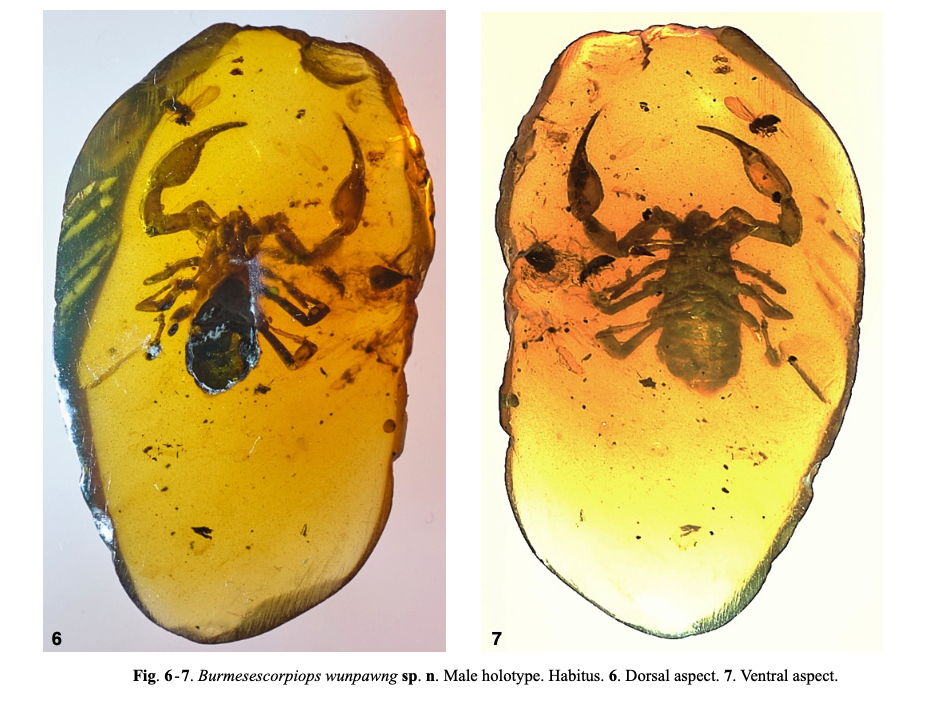
Scorpion in Cretaceous Amber
Image taken with FUJI camera
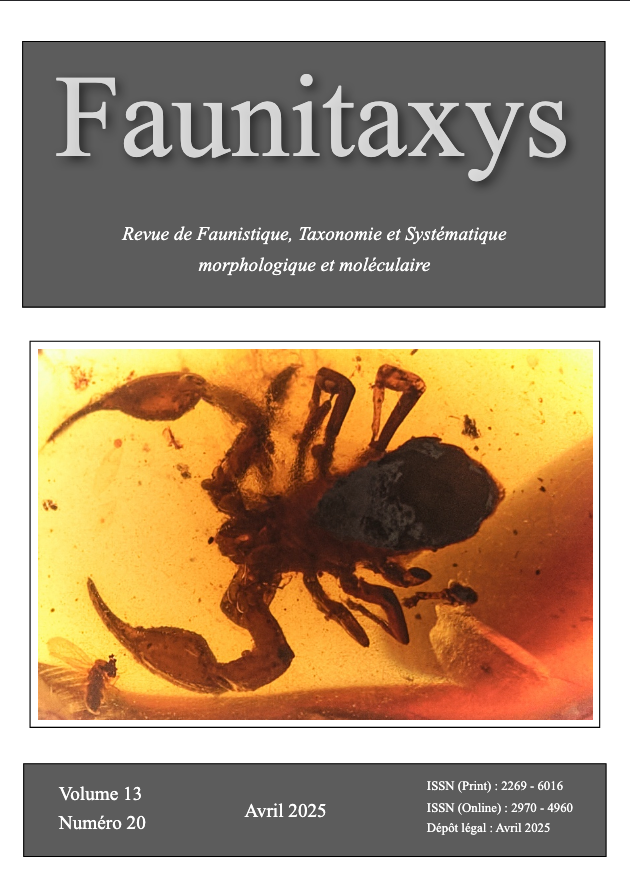
New scorpion is peer reviewed holotype
Burmesescorpiops Wunpawng
Categories