
Beautélanin® Founder Judith Pluviose Releases "The Skin They Forgot to Teach," Examining Racism and Systemic Neglect in Esthetics Education
Beautélanin® founder, licensed esthetician, skincare formulator, and attorney Judith Pluviose announces the release of "The Skin They Forgot to Teach." The book examines the historical exclusion of Black skin from esthetics education and explores how systemic gaps in research and training continue to influence skincare practice. It calls for more complete, biology-based education that better serves melanin-rich skin.
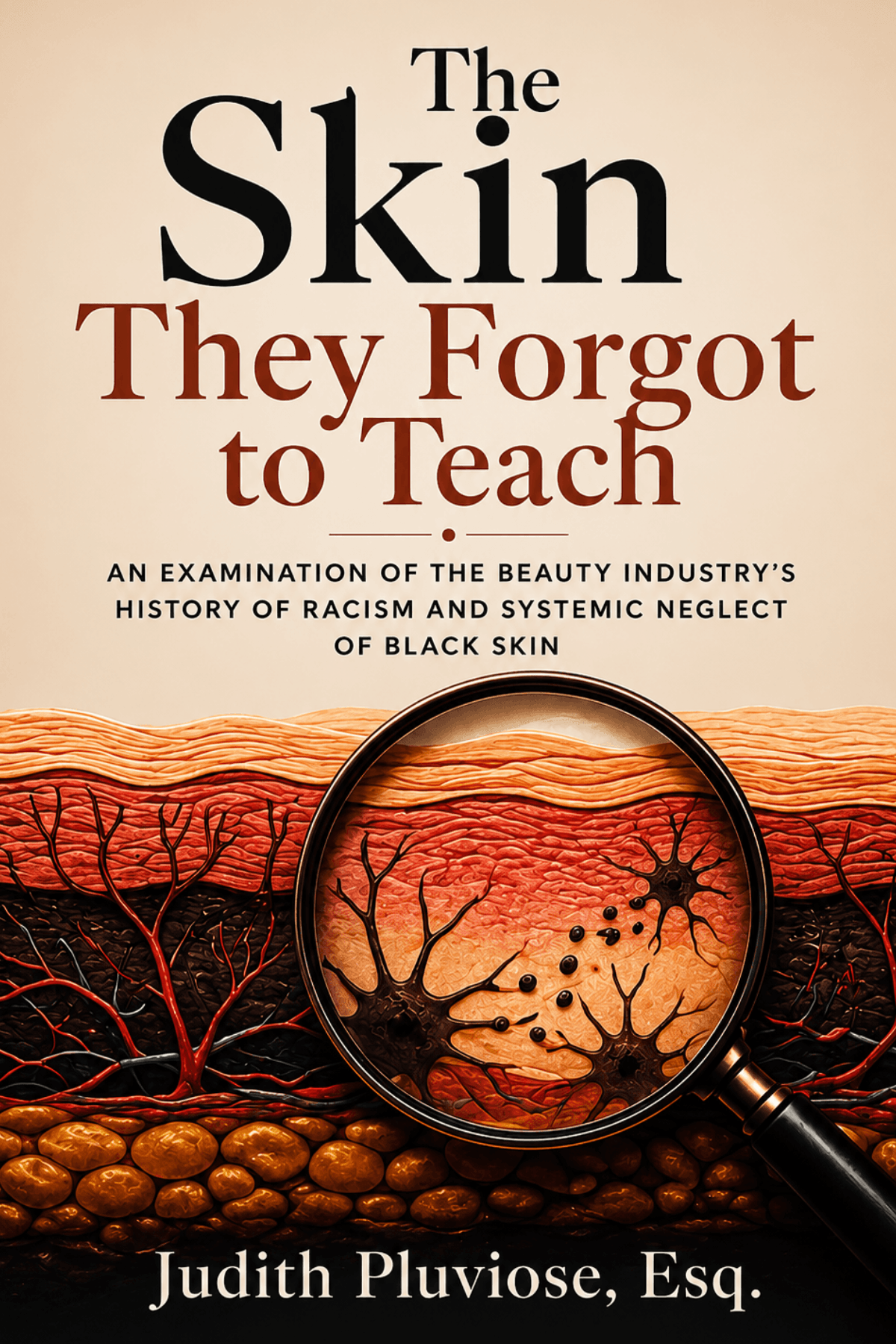
The Skin They Forgot to Teach pairs a firsthand account of exclusion in esthetics education with a working, behavior-based framework for treating melanin-rich skin.
Attorney and licensed esthetician Judith Pluviose, Esq. has released The Skin They Forgot to Teach: An Examination of the Beauty Industry's History of Racism and Systemic Neglect of Black Skin, a two-part book examining how esthetics education, licensing standards, and dermatological diagnosis were built around a narrow default—and what it will take to correct course.
The book began with a single line in a licensing-exam textbook describing dark skin as a “problematic case” for hyperpigmentation. For Pluviose, then a student esthetician, the moment became the starting point for a broader investigation: how curricula, professionalism standards, and diagnostic frameworks across the beauty and dermatology industries have systematically underrepresented and mismanaged melanin-rich skin.
“The lesson was not just about skin but about erasure,” Pluviose writes in the book's opening pages. “The skin remembers what education forgets. Melanin carries both history and biology. Inflammation is not a moral failing. Pigment is not a disease.”
Book I traces the roots of that erasure, from underrepresentation in medical and cosmetology textbooks, to grooming and professionalism codes that penalize natural hair texture, to diagnostic models that treat unexpected outcomes in melanin-rich skin as client noncompliance rather than a flaw in the protocol itself.
Book II, Anchoring Repair, shifts from critique to framework. It introduces MélanoMatrix-D™, a five-axis, behavior-based model for assessing melanin-rich skin by evaluating melanin density, inflammatory response, barrier resilience, UV legacy, and pigment memory. Rather than relying primarily on appearance-based classification systems developed outside the lived biological context of melanin-rich skin, the framework emphasizes observable skin behavior over time.
Pluviose brings a dual perspective to the material: years of legal practice interpreting how language like “professionalism” gets applied unevenly, paired with hands-on experience as a licensed esthetician and certified skincare formulator. She is the founder of Beautélanin® Skincare and an alumna of the Goldman Sachs One Million Black Women in Business program. Her legal background shaped her interest in how institutional language influences professional practice, while her esthetics training informed the biological questions explored throughout the book.
“This is not about replacing legacy diagnostic systems with another rigid chart,” Pluviose said. “It's an intervention framework—one that stays open to testing, scrutiny, and revision. The goal was never to colonize the skin with quick fixes. It's to support it.”
Why This Book Matters Now
In 2026, conversations about identity, healthcare, and science often become entangled with politics. The Skin They Forgot to Teach offers a different approach. It asks readers to return to observation, evidence, and biological understanding.
Biological truth is not political; it is informative. Understanding the biological differences that make us unique does not divide us; it helps us provide better care, ask better questions, and make better decisions.
This book invites readers to examine long-held assumptions with curiosity and intellectual honesty. As our world becomes increasingly interconnected, the future of skincare and healthcare depends not on inherited assumptions, but on our willingness to let evidence guide us toward more thoughtful and informed practice.
About the Book
The Skin They Forgot to Teach: An Examination of the Beauty Industry's History of Racism and Systemic Neglect of Black Skin by Judith Pluviose, Esq., is available now in paperback through Amazon and as a digital download (EPUB and PDF) at www.beautelaninskincare.com.
About the Author
Judith Saintvil Pluviose, Esq. is an attorney, New York State–licensed esthetician, certified skincare formulator, and founder of Beautélanin® Skincare. Drawing on her experience in both the legal profession and esthetics, her work examines how history, language, and scientific assumptions have shaped the education and treatment of melanin-rich skin. She is an alumna of the Goldman Sachs One Million Black Women in Business program. The Skin They Forgot to Teach is her first published book.
Media Contact
For review copies, interviews, speaking engagements, or media inquiries:
Judith Pluviose, Esq.
Email: judith@beautelaninskincare.com
Website: www.beautelaninskincare.com
Instagram: @beautelaninskincare
Judith Pluviose
718-600-8767
beautelaninskincare.com
 Contact
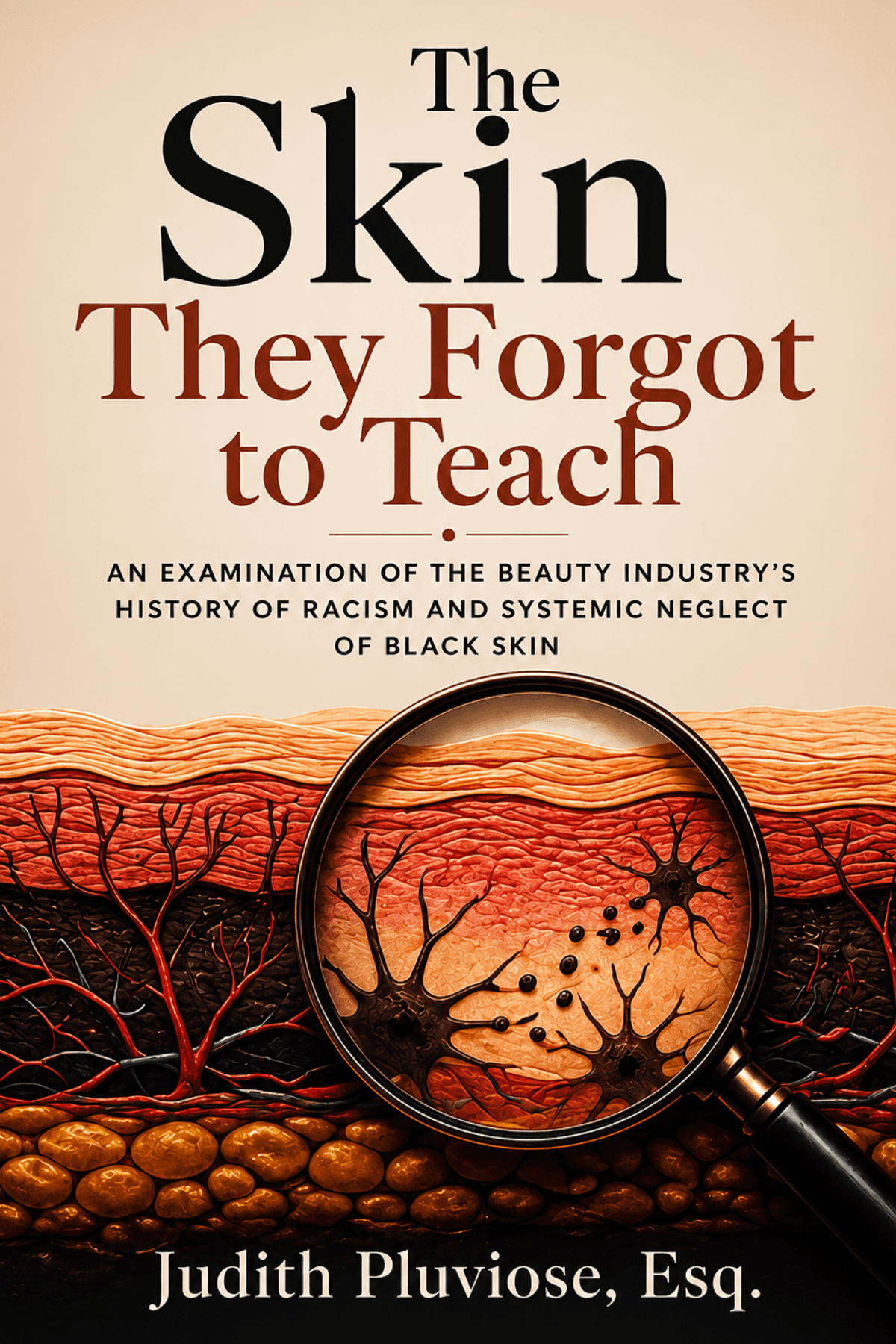
The Skin They Forgot to Teach – Official Book Cover
Official artwork for The Skin They Forgot to Teach: Racism and Systemic Neglect in Esthetics Education by Judith Pluviose, Esq. The book explores the historical and educational gaps surrounding melanin-rich skin and calls for more comprehensive, biology-centered approaches to skincare education.

Judith Pluviose, Esq. – Author of The Skin They Forgot to Teach
Professional author portrait of Judith Pluviose, Esq., founder of Beautélanin®, licensed esthetician, skincare formulator, and attorney. Pluviose is the author of The Skin They Forgot to Teach, a book examining the historical exclusion of Black skin from esthetics education and advocating for more i

Press Release – The Skin They Forgot to Teach Book Launch
Official press release announcing the publication of The Skin They Forgot to Teach by Judith Pluviose, Esq. The release introduces the book, its purpose, and its examination of racism and systemic neglect within esthetics education, while outlining its call for more equitable, evidence-informed skin